 lop News
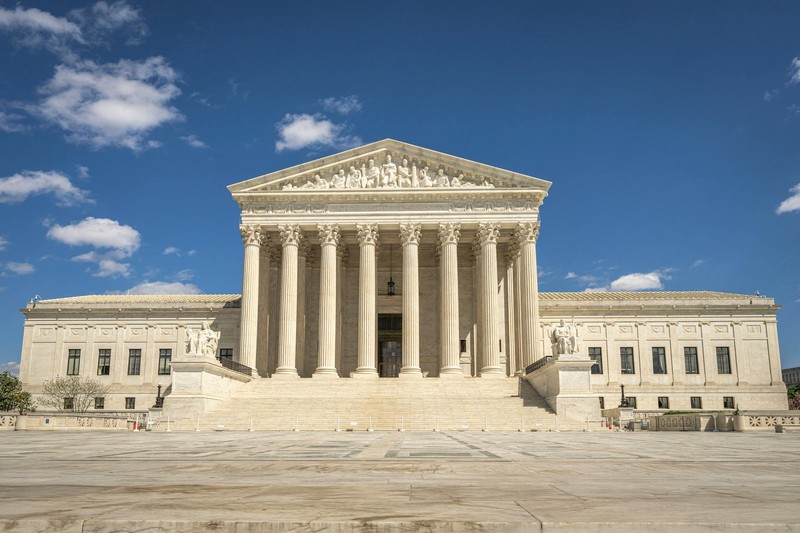
On February 20, the Supreme Court struck down Donald Trump’s signature tariffs. Within four days, the White House had replacements in place under a different law. On Thursday, a federal trade court struck those down too.
The question every importer, trading partner, and market watcher is now asking: do these rulings actually kill the tariffs, or does the administration have a path to keep them?
The answer is both. Thursday’s ruling is a genuine legal defeat. But the White House has been building its next move for weeks, and the tariff architecture may simply shift to a new legal foundation — one that could prove harder to challenge.
What the Court Decided
The US Court of International Trade ruled 2-1 on Thursday that the Trump administration’s 10% across-the-board tariffs, imposed under Section 122 of the Trade Act of 1974, are unlawful. The case was brought by two small businesses — Burlap & Barrel, a New York-based spice retailer, and Basic Fun!, a Florida toy company behind brands including Care Bears and Tonka Trucks — along with 24 state attorneys general led by Oregon.
The majority found that Section 122, a narrow statute enacted during a 1970s currency crisis, does not authorize the president to impose sweeping tariffs in response to ordinary trade deficits. The law requires “large and serious” balance-of-payments deficits — the kind of international payments emergency that threatens the dollar’s stability and depletes gold reserves. The United States is not experiencing one.
“Section 122 was passed in response to a specific historical crisis that resulted in the United States’s currency and gold reserves being depleted,” said Jeffrey Schwab, senior counsel at the Liberty Justice Center, which represented the plaintiffs. “The United States has a trade deficit, not a balance-of-payments deficit, and does not have international payments problems.”
One judge dissented, arguing it was premature to grant victory to the plaintiffs.
What Happens to the Tariffs Now
For the plaintiffs, the tariffs are dead — and they are owed refunds on duties already paid. For everyone else, the 10% surcharge can continue until Section 122’s hard 150-day expiration, which falls on approximately July 23.
The administration is expected to appeal, likely seeking an emergency stay from the Federal Circuit. But the clock is ticking on Section 122 regardless of what the appellate courts do.
The bigger story is what comes next.
The Backup Plan: Section 301
The administration has not been waiting passively for a court ruling. The US Trade Representative has initiated expedited Section 301 investigations targeting trade practices across dozens of economies — forced labor practices in 60 economies and structural excess capacity in 16 or more, according to Freight Figures’ reporting. Section 301 is the same authority used to impose tariffs on China during Trump’s first term. It carries no 150-day ceiling. It produces durable tariff schedules. Its legal foundation is well-established.
If those investigations produce new tariffs by late July — the administration’s stated timeline — the 10% surcharge could seamlessly transition to a new set of duties at similar or higher rates. During oral arguments in April, the states challenging Section 122 argued the administration was using the statute as “a bridge to permanent trade barriers, not as the emergency measure the statute contemplates,” according to Freight Figures’ reporting.
The court agreed. But that doesn’t stop the bridge from reaching its destination.
The Money: Who Pays, Who Benefits
If the Section 122 tariffs ultimately fall and aren’t replaced, the economic impact would be meaningful. According to the Tax Policy Center, letting the tariffs expire would push tariff-induced cost increases “close to zero for many goods.” Apparel and leather goods costs could fall slightly below 2024 levels. Textile products would face almost no tariff-related cost increases.
But substantial tariffs would remain in place under other legal authorities. Section 232 tariffs on steel, aluminum, copper, and automobiles were never dependent on IEEPA or Section 122 and remain fully intact. Any new Section 301 tariffs would layer on top.
The distributional story matters. During the IEEPA tariff period — April 2025 through the Supreme Court ruling in February 2026 — US Customs and Border Protection collected at least $166 billion in duties from more than 330,000 importers. The average effective US tariff rate climbed from approximately 2.5% to a peak of 27%, the highest in over a century, according to the Gov Transparency Project. Research from the New York Federal Reserve found that more than 90% of tariff costs were borne domestically during most of 2025.
A Pattern of Legal Defeat, Policy Continuity
Thursday’s ruling fits a pattern. The administration has now lost twice in federal court on its tariff program — first at the Supreme Court, now at the Court of International Trade. Both losses were on statutory grounds: the courts found that the laws the White House invoked do not authorize what the president was doing with them.
But the administration’s strategy has been to treat each legal defeat as a speed bump. After the Supreme Court’s IEEPA ruling voided the entire “Liberation Day” tariff architecture — triggering refunds on $166 billion in collected duties — the White House pivoted to Section 122 within hours. When Section 122 was challenged in court, it began building the Section 301 scaffolding.
The institutional tension is clear. Congress writes trade laws with specific limits. The executive branch keeps finding new statutory hooks to impose broadly similar policy outcomes. The courts keep being asked to referee whether the latest legal theory is a genuine reading of the statute or a pretext.
Trading Partners Watch and Wait
The ruling coincides with escalating tensions with the European Union. On Thursday, Trump said he would give the EU until July 4 to implement trade deal commitments before raising tariffs on EU goods, including cars, to “much higher levels.” Last Friday, he announced tariffs on EU vehicles would rise to 25% from the previously agreed 15%, citing slow implementation of the Scotland trade deal through the European Parliament.
For trading partners, the court ruling offers a flicker of hope that the US tariff regime faces genuine legal constraints. The administration’s demonstrated willingness to pivot to new authorities — combined with Section 301 investigations already underway — suggests that hope may be premature.
The constitutional geometry here is straightforward: Congress controls the power to tax imports. The president acts within the statutes Congress writes, not beyond them. Thursday’s ruling affirms that principle. Whether it changes what happens at the ports and on the docks is a different question entirely.
Sources
- US trade court rules against Trump’s 10% global tariffs — The Guardian
- Trump administration loses second major tariff case — CNN
- Liberty Justice Center Victorious in Lawsuit Challenging Trump’s Section 122 Tariffs — Liberty Justice Center
- IEEPA Tariffs Voided by SCOTUS — Gov Transparency Project
- 24 States Challenge Section 122 Tariffs in Court: What the CIT Hearing Means for Importers — Freight Figures
- How the Supreme Court’s IEEPA Ruling and New Section 122 Tariffs Reshape Costs Across Industries — Tax Policy Center
Discussion (14)