 lop News
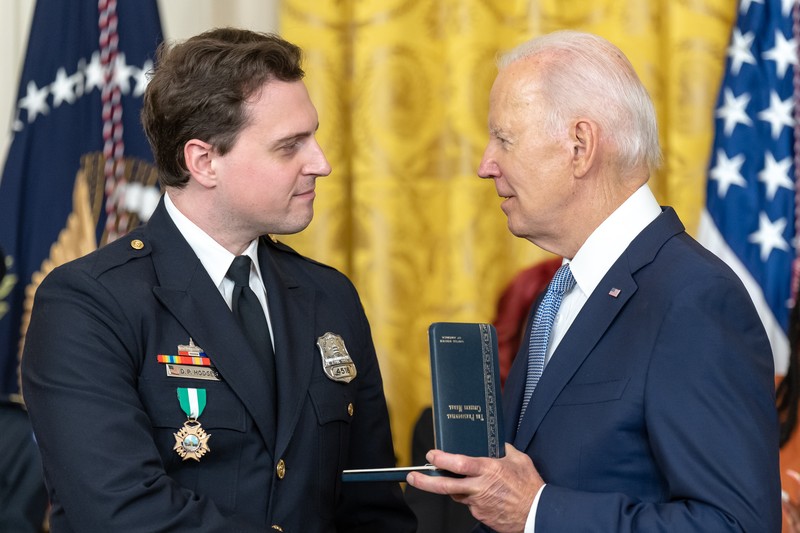
Daniel Hodges nearly died in a Capitol tunnel on January 6, 2021, crushed against a doorframe by a mob that threatened to kill him with his own gun. Five years later, he is back in federal court — trying to stop those same rioters from collecting taxpayer-funded payouts that could reach millions of dollars each.
Hodges and former Capitol Police officer Harry Dunn filed suit on Wednesday to block the Trump administration’s newly created “Anti-Weaponization Fund,” a $1.776 billion pool designed to compensate Americans who claim they were victimized by politically motivated prosecutions. The officers call it “the most brazen act of presidential corruption this century.”
A Settlement With Himself
The fund emerged this week from a settlement that even the presiding judge found difficult to take at face value. Trump had sued the Internal Revenue Service for $10 billion over the leak of his tax returns to the New York Times and other outlets. On Monday, he dropped the case. In exchange, the Justice Department — which answers to him — drew $1.776 billion from the federal Judgment Fund and set it aside for people who believe they were mistreated by prior administrations.
Judge Kathleen Williams noted during the proceedings that the defendants were “subject to his direction.” Trump himself described the case as requiring him to “work out a settlement with myself,” according to the officers’ complaint.
The settlement also reportedly bars the IRS from auditing past tax claims by Trump, his relatives, and his businesses — and stipulates that the US government bears “no liability whatsoever for the protection or safeguarding of those funds” from fraud.
The Officers’ Case
Both Dunn and Hodges were injured during the Capitol assault, when thousands of Trump supporters stormed Congress in a failed effort to stop certification of the 2020 election. More than 100 police officers were hurt, according to the Associated Press. Nearly 1,600 people were eventually charged with January 6-related crimes. Trump pardoned the vast majority on his first day back in office.
The officers say they continue to face credible death threats. Their lawsuit argues that the fund will “directly finance the violent operations of rioters, paramilitaries, and their supporters who threatened Plaintiffs’ lives that day, and continue to do so.”
“The Fund’s mere existence sends a clear and chilling message,” the complaint states: “those who enact violence in President Trump’s name will not just avoid punishment, they will be rewarded with riches.”
The Line to Collect
That concern is not hypothetical. Enrique Tarrio, the former Proud Boys chairman sentenced to 22 years for seditious conspiracy before Trump commuted his sentence, told Reuters he plans to apply and expects between $2 million and $5 million.
“I’m not greedy,” Tarrio said. “But my life was all fucked up because of this.”
Peter Ticktin, an attorney representing more than 400 January 6 defendants, said the $1.776 billion may not suffice. “People lost multi-million dollar businesses while they were locked up,” he said. “I don’t think the DOJ is ready for us yet.” Ticktin, who attended high school with Trump, said he suggested the fund idea to the president in a March email.
Minimal Guardrails
Payout decisions will rest with a five-member commission appointed by acting Attorney General Todd Blanche. The commissioners have not been named. The process will be largely shielded from public scrutiny, according to NBC News — unlike civil litigation that plays out in open court.
Pressed by lawmakers, Blanche would not rule out payments to rioters who assaulted police. “Whether the commissioners will give that person money — that claimant — it’s up to them,” he told CNN. He called harm to law enforcement “abhorrent” but dismissed backlash as “fake outrage.”
Steep Odds
The officers’ legal challenge faces long odds. Their attorney, Brendan Ballou — a former federal prosecutor who handled January 6 cases — framed the stakes plainly: if the fund operates, “it will fund insurrectionists, militias, and paramilitaries that are loyal to the president but unaccountable to the rule of law.”
Democrats in Congress are pursuing separate avenues. Senator Chris Coons of Delaware plans to introduce spending-bill amendments to block the fund. Representatives Jamie Raskin and Richard Neal demanded transparency on payout caps and public reporting, writing that “never in American history has a President pursued corruption this brazenly or on such a colossal scale.”
The Republican-controlled Congress has shown little appetite for intervention. Trump, for his part, says the $1.776 billion is insufficient. “You’re talking about peanuts,” he told reporters. “It destroyed the lives of many, many people.”
The officers who bled protecting the Capitol have heard those words of sympathy before — just never directed at them.
Sources
- Officers who defended Capitol from rioters sue to block payouts from $1.8B ‘anti-weaponization’ fund — Associated Press
- ‘I’m not greedy’: January 6 rioters and Trump allies eye $1.8 billion ‘weaponization’ fund — Reuters
- US police officers sue Trump over $1.8bn ‘anti-weaponisation’ fund — Al Jazeera
- Jan. 6 officers sue over $1.8B pot they call ‘slush fund’ for ‘insurrectionists’ — NBC News
Discussion (10)