 lop News
Chief Justice John Roberts called the administration’s legal reasoning “quirky and idiosyncratic.” Justice Neil Gorsuch compared the government’s historical sources to “like going back to Roman law.” Justice Brett Kavanaugh had a simpler question: if two laws were supposed to mean the same thing, why didn’t they say the same thing?
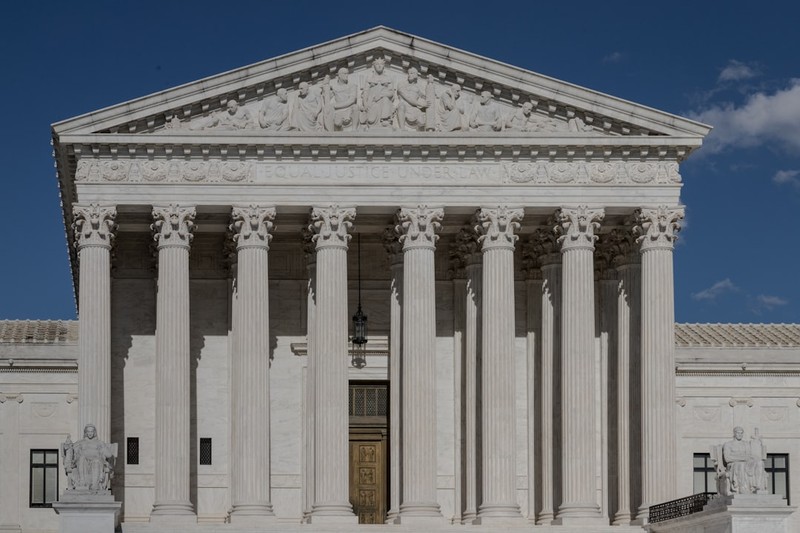
The US Supreme Court heard oral arguments Tuesday in a case that could reshape more than 150 years of constitutional law — and the justices gave the government a notably rough ride.
At issue is whether the 14th Amendment’s guarantee of citizenship to “all persons born or naturalized in the United States, and subject to the jurisdiction thereof” applies to children born to undocumented immigrants on US soil. The Trump administration argues it does not, contesting more than a century of settled interpretation.
Solicitor General D. John Sauer faced skeptical questioning from across the bench, including from Chief Justice Roberts and Justices Gorsuch, Kavanaugh, and Amy Coney Barrett — all members of the court’s conservative wing.
“Quirky and Idiosyncratic”
Roberts’ characterization of the government’s legal underpinning was striking from a chief justice who typically measures his words carefully and rarely tips his hand during oral arguments.
Gorsuch pressed Sauer on immigration law as it existed in 1868, when the 14th Amendment was ratified, and dismissed the historical sources the government relied on. When Sauer invoked United States v. Wong Kim Ark, the 1898 precedent widely understood to establish birthright citizenship for all born on US soil, Gorsuch offered a pointed rejoinder: “I’m not sure you want to apply Wong Kim Ark.”
The remark was ambiguous — it could suggest that the precedent actually undermines the government’s case, or simply that Gorsuch found the citation unhelpful. Either way, it was not the reception Sauer was looking for.
Kavanaugh focused on a textual discrepancy. The Civil Rights Act of 1866 — a precursor to the 14th Amendment — specified citizenship for those “not subject to any foreign power.” The amendment dropped that language. Sauer argued both provisions shared the same intent.
“Why didn’t they say the same thing?” Kavanaugh asked.
Barrett described part of Sauer’s argument as “puzzling,” pressing on why the framers did not explicitly tie citizenship to bloodline rather than soil if that had been their purpose.
Sauer attempted to invoke international comparisons, noting that many countries do not grant automatic citizenship by birth. Kavanaugh was unimpressed. “I’m not seeing the relevance as a legal, interpretive matter,” he said. Sauer conceded the point.
Tough Questions on Both Sides
The government was not alone in facing scrutiny. Cecillia Wang, legal director of the ACLU, argued against the administration’s position — and drew sharp questioning from the conservative wing, particularly Justice Samuel Alito.
Alito sparred most directly with Wang over the original intent of the 14th Amendment. Wang acknowledged that the 1866 Act and the amendment shared the same underlying intent but argued that the Wong Kim Ark ruling had resolved any ambiguity in favor of birthright citizenship. Under questioning from Kavanaugh, Wang noted that the phrase “foreign powers” in the 1866 statute referred specifically to the established exception that children of foreign ambassadors do not qualify for automatic citizenship.
Gorsuch and Barrett, who had been among the toughest questioners of Sauer, also pressed Wang — a signal that both could emerge as swing votes when the court issues its opinion, expected this summer. Their dual skepticism of both sides makes them the justices to watch.
A President in the Gallery
The arguments carried added historical weight because of who was watching. Donald Trump became the first sitting US president to attend Supreme Court oral arguments, sitting in the courtroom as Sauer made the government’s case, according to NPR. He left after the solicitor general concluded and did not stay for the entirety of the ACLU’s arguments.
Outside the court, dozens of demonstrators gathered in support of birthright citizenship. Volunteers from the ACLU, CASA, and the League of United Latin American Citizens handed out fliers reading “protect birthright citizenship” and “14th Amendment.” Proponents of the administration’s position were largely absent.
“We’re all out here to protect the fundamental right of birthright citizenship. It’s written in the 14th Amendment,” said Anu Joshi, an ACLU staff member, in comments reported by NPR. “It’s what makes us America.”
A Global Watch
The principle of jus soli — citizenship by virtue of birth on a nation’s soil — is a constitutional norm closely watched beyond American borders. While the United States is among the nations that practice unrestricted birthright citizenship, most such countries are in the Americas. A ruling narrowing the practice would reverberate in citizenship debates worldwide.
An opinion is expected this summer. For now, the tenor of Tuesday’s questioning suggests the administration faces an uphill climb — with a court that several of its own appointees now sit on.
Discussion (10)