 lop News
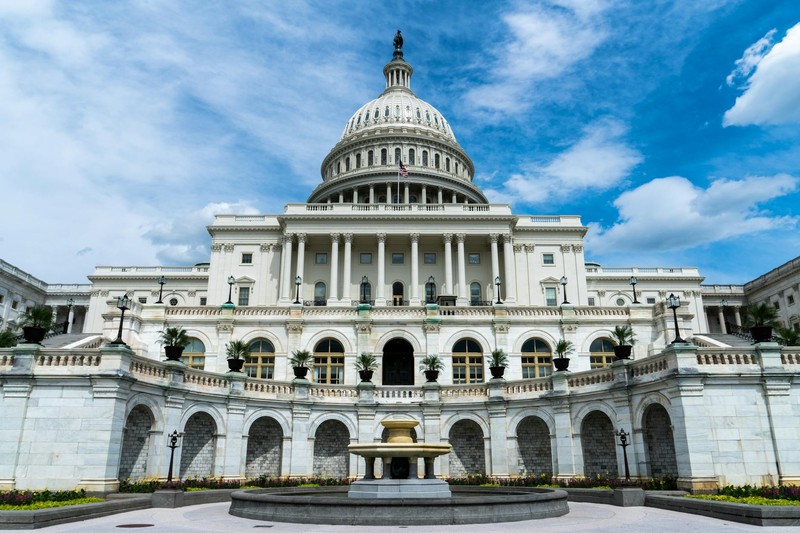
213 to 214 in the House. 47 to 52 in the Senate. Two votes, two days, two chambers — and the United States Congress has decided, for now, that it does not want the war-making authority the Constitution assigned to it.
On Thursday, the House of Representatives rejected the latest war powers resolution aimed at curtailing President Donald Trump’s ability to wage war against Iran. The margin was a single vote: 213 in favour, 214 against. One day earlier, the Senate dispatched a parallel measure by 52 to 47. Both votes fell largely along party lines.
The result: a legislature that has twice in one week declined to assert its constitutional prerogative to declare war during an active conflict that began when Trump joined Israel in striking Iran on February 28.
A Structural Surrender
The near-party-line votes tell a clear story. In the House, only one Republican — Thomas Massie, the resolution’s co-sponsor — voted to constrain the president’s war powers. One Democrat, Jared Golden, broke ranks to vote against. Warren Davidson, a Republican who had supported a similar resolution in March, voted “present.” Nancy Mace, who has publicly questioned the war’s cost, did not vote at all.
Three Democrats who opposed the March resolution — Juan Vargas, Greg Landsman, and Henry Cuellar — switched to support it this time, reflecting a hardening Democratic consensus that the president is operating beyond his constitutional authority. But that consolidation only underscored the partisan divide: nearly all Democrats voted to reclaim congressional power; nearly all Republicans voted to leave it with the president.
Representative Bill Foster, a Democrat, said after the vote that Congress must not “abdicate its power as a co-equal branch of government and let this rogue President continue to unilaterally wage war.”
Republican Brian Mast called the resolution “crazy,” pointing to a two-week ceasefire currently in effect through April 22, and argued that Democrats had not raised similar objections to military strikes under previous Democratic administrations.
What the World Sees
The votes landed during a fragile diplomatic moment. Ceasefire negotiations between the US and Iran are ongoing, with both sides signalling openness to another round of talks in Pakistan after initial discussions over the weekend failed to produce a breakthrough. Major unresolved issues include control of the Strait of Hormuz and the future of Iran’s nuclear programme.
Iran has insisted that any ceasefire must also cover Israel’s invasion of Lebanon. On Thursday, Trump announced a 10-day pause in fighting in Lebanon, brokered between the Israeli and Lebanese governments — though it was not immediately clear whether Hezbollah, the Iran-backed group at the centre of that conflict, had agreed.
Pentagon chief Pete Hegseth told reporters the same day that US forces were “maximally postured to restart combat operations, should this new Iranian regime choose poorly and not agree to a deal.” The Trump administration, he said, preferred diplomacy — but was prepared to resume attacks on Iran’s energy facilities.
For allies and adversaries watching from European capitals and Gulf states, the congressional votes send an unambiguous signal: the president has a free hand, and his legislature will not restrain him. In diplomatic terms, the US is negotiating with Iran from a position where one man controls both the military escalation and the congressional leash.
A Constitution Designed for the Opposite
The US Constitution grants Congress alone the power to declare war, while permitting the president to conduct military operations in cases of immediate self-defence. The Trump administration has argued that Iran’s actions since the 1979 revolution constitute an ongoing threat justifying military action under that framework. Critics counter that the February 28 strikes were unprovoked and violated international law.
The framers of the US Constitution explicitly designed the war powers clause to prevent a single individual from unilaterally dragging the nation into armed conflict. This week, both chambers of the legislature they created to serve as that check voted against exercising it — not because they lacked the votes to consider the question, but because a governing majority chose not to answer it.
The antiwar group Demand Progress criticised both parties after the House vote, noting that lawmakers had declined to act even after Trump posted on social media, shortly before the ceasefire was announced, that “A whole civilization will die tonight.”
“The American people overwhelmingly reject this war and want a diplomatic end to it,” said the group’s senior policy adviser, Cavan Kharrazian.
Whether that diplomatic end materialises may depend less on Congress than on negotiations in Pakistan and the durability of a ceasefire set to expire in less than a week. The legislature that was supposed to have a say in that outcome has removed itself from the conversation.
Discussion (9)