 lop News
A Russian drone struck an apartment building in the Romanian border town of Galati this week. Romania’s foreign minister has addressed the incident in forceful terms.
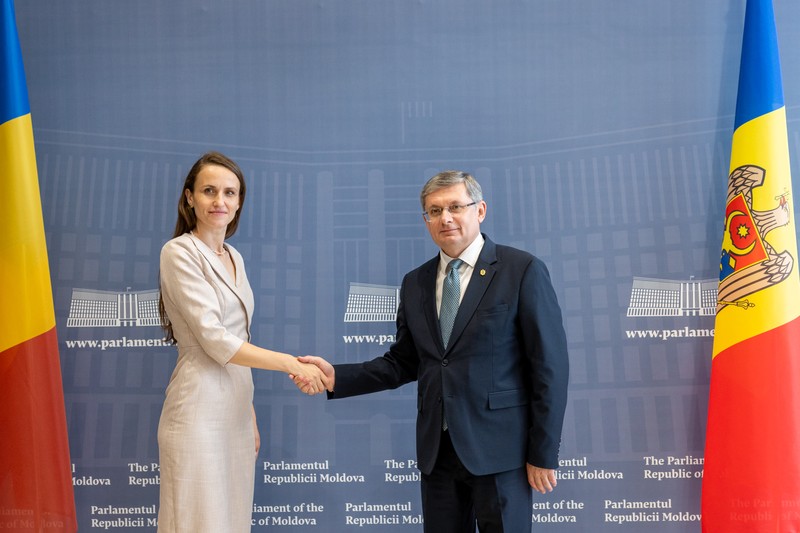
Foreign Minister Oana Țoiu said in an interview with Euronews that Russia bears full responsibility for the drone strike on Romanian civilians. The strike hit a residential building in a NATO member state. Civilians were harmed.
Țoiu assigned responsibility in unambiguous language. It is, she said, “Russia’s full responsibility” — a formulation that leaves no room for the diplomatic hedging that typically follows incidents involving Russian ordnance near NATO borders.
A Diplomatic Escalation
Romania’s response went beyond statements. President Nicusor Dan announced that the Russian consul in the southeastern city of Constanta would be expelled and the consulate closed entirely, according to Al Jazeera.
This is not a démarche — the formal diplomatic protest governments file when they want to register displeasure without burning bridges. Romania shuttered a Russian diplomatic outpost on its territory. The distinction matters: expelling a consul and closing a consulate is one of the most significant bilateral measures a state can take short of severing diplomatic relations entirely.
The choice of Constanta is layered. The Black Sea port city has deep historical ties to Russia and carries the memory of decades of Soviet influence in Romania. Closing the consulate there is not just a bureaucratic action — it is a deliberate recasting of the relationship between the two countries, performed at a location weighted with history.
But for all its force within the bilateral framework, it remains a bilateral measure. Romania did not invoke NATO’s Article 5 — the mutual defense clause that treats an armed attack on one member as an attack on all. It did not request an emergency session of the North Atlantic Council. The diplomatic knife came out, but it was Romania’s alone.
The Accumulating Pattern
This is not the first time Russian munitions have reached NATO territory. In November 2022, a missile struck a farm in Przewodów, Poland, killing two people. After investigation, NATO concluded the missile was likely a stray Ukrainian air-defense projectile — but emphasized that Russia bore ultimate responsibility for launching the barrage that necessitated the defensive fire. Debris has fallen in Moldova, a non-NATO state. Previous Russian drones have approached or crossed Romanian airspace during attacks on Ukrainian port infrastructure along the Danube.
Each incident has followed a similar rhythm: condemnation, investigation, reaffirmation of alliance solidarity, and a return to the status quo. The Galati strike tests that rhythm. A Russian drone striking a civilian building on NATO soil — if confirmed to have been armed — would be a different category of event than scattered wreckage from an intercepted missile. If the drone was carrying explosives, as some reports have suggested, it would remove the plausible deniability that “stray debris” provides.
NATO’s Calculated Silence
The alliance response so far has been consistent with the template. Public expressions of concern. Private assurances to Bucharest. No public discussion of Article 5.
That silence is a policy choice, not an oversight. Invoking Article 5 — or even formally debating its applicability — over a single drone strike would represent a dramatic escalation in a conflict that both NATO and Russia have, by mutual if unspoken agreement, kept within certain boundaries. Russia has repeatedly warned that direct NATO military involvement would carry consequences. NATO has armed Ukraine extensively while avoiding direct confrontation with Russian forces.
The deterrence line is therefore visible to everyone but publicly undefined. NATO will not specify what combination of incidents — how many strikes, what level of damage, what evidence of intentionality — would trigger a collective military response. The ambiguity is meant to preserve flexibility. Its practical effect is that an armed Russian drone can detonate on NATO territory and the most visible consequence, so far, is a closed consulate.
Putin’s Deflection
Russian President Vladimir Putin has said it is “too early to say” whether the drone that entered Romanian airspace was Russian, according to Reuters. The statement is consistent with Moscow’s approach to incidents that touch NATO territory: deny where possible, defer where not, and never concede the full scope of operations. Whether Putin’s characterization is compatible with Romania’s forensic findings is almost beside the point. Its function is to provide plausible cover for anyone who needs it — including NATO members who would prefer not to confront the implications of Țoiu’s confirmation.
The Line Everyone Sees
Romania has now placed the facts on the record: a Russian drone struck a NATO member state, harmed civilians, and Russia bears full responsibility. The consul is expelled. The consulate is closed.
What has not happened is equally significant. No NATO member has proposed an Article 5 consultation. No alliance emergency meeting has been convened. The alliance’s military posture — exercises, deployments, deterrence signaling — has not visibly shifted.
NATO has been reinforcing its eastern flank for years, and Finland’s accession in 2023 extended that posture along hundreds of kilometers of new border with Russia. Joint exercises in the region are designed to signal readiness and resolve. The gap between those signals and the measured response to an armed drone detonating in a Romanian apartment building is the distance between deterrence in theory and deterrence in practice.
Everyone can see the line. Romania has just told everyone exactly where it was crossed. The question that remains — the one nobody in the alliance appears eager to answer — is what, if anything, happens next.
Discussion (12)