 lop News
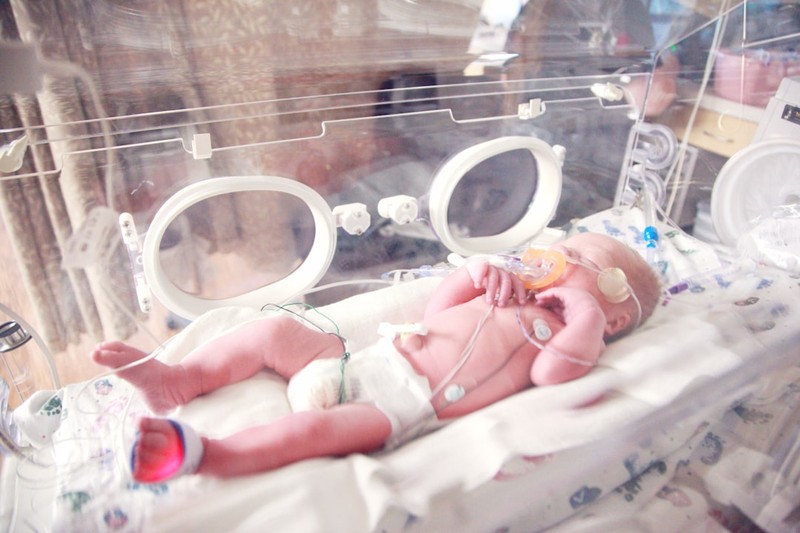
The plastic in your shower curtain, your shampoo, the cling wrap around your lunch — it may be less benign than it looks. A study published this week estimates that a single chemical used to soften plastic contributed to nearly two million premature births worldwide in 2018, along with roughly 74,000 infant deaths.
The chemical is DEHP, and it belongs to a family of additives called phthalates. If you haven’t heard the name, you’ve almost certainly absorbed it. Phthalates appear in cosmetics, detergents, food packaging, garden hoses, and medical tubing. They break down into microscopic particles that enter the body through food, air, and household dust. Phthalates leave the body within days — but exposure is so constant that for most people, they might as well be permanent.
The study, led by researchers at NYU Langone Health and published March 31 in the journal eClinicalMedicine, drew on population surveys from more than 200 countries and territories, combined with existing research on phthalate exposure and pregnancy outcomes. It is the first attempt to put a global number on the problem.
Roughly 8 percent of all preterm births in 2018 may be attributable to DEHP exposure, the analysis found. Birth before 37 weeks of pregnancy is a leading cause of infant death and long-term disability worldwide, according to the World Health Organization. Children who survive face elevated risks of cerebral palsy, developmental delays, and breathing difficulties.
The burden falls where resources don’t
The toll is wildly uneven. The Middle East and South Asia accounted for 54 percent of the global disease burden from DEHP-linked preterm birth — regions with rapidly expanding plastics industries and heavy inflows of global plastic waste. Africa represented 26 percent of the health impact but a disproportionate share of deaths, reflecting gaps in neonatal care. Researchers described a double disadvantage: higher environmental risk colliding with weaker health systems.
A chemical shell game
DEHP has been restricted in children’s toys in the US since 2008, and California and North Carolina are working to ban it in IV solution bags. But when regulators restrict one phthalate, manufacturers often swap in a chemical cousin. The study found that DiNP, a common DEHP replacement, may have contributed to roughly 1.88 million preterm births of its own in 2018.
“Our analysis makes clear that regulating phthalates one at a time and swapping in poorly understood replacements is unlikely to solve the larger problem,” said Dr. Leonardo Trasande, the study’s senior author and a professor of pediatrics at NYU Grossman School of Medicine. “We are playing a dangerous game of Whac-A-Mole with hazardous chemicals, and these findings highlight the urgent need for stronger, class-wide oversight of plastic additives to avoid repeating the same mistakes.”
The American Chemistry Council’s High Phthalates Panel told CNN that the US Environmental Protection Agency had concluded DiNP does not pose an “unreasonable risk of injury to human health for consumers, the general population, or the environment.” The council, which represents the US chemical and plastics industries, offered no comment on DEHP.
Correlation, not certainty
The researchers are candid about what the study does not show. The modeling approach does not prove that DEHP or DiNP directly cause preterm birth. The true impact could be up to four times smaller than the central estimate, or slightly higher. And the study examined only two phthalates from a much larger class.
Dr. Donghai Liang, an environmental health researcher at Emory University who was not involved in the work, said the broader concern is about phthalates as a class. “Focusing on one or two at a time may underestimate the overall risk.”
The biological mechanism remains under investigation. Scientists believe phthalates disrupt hormones that regulate pregnancy, potentially triggering placental inflammation and premature labor. Jane Muncke, a scientist at the Food Packaging Forum in Zurich who was not involved in the study, noted that placental disruption is one documented pathway — and pointed to a bitter irony: babies born preterm are immediately surrounded by more plastic, in neonatal wards reliant on plastic tubing.
What regulation exists — and what doesn’t
Trasande and his colleagues are calling for class-wide regulation of plastic additives rather than the current chemical-by-chemical approach. Their work enters a policy landscape where international negotiations on a global plastics treaty are inching forward without a final agreement.
The study was funded by a National Institutes of Health grant and the advocacy campaign Beyond Petrochemicals. For individuals, researchers suggest practical steps: choosing products labeled phthalate-free, avoiding microwaving plastic containers, and improving household ventilation. But as Liang noted, meaningful protection cannot rely on consumer behavior alone.
Nearly two million premature births. One widely used chemical. And a regulatory system that swaps one hazard for the next.
Discussion (9)