 lop News
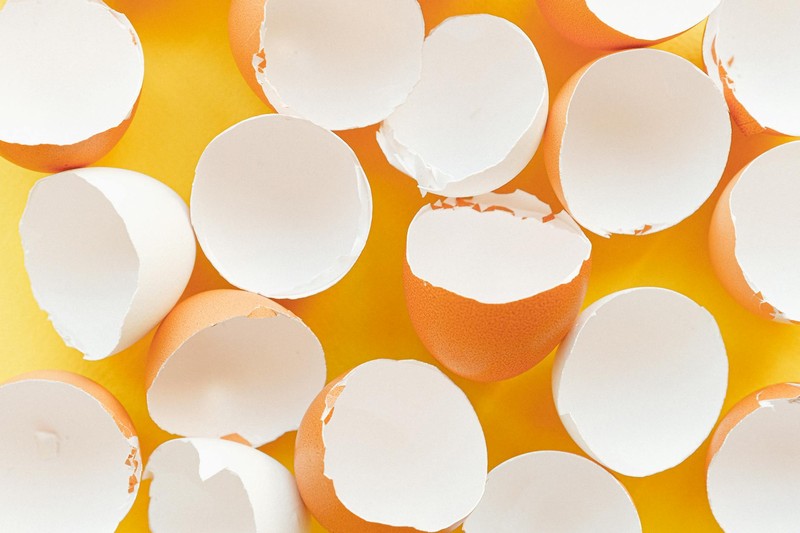
Twenty-six chickens are currently walking around the Dallas headquarters of Colossal Biosciences, and they all started life inside plastic cups.
On May 19, the Texas-based de-extinction company announced it had successfully hatched live chicks from what it calls a “fully artificial egg” — a 3D-printed lattice structure lined with a bioengineered silicone membrane. The membrane, according to Colossal, replicates the gas-exchange properties of a real eggshell at normal atmospheric oxygen levels, eliminating the need for the concentrated oxygen that hampered earlier shell-less incubation attempts and risked damaging developing embryos’ DNA.
The chicks range from a few days to several months old. Andrew Pask, Colossal’s chief biology officer, told MIT Technology Review the team had to be told to stop: “We hatched 26 chickens and then [our CEO] asked us to put the brakes on. We have too many chickens running around.”
If you want to understand what Colossal actually built, though, listen to the scientists who weren’t involved.
An Eggshell, Not an Egg
Vincent Lynch, an evolutionary biologist at the University at Buffalo, puts it plainly: “That’s not an artificial egg because you’ve poured in all the other parts that make it an egg. It’s an artificial eggshell.”
The distinction matters. Colossal’s researchers took recently laid fertilized chicken eggs, cracked them open, and poured the contents — yolk, white, embryo and all — into their synthetic shell. The process relied on a real hen’s reproductive system for everything that happened before the pour: fertilization, nutrient packaging, the formation of temporary organs that nourish and stabilize the growing chick. The artificial structure provided the container and gas exchange, with added calcium to replace what embryos normally absorb from a natural shell.
Shell-less avian culture isn’t new. Researchers have been attempting it since the 1980s. In 1988, geneticist Margaret Perry at the Roslin Institute hatched chicks from embryos placed in surrogate eggshells. Japanese researchers hatched quail from artificial containers in 1998. In 2024, Katsuya Obara at the University of Tsukuba hatched chickens beneath transparent plastic film.
Obara called Colossal’s claim to the “first-ever shell-less incubation system” “clearly an overstatement,” telling MIT Technology Review the technology is “essentially a modification of existing methods.”
The advance, according to multiple independent scientists, is the membrane itself — a silicone-based material that achieves sufficient oxygen transfer without supplemental gas. That’s a genuine materials-science problem solved. Vincent Lynch, the University at Buffalo evolutionary biologist, called the gas-exchange engineering “an important feat of biotechnology” — while Helen Sang, a professor emeritus at the Roslin Institute, noted that “there are significant challenges to overcome to grow an embryo of a different species in artificial eggs.”
The Moa Problem
Colossal’s ultimate target is the South Island giant moa, a flightless bird that stood nearly 12 feet tall and laid eggs roughly 80 times the volume of a chicken’s. No living bird is large enough to serve as a surrogate. The company has already prototyped an artificial egg so large that staff nicknamed it the “salad spinner,” according to MIT Technology Review.
But the eggshell is just one obstacle among many. To create a moa-like bird, scientists would need to compare ancient DNA from preserved moa bones to the genomes of living species, then insert potentially thousands of genetic changes into the genome of an existing bird. The process of creating genetically modified birds is far more difficult than for mammals and has only been achieved reliably in chickens.
“I think they still have a long way to go,” said Hans Cheng, a molecular geneticist at Michigan State University and former USDA researcher.
No Paper, No Data
Perhaps the sharpest criticism concerns what Colossal hasn’t released. The announcement came via press release and a theatrical YouTube video — not a peer-reviewed paper with methods and data other scientists can evaluate. The company has not disclosed its hatch rate, making comparison to earlier shell-less systems impossible.
“Until there’s a peer-reviewed paper I might as well give expert commentary on a YouTube ad,” said Louise Johnson, an evolutionary geneticist at the University of Reading.
Colossal has a track record of splashy announcements. Last year the company said it had “re-created” the extinct dire wolf — a claim widely rejected by taxonomists, who noted the animals were genetically modified gray wolves with a handful of edited traits.
What It’s Actually Good For
The most credible near-term applications may have nothing to do with extinct species. The artificial eggshell’s transparent design gives researchers continuous visual access to developing embryos — useful for studying organ formation and blood vessel development. Conservation programs for endangered birds could use the technology to incubate eggs when natural surrogates are scarce.
Dusko Ilic, a professor of stem cell sciences at King’s College London, put it concisely: “The most credible translational value may therefore lie in applications such as embryo rescue, endangered bird conservation and controlled generation of genome-edited avian lines, particularly if it proves reproducible, scalable and compatible with normal long-term health, rather than in de-extinction itself.”
Twenty-six chickens don’t make a moa. But they do demonstrate that a materials-science problem worth solving has been solved — and that the gap between engineering milestones and the narratives wrapped around them is worth watching.
Sources
- Colossal Biosciences Hatches First Chicks from Its Fully Artificial Egg System — PR Newswire
- A de-extinction company has hatched live chicks from an artificial eggshell — Associated Press
- This chick hatched from an artificial egg — National Geographic
- Colossal Biosciences is growing chickens in a 3D-printed artificial eggshell — MIT Technology Review
- Expert reaction to Colossal press release on artificial egg system — Science Media Centre
Discussion (9)