 lop News
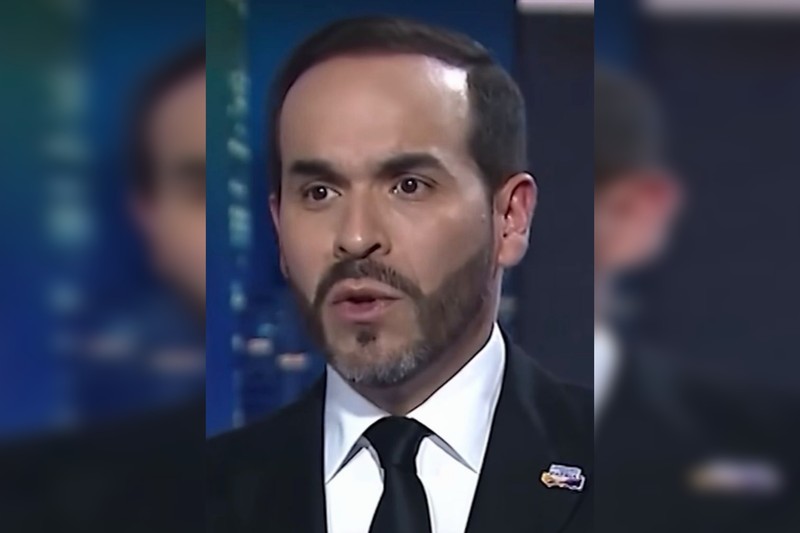
Ten million votes for a man who has never held public office. That is the result that has upended Colombian politics.
Far-right lawyer Abelardo de la Espriella won the first round of Colombia’s presidential election on Sunday with 43.7% of the vote — roughly 10.3 million ballots — defying polls that had consistently shown leftist senator Iván Cepeda in the lead. Cepeda, the candidate backed by outgoing president Gustavo Petro, took 40.9%, or about 9.6 million votes, according to the National Civil Registry with 99.97% of ballots counted.
Neither candidate crossed the 50% threshold. They face each other in a runoff on June 21.
An outsider’s rapid ascent
Espriella’s rise has been startling. A criminal lawyer and millionaire businessman who calls himself “el Tigre” — the Tiger — he was barely registering in polls months ago. He surged by absorbing support that had been drifting toward rightwing senator Paloma Valencia, who finished a distant third with 6.9% and immediately endorsed him.
His campaign was built on a single promise: total confrontation with Colombia’s armed groups. He has pledged to scrap Petro’s “total peace” strategy of negotiating with criminal organizations and replace it with a mano dura — iron-fist — approach modeled on El Salvador’s Nayib Bukele. He has promised 10 mega-prisons in the jungle. His neatly trimmed beard and baseball caps draw deliberate comparisons with Bukele.
He is an outspoken admirer of Donald Trump, Argentina’s Javier Milei, and Bukele — placing him squarely within Latin America’s accelerating rightward shift. Milei was quick to congratulate him on X after the results came in.
The peace process on the ballot
Cepeda represents the opposite pole. A 63-year-old philosopher and human rights activist who has served in the Senate since 2014, he was a key architect of both the 2016 peace deal with the Farc and Petro’s “total peace” policy. His campaign promised expanded welfare, land reform, and a deepening of Petro’s social programs.
The runoff is, in many ways, a referendum on whether Colombia continues down that path or reverses course. The country’s security crisis — now considered the worst since the 2016 peace agreement — has become the defining issue. Cocaine production hit record highs under Petro. Armed group membership grew. Guerrilla attacks, kidnappings, and forced displacement surged. Last year, rightwing senator Miguel Uribe Turbay was shot at a campaign rally by a Farc dissident group and later died.
Petro’s critics have seized on this record. His supporters counter that his government seized the largest quantity of drugs in Colombian history and that the economy grew with significant minimum wage increases — though roughly one in three Colombians still live in poverty.
Claims without evidence
The aftermath was marred by baseless allegations from the president himself. Petro posted on X that he did not accept the preliminary results, claiming — without evidence — that “hundreds of thousands of votes were added.” Cepeda echoed the claim, citing unspecified “atypical voting patterns.”
Juan Carlos Galindo Vácha, who previously led the National Civil Registry, dismissed the allegations. “Historically, in presidential elections, the difference between the preliminary count, which is unofficial, and the official scrutiny process is less than 1%,” he told Radio Caracol, adding that the president “should not make these wild claims that even he does not understand.”
Electoral authorities said voting proceeded “normally and safely.” Turnout was approximately 56%.
Three weeks to decide
Espriella needs to consolidate the roughly 7% of voters who backed Valencia and other rightwing candidates. Cepeda must win over roughly 2.2 million voters who supported neither frontrunner — a pool that includes moderate conservatives repelled by Espriella’s populism and leftists unenthusiastic about Petro’s record.
The stakes extend beyond Colombia’s borders. The result will shape relations with Washington on counternarcotics, with Ecuador on border security, and with a region where the left is increasingly isolated. Colombia, Mexico, and Brazil — which holds its own presidential vote in October — are among the few Latin American nations still governed by the left.
Espriella has called for closer alignment with Washington and joint military operations against cartels. Cepeda, like Petro, has insisted Colombia should not be a “vassal state” to the US.
Three weeks. Two diametrically opposed visions. And a peace process that hangs in the balance.
Sources
- Colombia’s far-right presidential candidate Espriella wins first round of vote ahead of runoff — The Guardian
- Colombia presidential runoff pits leftist senator against pro-Trump rival — BBC News
- Colombian presidency goes to runoff election that could redefine country’s future — CNN
- Colombia’s presidential race goes to a runoff: De la Espriella vs. Cepeda — France 24
Discussion (8)