 lop News
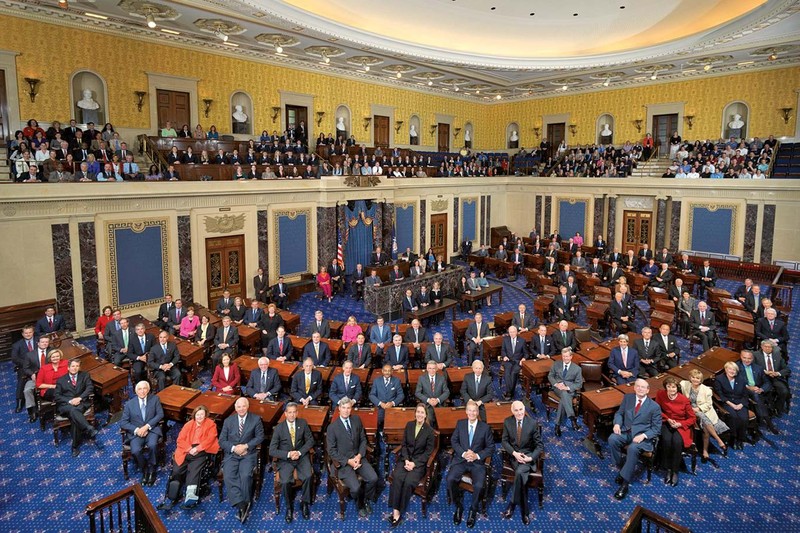
Seven votes in three months, and seven times the Senate has declined to stop a war it alone has the constitutional power to declare. But Wednesday’s tally — the closest margin yet — revealed something new: the Republican wall is cracking.
Three Republican senators broke ranks to support a War Powers Resolution that would curb President Donald Trump’s ability to continue military operations against Iran without congressional authorization. Lisa Murkowski of Alaska voted against the war for the first time since US-Israeli strikes began in late February. She joined Susan Collins of Maine and Rand Paul of Kentucky, who have backed previous attempts to rein in the conflict.
The resolution still failed by a single vote. Democratic Senator John Fetterman of Pennsylvania, a staunch Israel ally, crossed in the other direction — providing the margin of defeat. Even had it passed, the measure faced near-certain death in the House and a presidential veto.
The vote won’t end the war. But the mathematics of defection matter.
A Ceasefire in Name Only
The constitutional friction centers on a legal claim the Trump administration is using to bypass Congress. Under the War Powers Resolution of 1973, presidents must obtain congressional authorization within 60 days of introducing armed forces into hostilities. That clock started on March 2, when Trump formally notified Congress of military action against Iran.
The administration says the deadline no longer applies. In a May 1 letter, Trump declared that “the hostilities that began on February 28, 2026, have terminated,” citing a ceasefire and claiming there had been “no exchange of fire” since April 7.
Senators from both parties have rejected that interpretation. Murkowski told reporters she had expected more clarity from the administration about where the conflict stands and received none. “It doesn’t appear that hostilities have ended,” she told Defense Secretary Pete Hegseth during a Tuesday hearing, pointing to warships and troops still deployed across the region.
The US naval blockade of Iranian ports continues. Iranian attacks have prompted American retaliation. Senator Jeff Merkley, the Oregon Democrat who sponsored the resolution, told colleagues that “both sides are engaged in a daily war.”
Secretary of State Marco Rubio was blunt: “The War Powers Act is unconstitutional, 100 percent,” he told reporters, claiming every president since 1973 has shared that view. Hegseth told senators the administration already has “all the authorities necessary” to restart combat operations.
The Price of Stalemate
The standoff carries compounding economic costs. The Strait of Hormuz remains blocked. According to data cited by Al Jazeera, the average US gasoline price has surpassed $4.50 per gallon, up from under $3 before the war. A Reuters/Ipsos poll released this week found that two-thirds of US voters do not believe Trump has clearly explained why the country went to war.
Iran has repeatedly denied seeking a nuclear weapon. Trump’s own director of national intelligence, Tulsi Gabbard, told lawmakers last year that Tehran is not building one.
Before departing for China, Trump was asked whether Americans’ financial strain would factor into his negotiations. “Not even a little bit,” he said. “[…] I don’t think about Americans’ financial situation. I don’t think about anybody.” Vice President JD Vance later said the remark had been misrepresented.
A Power Surrendered
The founders gave Congress, not the president, the power to declare war. For generations, legislators have been giving it back. Wednesday’s vote was another chapter in that long abdication — another chance to assert a constitutional prerogative, another refusal.
Republican leaders urged unity. “I think it would be best if everybody hung together and supported the president,” Senate Majority Leader John Thune told reporters. Senator John Barrasso of Wyoming accused Democrats of trying to pull the rug out from under Trump while he meets with Chinese President Xi Jinping.
Yet several Republicans who voted with their party — including John Curtis of Utah and Thom Tillis of North Carolina — had previously suggested Congress should assert itself if military operations extended beyond 60 days. Neither followed through.
Democrats plan to keep forcing weekly votes. Senator Tim Kaine of Virginia predicted that “there will be a day — and it might be soon, I believe — where this Senate will say to the president, ‘Stop this war.’”
Seven votes. Zero successes. The margin narrows one defection at a time.
Discussion (9)