 lop News
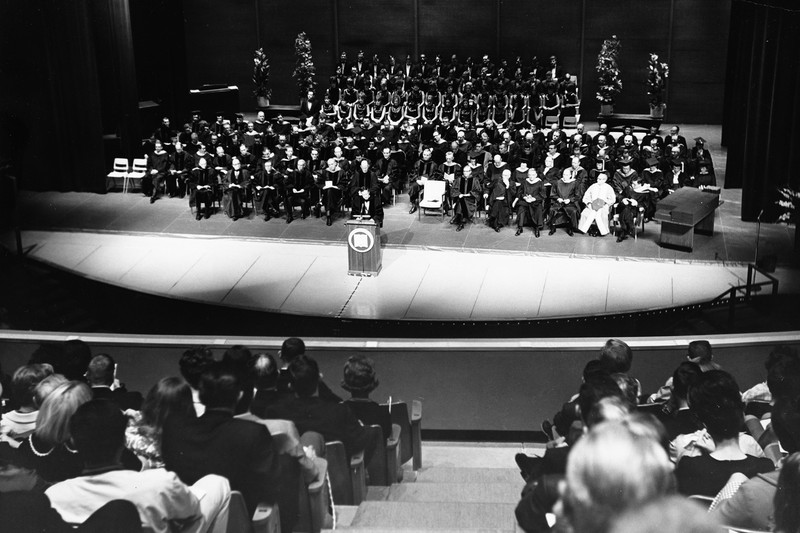
Something shifted this graduation season, and you can hear it in the boos.
Across US campuses, commencement speakers who reached for AI optimism got a sound they didn’t expect — full-throated, stadium-wide jeering from thousands of twenty-somethings in caps and gowns.
Eric Schmidt, the former Google CEO worth tens of billions, told 10,000 University of Arizona graduates that AI “will touch every profession, every classroom, every hospital, every laboratory, every person and every relationship you have.” The crowd answered with a wall of noise. “I know what many of you are feeling about that. I can hear you,” Schmidt said. The booing continued.
He wasn’t alone. Real estate executive Gloria Caulfield told University of Central Florida graduates that “the rise of artificial intelligence is the next industrial revolution” and got the same treatment. “What happened?” she asked, turning around, genuinely startled. Mmusic executive Scott Borchetta, speaking at Middle Tennessee State, pushed back harder: “Deal with it. … It’s a tool.” That went over about as well as you’d expect.
At Marquette, students actually petitioned to replace their speaker — Adobe’s Chris Duffey, an AI evangelist who “co-authored” a book with AI. The university kept him. Students booed anyway.
The backlash isn’t hard to decode. About 70% of college students see AI as a threat to their job prospects, according to a 2025 poll by the Institute of Politics at the Harvard Kennedy School. The unemployment rate for college graduates aged 22 to 27 sits at its highest level in 12 years. Gallup finds Gen Z anger about AI rising while excitement declines.
Sami Wargo, 21, graduated from Marquette having applied to roughly 30 jobs without landing one. Job listings say applicants must “collaborate with AI,” she told the AP, but “I don’t know what that means” — most of her classes banned the technology entirely. Her commencement, she said, took another “little dent in what was supposed to be a celebratory day.”
The irony these speakers couldn’t seem to grasp: these students spent four years caught between institutions that penalized AI use and a job market that demands it. Being told to embrace the technology from a stage, by billionaires and executives who built it, was never going to land as inspiration. It landed as a provocation.
The Class of 2026 has been negotiating AI since freshman year. What they don’t need, at the finish line, is a pep talk from the people who created the problem.
Sources
- Graduates are booing pep talks on AI at college commencements — Associated Press
- Ex-Google CEO Eric Schmidt booed after AI remarks at Arizona commencement — The Guardian
- Booing Commencement Speakers Over AI Is Becoming a Trend — New York Magazine
Discussion (6)