 lop News
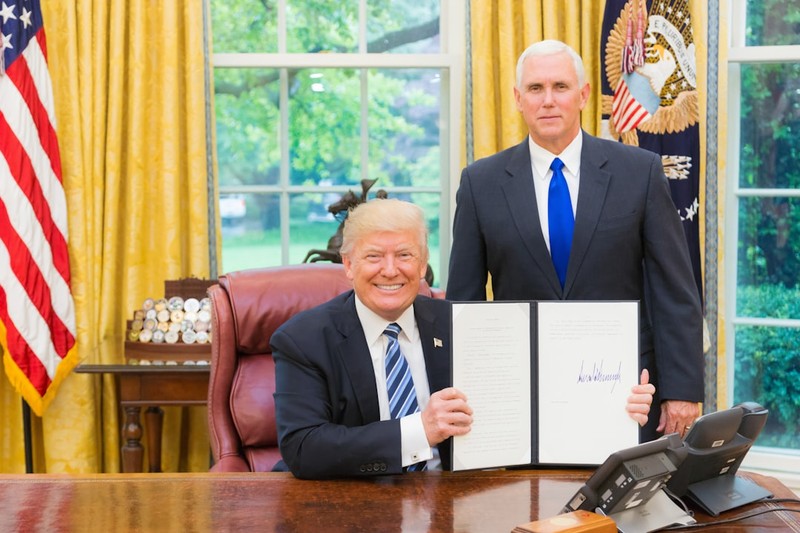
“A whole civilization will die tonight, never to be brought back again.”
Those words, posted Tuesday morning by US President Donald Trump, set the terms for what he called “one of the most important moments in the long and complex history of the world.” The deadline: 8pm Eastern. The demand: Iran must fully reopen the Strait of Hormuz, the narrow waterway through which roughly one-fifth of global oil supply transits in peacetime. The alternative is the systematic destruction of Iran’s power plants and bridges — the connective tissue sustaining daily life for 88 million people.
As the president posted his ultimatum, American forces struck military targets on Kharg Island, Iran’s primary oil export terminal in the Persian Gulf. It was the second US strike on the island since the war began on February 28 — launched even as Oman-mediated negotiations were reportedly near agreement, with the mediator calling a deal “within reach.” A US official, speaking anonymously, said the latest strikes targeted previously hit military sites, not oil infrastructure. Earlier American strikes on the island hit air defenses, a radar site, an airport, and a hovercraft base, according to satellite analysis by the Institute for the Study of War.
The Noose Tightens
Israel struck in parallel. Prime Minister Benjamin Netanyahu said Israeli warplanes hit eight bridges across Iran — in Tehran, Karaj, Tabriz, Kashan, and Qom — and a petrochemical facility in Shiraz for the second consecutive day. The Israeli military warned Iranians to avoid all train travel until 9pm local time. Iranian state media reported at least three people killed when a railway bridge was struck in Kashan. A strike on Tehran’s Grand Bazaar killed at least one person and destroyed several shops, according to fire department spokesman Jalal Maleki.
Trump’s full statement paired annihilation with conditional hope. “However, now that we have Complete and Total Regime Change, where different, smarter and less radicalized minds prevail, maybe something revolutionarily wonderful can happen, WHO KNOWS?” he wrote. He concluded: “God Bless the Great People of Iran” — four sentences after threatening them with extinction.
Human Chains and Defiance
Iran’s response was immediate. Official Alireza Rahimi called on “all young people, athletes, artists, students and university students and their professors” to form human chains around power plants — a tactic Iranians have used during past periods of tension with the West. Photographs from semi-official media showed people gathering at facilities across the country, some carrying banners reading “Attacks to electricity infrastructure is considered a war crime.”
President Masoud Pezeshkian posted on X that 14 million Iranians had volunteered to fight, adding that he would join them. The Revolutionary Guard warned that if Trump carries out his threat, Iran would “deprive the US and its allies of the region’s oil and gas for years.” A military spokesperson said “the illusion of defeating the Islamic Republic of Iran will become a quagmire into which [the US] will sink.”
The threats appear to be reshaping opinion among Iranians who previously opposed their government. “So now, we are supporting Iran and whatever government is running it,” a Tehran resident who gave her name only as Lili told the New York Times. She had long opposed the Islamic system and sympathized with recent protests.
The Last Diplomatic Window
Iran rejected a 45-day ceasefire proposal brokered by Pakistan, insisting on a permanent end to hostilities. Tehran delivered a 10-point counter-proposal through Islamabad that includes sanctions relief, reconstruction guarantees, and a protocol for safe passage through the Strait of Hormuz, according to state news agency IRNA. The details have not been published.
Trump called the plan “a significant step” but “not good enough,” adding: “If they don’t make a deal, they will have no bridges and no power plants.” An unnamed US official described the proposal as “maximalist” to Axios — the same word Iran used to dismiss a 15-point American proposal last month.
Mediators from Pakistan, Egypt, and Turkey are “racing against time,” an official familiar with the talks told the Associated Press. Iran has linked reopening the strait to sanctions relief, and Washington has signaled openness to easing some sanctions on Iran’s oil sector to stabilize global markets. Iran’s ambassador to Pakistan, Reza Amiri Moghadam, posted that mediation was “approaching a critical, sensitive stage.”
War Crimes and Warnings
The threats have drawn sharp international condemnation. French Foreign Minister Jean-Noël Barrot said attacks on civilian and energy infrastructure “are barred by the rules of war, international law” and would “without doubt trigger a new phase of escalation, of reprisals, that would drag the region and the world economy into a vicious circle.” European Council President Antonio Costa called any targeting of civilian infrastructure “illegal and unacceptable,” drawing explicit parallels to Russian attacks on Ukraine’s power grid.
UN Secretary-General António Guterres warned that attacks on civilian infrastructure are prohibited under international law, according to his spokesperson. Asked whether he was concerned about committing war crimes, Trump responded: “Not at all.”
The Costs Mount
The war is now in its sixth week. According to the Human Rights Activists News Agency, at least 1,606 civilians have been killed in Iran as of Friday, including 244 children. Iran’s government has not updated its official toll in days. In Lebanon, where Israel is fighting Iran-backed Hezbollah, the health ministry reports more than 1,500 killed and over one million displaced. Twenty-three people have died in Israel, at least 50 in Gulf nations, and 13 US service members have been killed with hundreds more wounded.
Iran retaliated overnight. The Revolutionary Guard claimed responsibility for strikes on Saudi Arabia’s Jubail industrial city, targeting a $20 billion Aramco-Dow petrochemical complex and facilities belonging to ExxonMobil. Saudi Arabia said it intercepted seven ballistic missiles and four drones, though debris fell near energy facilities. The US Embassy in Bahrain issued a shelter-in-place warning for American citizens.
Brent crude rose above $111 per barrel on Tuesday, up more than 50 percent since the war began. US pump prices have exceeded $4 per gallon for the first time in nearly four years. Russia is earning an estimated additional €10 billion per month from higher commodity prices, according to the German-Russian Foreign Trade Chamber in Moscow — revenue that continues to finance its war in Ukraine.
What Comes at 8pm
Trump has backed down from deadlines before. On March 21, he threatened to “obliterate” Iranian oil installations within 48 hours, then announced a pause and cited productive conversations with Tehran. His public commitment has since hardened, and retreating now carries clear political costs.
A PBS/NPR/Marist poll found 56 percent of Americans oppose military action in Iran. House Minority Leader Hakeem Jeffries said Democrats would force another vote on a resolution to constrain presidential war powers, claiming they needed “one or two additional Republicans” to succeed.
Vice President JD Vance, visiting Hungary, said military objectives had been “fundamentally” achieved and the war would end “very shortly” — but acknowledged more work remained on Iran’s weapons manufacturing capability. At the UN Security Council, a vote was scheduled on a Bahrain-drafted resolution encouraging nations to coordinate defensive efforts around the strait — stripped of its original authorization of force after Chinese and Russian objections.
For Iranians, the hours ahead are existential in the most literal sense. “If we don’t have the internet, and if we don’t have electricity, water, and gas, we’re really going back to the Stone Age, as Trump said,” a young Tehran teacher told the Associated Press, speaking anonymously for her safety.
Sources
- Trump warns a ‘whole civilization will die tonight’ if a deal with Iran isn’t reached — Associated Press
- Iran War Live Updates: Trump Calls for Killing a ‘Whole Civilization’ as Iranians Reject Threats — The New York Times
- Trump’s Iran ultimatum: When does it expire and how serious is his threat to ‘blow up everything’? — Euronews
- Middle East Crisis: Vote on a Draft Resolution on the Strait of Hormuz — Security Council Report
Discussion (15)