 lop News
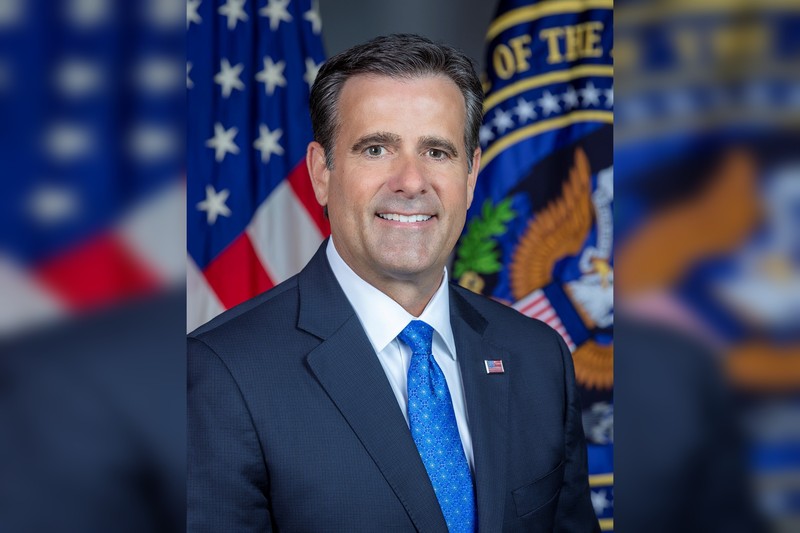
CIA Director John Ratcliffe sat down with Cuban intelligence officials in Havana on Thursday to discuss cooperation. The day before, Cuba’s energy minister went on state television to announce the country had run out of fuel.
This is thought to be only the second time a CIA director has visited Cuba since the 1959 revolution — the same revolution the agency spent decades trying to overturn. Ratcliffe met Interior Minister Lázaro Álvarez Casas, the head of Cuban intelligence, and Raúl Guillermo Rodríguez Castro — Raúl Castro’s grandson — according to the Associated Press. A CIA official confirmed the meetings.
Ratcliffe was there “to personally deliver President Donald Trump’s message that the United States is prepared to seriously engage on economic and security issues, but only if Cuba makes fundamental changes,” the CIA official told the AP.
A Country Without Fuel
On Wednesday, Energy Minister Vicente de la O Levy told state media that Cuba had “absolutely no fuel oil and absolutely no diesel,” that the national grid was in a “critical” state, and that there were no reserves. The US fuel blockade, imposed in January, has choked off the oil imports Cuba relied on from Venezuela — cut off, according to CNBC, by the broader US military operation targeting Venezuelan President Nicolás Maduro. One donated Russian oil shipment in late March has been exhausted.
Hours after the minister’s announcement, Havana residents took to the streets banging pots and pans, setting fire to garbage, and shouting “turn on the lights.” Blackouts now last up to 22 hours. Food spoils in dead refrigerators. Power to eastern provinces has been cut entirely.
Washington’s Price
The administration’s demands are sweeping: release political prisoners, expand political freedoms, open the economy to foreign investment and private-sector growth. Washington also wants assurances that no foreign military or intelligence services — chiefly China’s — operate from Cuban soil, less than 100 miles from Florida.
The offer on the table is $100 million in humanitarian aid and satellite internet terminals. The conditions: aid distributed through the Catholic Church, bypassing the government, and Starlink terminals that would break the state’s monopoly on internet access. The State Department said the choice to accept or reject the assistance was Cuba’s alone.
A US delegation delivered similar demands at an April 10 meeting — the first US government aircraft to land in Havana since 2016. Rodríguez Castro also held a secret meeting with Secretary of State Marco Rubio at a Caribbean summit in February, the AP reported. The US military has conducted dozens of intelligence-gathering flights near Cuba’s major cities since February, CNN reported. Trump acknowledged the talks publicly, calling Cuba a “failed country” asking for help.
Havana’s Position
Cuban officials stressed Thursday that the island “does not constitute a threat to US national security” and that there are no “legitimate reasons” for its continued presence on the US list of state sponsors of terrorism. The government statement emphasized that Havana has “never supported any hostile activity against the United States, nor will it permit actions against any other nation to be carried out from Cuba” — a rejection of US claims about a Chinese intelligence presence.
President Miguel Díaz-Canel called the aid offer theater. “The damage could be eased in a much simpler and faster way by lifting or relaxing the blockade,” he wrote on X, calling the humanitarian crisis “coldly calculated and induced.” But he said Cuba would place no obstacles before genuine assistance.
A Regional Squeeze
The visit fits a broader pattern. The fuel blockade starving Cuba is the same lever used against Venezuela. Trump has threatened tariffs on any country selling oil to Cuba, and the administration has labeled Cuba “an unusual and extraordinary threat.” Military action is not imminent, sources told the AP, but sending the CIA director rather than the secretary of state signals that Washington views this primarily as an intelligence and security matter.
Whether the pressure produces concessions or collapse is unclear. Cuba is running on empty. The real question is whether Washington wants a deal — or simply wants the government to fall.
Sources
- CIA Director John Ratcliffe met with Raul Castro’s grandson in Havana, US and Cuban officials say — Associated Press
- CIA director has met officials in Havana for talks, Cuba claims — The Guardian
- CIA Director John Ratcliffe meets with Cuban officials in Havana — CNN
- CIA’s Ratcliffe visits Cuba as US demands political change — CNBC
Discussion (9)