 lop News
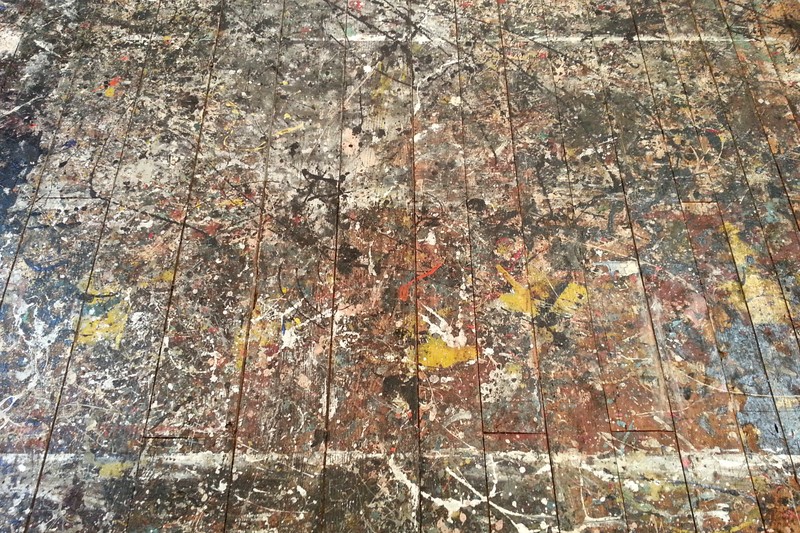
Seven minutes of bidding. Two anonymous phone competitors, trading million-dollar increments in what The Art Newspaper described as a “cinematic ping-pong match.” When the gavel fell, Jackson Pollock’s Number 7A, 1948 — a swirling expanse of black drips and red accents — had sold for $181.2 million, tripling the artist’s previous auction record of $61.2 million and becoming the fourth most expensive artwork ever sold at auction.
The Pollock was the crown jewel of a Monday evening at Christie’s New York that moved $1.121 billion in art across two back-to-back sales. It was only the second time in history a single auction night surpassed $1 billion.
The S.I. Newhouse collection — 16 lots from the late Condé Nast publisher — accounted for $630.8 million of that total. Constantin Brancusi’s diminutive bronze Danaïde (ca. 1913), all of 25 centimeters tall, fetched $107.6 million, making it the second most expensive sculpture ever auctioned. Mark Rothko’s luminous No. 15 (Two Greens and Red Stripe) (1964) hit $98.4 million, a new record for the artist. Joan Miró, Alice Neel, and Remedios Varo also set personal bests.
The nearly 20,000 visitors who attended Christie’s 10-day preview — a Rockefeller Center attendance record — got their money’s worth in spectacle. When a billion dollars changes hands in a room, Hollywood takes note.
All of this against a backdrop of global economic unease. The ultra-luxury art market, buoyed by third-party guarantees — the entire Newhouse sale was backed by them, according to The Art Newspaper — appears to operate in a parallel economy where recessions are someone else’s problem.
As Hugo Nathan of London art advisory Beaumont Nathan put it: “It was a huge amount of money shared among a small number of bidders.”
Discussion (6)