 lop News
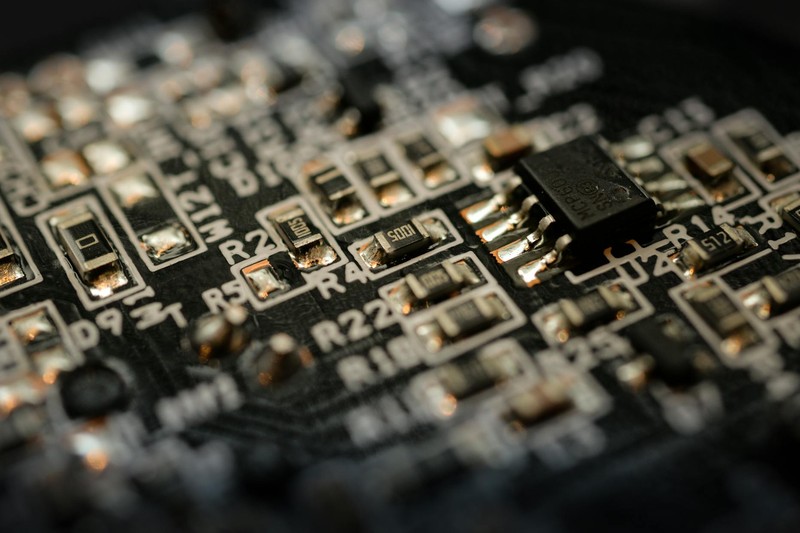
The company is China’s largest chipmaker. It has been under US sanctions since 2020. And according to two senior Trump administration officials, it has been supplying Iran’s military with semiconductor manufacturing equipment for roughly a year.
Semiconductor Manufacturing International Corp, or SMIC, began sending chipmaking tools to Iran’s military industrial complex about twelve months ago, the officials said Thursday. The collaboration “almost certainly included technical training on SMIC’s semiconductor technology.”
“We have no reason to believe that any of this has stopped,” one official added.
The officials spoke on condition of anonymity to discuss previously undisclosed US government information. They did not specify whether the equipment was of US origin — a detail that would determine whether the shipments violated American sanctions law.
The accusation arrives at a delicate moment. The United States and Israel launched a war against Iran on February 28, killing Supreme Leader Ayatollah Ali Khamenei in the opening strikes and targeting nuclear facilities, missile infrastructure, and military leadership across the country. The conflict has killed thousands, triggered a surge in oil prices, and drawn in Iran’s allies across the region.
China has publicly positioned itself as a neutral party. Foreign Minister Wang Yi this week called for all sides to “seize all opportunities to start peace talks as soon as possible.” Beijing maintains that its trade with Iran is normal commercial activity.
But the SMIC allegation suggests a different picture — one in which Chinese technology has been flowing to Iran’s military even as Washington has spent years trying to choke off exactly that kind of support.
A sanctioned company
SMIC was added to a US trade blacklist in December 2020 over alleged ties to the Chinese military. The designation restricts the company’s access to American exports, particularly advanced chipmaking equipment from suppliers like Lam Research, KLA, and Applied Materials.
The restrictions tightened further in 2024, when the Biden administration cut off SMIC’s most advanced factory from additional US imports after the company produced a sophisticated 7-nanometer chip for Huawei’s Mate 60 Pro smartphone — a technical achievement that surprised US officials and demonstrated China’s ability to advance despite sanctions.
SMIC has repeatedly denied connections to China’s military. The company did not respond to requests for comment on the new allegations. The Chinese Embassy in Washington and Iran’s mission to the United Nations also did not respond.
Pattern of support
The chipmaking equipment allegation fits a broader pattern of deepening military ties between Beijing and Tehran.
Last month, Reuters reported that Iran was close to finalizing a deal to purchase Chinese CM-302 supersonic anti-ship cruise missiles. Those negotiations accelerated after a 12-day war between Israel and Iran in June 2025 and entered their final stages last summer, according to six people familiar with the talks.
The CM-302 has a range of about 290 kilometers and is designed to evade shipborne defenses by flying low and fast. Military analysts described the potential transfer as a “gamechanger” that would significantly threaten US naval forces in the region.
The US Treasury Department has also sanctioned Chinese entities for supplying chemical precursors to Iran’s Islamic Revolutionary Guard Corps for use in its ballistic missile program — allegations Beijing has rejected.
What the chips could build
The officials did not detail what specific equipment SMIC provided or what Iran’s military might use it for. But the tools could theoretically support any electronics requiring semiconductors — from weapons guidance systems to communications equipment to the kind of sophisticated military hardware Iran has been deploying in its war with the US and Israel.
It was not immediately clear what role, if any, the chipmaking equipment has played in Iran’s military response to the ongoing conflict.
The Washington-Beijing friction
The allegation threatens to further strain relations between the world’s two largest economies at a moment when the US is simultaneously waging war against Iran and maintaining pressure on China’s semiconductor industry.
Washington has invested years in an effort to curtail China’s ability to produce advanced chips, arguing that the technology could enhance Beijing’s military capabilities. The SMIC sanctions are a cornerstone of that strategy.
If a company already under those restrictions has been supplying Iran’s military — during a war the US is fighting — the revelation could strengthen the hand of China hawks in Washington who argue that existing enforcement is inadequate.
For Beijing, the accusation creates a diplomatic problem. China has cultivated relationships across the Middle East and has framed itself as a constructive force for peace. Evidence that Chinese companies have been arming Iran’s military complicates that narrative and raises questions about whether Beijing can — or wants to — restrain its companies from supporting US adversaries.
The war shows no clear end in sight. President Trump said this week that “this war has been won,” though he offered little detail on what victory looks like. Israeli Prime Minister Benjamin Netanyahu has said the campaign will continue “as long as it is needed.”
How China navigates its relationship with Iran — and how Washington responds to companies like SMIC — may shape not just the outcome of this conflict, but the broader contest for influence between two powers that increasingly view each other as adversaries.
Discussion (9)