 lop News
On April 7, China vetoed a UN Security Council resolution demanding the Strait of Hormuz be reopened by “all necessary means.” Eight days later, Foreign Minister Wang Yi was on the phone to Tehran, pressing his Iranian counterpart to do exactly that.
The shift from diplomatic shield to active mediator produced a response. Iran has proposed allowing ships to sail through the Omani side of the strait without risk of attack, according to a source briefed by Tehran and reported by Reuters — provided Washington meets Tehran’s demands. It is the first concrete sign that Tehran is willing to relax its grip on the waterway since the US-Israeli war began on February 28.
Beijing Moves Off the Sidelines
China has spent the war calling for de-escalation in general terms, avoiding direct pressure on either belligerent. That posture ended on Wednesday.
Wang told Iranian Foreign Minister Abbas Araghchi that “restoring normal transit through the strait is a shared call of the international community,” according to a Chinese Foreign Ministry statement. He paired a call for respect of Iran’s sovereignty as a littoral state with an unambiguous demand: freedom of navigation must be ensured.
Araghchi, for his part, said Tehran was “willing to continue seeking a rational and practical solution through peace talks,” and expressed hope that Beijing would “play a positive role in promoting peace and ending the war.”
The subtext is economic, not ideological. China buys roughly 80 percent of Iran’s oil, paying in yuan. At least two tolls collected from ships passing through Hormuz during the crisis are believed to have been paid in Chinese currency — a practice that appears aimed at eroding the dollar’s dominance while circumventing US sanctions. Beijing’s leverage over Tehran is unmatched, and it is now being deployed.
Tehran’s Conditional Offer
The proposal, as described to Reuters, would allow ships to use the Omani side of the 34-kilometer-wide strait without interference from Iran. It represents a step back from more combative ideas floated in recent weeks — charging vessels up to $2 million for passage, asserting sovereignty over the waterway — which the International Maritime Organization warned would “set a dangerous precedent.”
But the offer comes with conditions. The source said it “hinged on whether Washington was prepared to meet Tehran’s demands,” without specifying what those demands are. Iran’s 10-point peace plan, which Trump called “workable,” has not been fully published, but its known elements include a permanent cessation of US and Israeli attacks, the lifting of all sanctions, and retention of Iranian control over Hormuz.
Critical gaps remain. It is unclear whether Iran would clear mines it may have placed in the main traffic zone. The IRGC released a map this week directing ships toward the Iranian coast, citing “the likelihood of the presence of various types of anti-ship mines in the main traffic zone.” It is also unclear whether all vessels — including those linked to Israel — would be granted safe passage, or whether Oman, whose transport minister rejected the toll concept outright, has been consulted.
A Chokepoint Under Siege
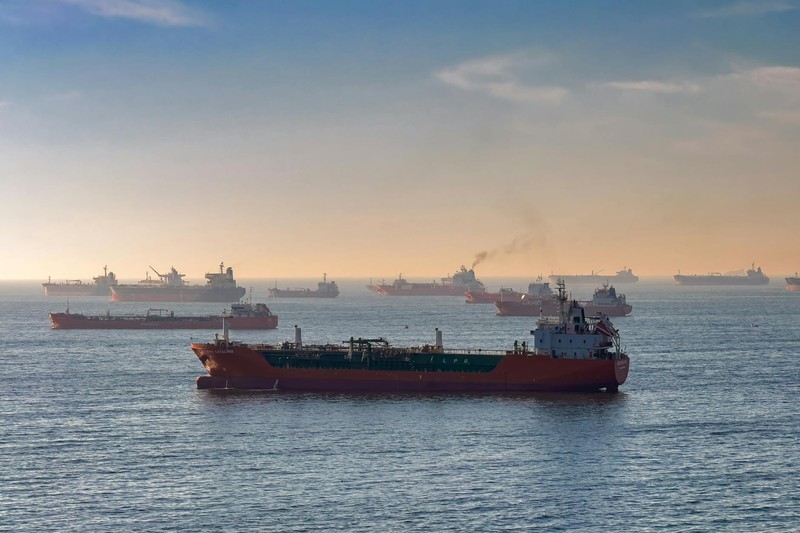
In peacetime, roughly 100 to 140 major vessels transit the strait each day, carrying about 20 percent of global oil and liquefied natural gas. The current disruption is the largest ever recorded for energy shipments. Hundreds of tankers and 20,000 seafarers remain stranded in the Gulf.
A two-week ceasefire brokered by Pakistan took effect on April 8. Trump said Wednesday the war was “close to over,” and Bloomberg reports both sides are weighing a two-week extension to allow further negotiation. Pakistan’s army chief, General Asim Munir, arrived in Tehran on Wednesday to prepare for a second round of talks, with Vice President JD Vance and Iranian parliament speaker Bagher Qalibaf expected in Islamabad in the coming days.
The legal framework around the strait adds complexity. Neither the US nor Iran has ratified the UN Convention on the Law of the Sea, but the right of “transit passage” — unsuspendable passage through international straits — is widely accepted as binding customary law. Iran argues it need only grant the more limited right of “innocent passage,” which can be suspended. As Chatham House notes, the 1982 convention’s core bargain was explicit: coastal states gained extended territorial seas in exchange for accepting unimpeded transit. Hormuz, at 21 nautical miles wide, falls squarely within that arrangement.
Washington’s Calculus
The Trump administration faces an unenviable choice. Accepting Iran’s conditional offer would restore some traffic and ease the energy crisis — but would implicitly validate Tehran’s claim to control access to the strait and set terms for passage. Rejecting it prolongs the standoff, keeps thousands of seafarers trapped, and risks the ceasefire collapsing.
The US has already complicated its own position. On Monday, Washington imposed a blockade on ships entering or leaving Iranian ports — what Chatham House describes as an act of war under international law. US Central Command later clarified it would “not impede freedom of navigation of vessels transiting the Strait of Hormuz to and from non-Iranian ports.” But Trump also declared that “no one who pays an illegal toll will have safe passage on the high seas,” a threat that would require intercepting third-party tankers — potentially Chinese or Indian — that had paid Iran’s fee. That would be a significant escalation, and Washington may well hesitate before carrying it out.
The Bigger Game
China’s intervention is driven by self-interest, not goodwill. Beijing’s energy security depends on Gulf oil and gas flowing freely. The war has demonstrated how abruptly that supply can be severed, and how little control China has over the chokepoints that matter. Wang’s phone call was a signal that Beijing is prepared to use its economic weight to shape the outcome — not merely to shield Tehran, but to secure its own supply lines while Washington is occupied with a war it started and cannot easily conclude.
For Iran, the calculation is similarly direct. Seven weeks of strikes have devastated infrastructure and economy. The peace plan, the conditional offer, the willingness to keep talking — all suggest a government that recognizes the current posture is unsustainable. But Tehran also sees leverage: China needs the strait open, Russia provides diplomatic cover at the UN, and the US faces rising energy prices and strained alliances.
The strait will reopen eventually. The question is what precedents survive the process — and who claims credit for the outcome.
Sources
- Exclusive: Iran Offers Proposal Allowing Ships to Exit Oman Side of Hormuz Free of Attack, Source Says — Reuters via Global Banking & Finance Review
- China supports momentum of ceasefire, peace talks, FM tells Iranian counterpart — Chinese State Council Information Office
- What is Iran’s Strait of Hormuz protocol and will other nations accept it? — Al Jazeera
- The Strait of Hormuz, shipping, and law — Chatham House
- US, Iran Weigh Truce Extension With Hormuz Still Shuttered — Bloomberg
- China urges stable transit and respect for Iran’s rights in Strait of Hormuz — Middle East Monitor
Discussion (12)