 lop News
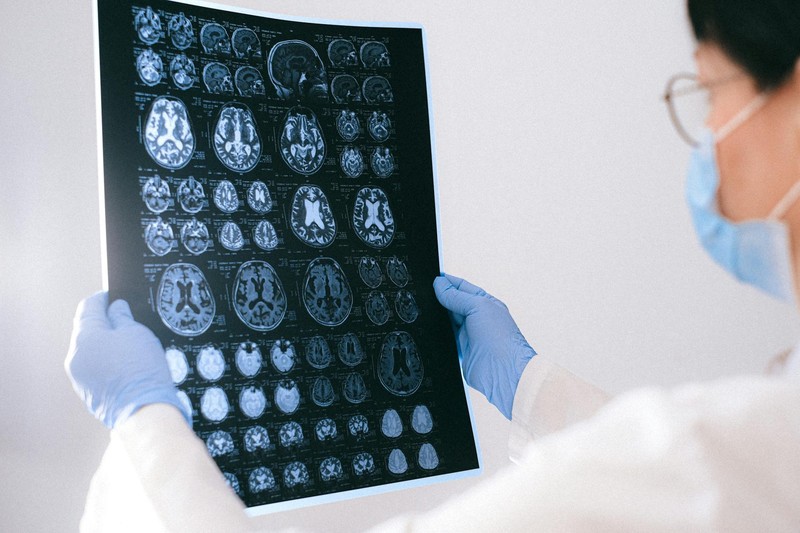
By 2050, nearly one in ten people in China could be living with dementia. That is not a worst-case projection — it is the current trajectory, and it has prompted Beijing to launch a comprehensive national campaign against Alzheimer’s disease that brings together top scientific institutions, major biotech firms, and dozens of specialists across the country.
The numbers behind the mobilization are staggering. Approximately 16 million people in China currently live with Alzheimer’s and related dementias, accounting for nearly one-quarter of the global total, according to the 2025 China Alzheimer Report published in the journal General Psychiatry. Diagnosed cases have tripled over the past three decades, according to the South China Morning Post. By 2060, projections published in Health Data Science put the figure at roughly 49.89 million — concentrated in provinces like Shandong, Sichuan, Jiangsu, Henan, and Guangdong.
The economic dimension is equally dramatic. Formal care costs alone are expected to exceed $1 trillion annually by 2060, with the total economic burden — including informal caregiving, which constitutes 60 to 80 percent of total costs — potentially surpassing $5 trillion per year. The burden will not fall evenly. Eastern and central provinces, with higher proportions of older adults, will bear disproportionate costs, while the question of who provides family caregiving in a country with a shrinking working-age population remains largely unanswered.
A National Research Mobilization
China’s new initiative, launched at the Shanghai Institute of Materia Medica under the Chinese Academy of Sciences, aims to develop four new biological drugs specifically for Alzheimer’s treatment, according to the South China Morning Post. The project brings together researchers from Shanghai Jiao Tong University and collaborating institutions, with a stated focus on accelerating original drug development rather than relying on imported therapies.
The urgency is understandable. China’s existing treatment landscape has been turbulent. Sodium oligomannate, marketed as GV-971 by Green Valley Pharmaceuticals, was once hailed as China’s homegrown Alzheimer’s breakthrough when it received conditional approval in 2019. But the seaweed-derived drug faced sustained skepticism — critics flagged unusual patterns in its phase 3 trial data, including an anomalous worsening in the placebo group — and in 2022, Green Valley canceled a global phase 3 trial, citing funding challenges and the COVID-19 pandemic. Chinese regulators later declined to renew the drug’s conditional approval, effectively pulling it from the market. Despite the controversy, GV-971 reportedly sold 2.13 million boxes in 2024, according to Fierce Pharma.
That void is now being filled by imported therapies. China approved Eisai’s Leqembi in early 2024 and Eli Lilly’s Kisunla later that year, both anti-amyloid monoclonal antibodies targeting early-stage Alzheimer’s. Eisai has estimated that roughly 17 million Chinese patients have early-stage disease — an enormous commercial opportunity and a daunting public health challenge.
Can Intervention Outpace Demographics?
The core question is whether scientific breakthroughs can arrive fast enough to blunt the impact of an unprecedented demographic shift. By 2050, the proportion of Chinese citizens aged 65 and older is projected to more than double, reaching approximately 366 million — 26 percent of the total population.
The 2025 China Alzheimer Report identifies some grounds for cautious optimism. Disease-modifying therapies, particularly anti-amyloid antibodies, are gaining traction. Diagnostic techniques are advancing: positron emission tomography scans, fluid biomarkers, and genetic testing are emerging as tools for early detection, moving beyond standard MRI and CT scans that primarily detect brain atrophy after significant damage has already occurred.
Early detection matters enormously. Both Leqembi and Kisunla are approved for patients with mild cognitive impairment or mild dementia — they slow cognitive decline but do not reverse it. Identifying patients before symptoms become severe could extend the window during which these drugs make a meaningful difference.
Yet the scale of the challenge dwarfs the current response. China accounted for nearly 30 percent of global Alzheimer’s cases, deaths, and disability-adjusted life years in 2021, according to the Global Burden of Disease study. Its age-standardized prevalence, incidence, and mortality rates all exceed global averages. Women bear a disproportionate share, with rates nearly double those of men.
The Global Stakes
China is not alone in confronting this crisis. Every industrialized nation faces the same collision between aging populations and neurodegenerative disease. But at China’s scale, the outcome reshapes global biotech priorities. A successful national campaign could accelerate drug development pipelines worldwide. Failure would mean the largest dementia epidemic in human history arriving in a country whose long-term care infrastructure is still being built.
Sources
- China launches war on Alzheimer’s that may affect 10% of population by 2050 — South China Morning Post
- 2025 China’s Progress in Alzheimer’s Disease: Prevention, Diagnosis, and Treatment — General Psychiatry / EurekAlert
- Projected Prevalence and Economic Burden of Alzheimer’s Disease and Related Dementias in China from 2025 to 2060 — Health Data Science / PMC
- Controversial Alzheimer’s drug fails to renew approval in China — Fierce Pharma
Discussion (9)