 lop News
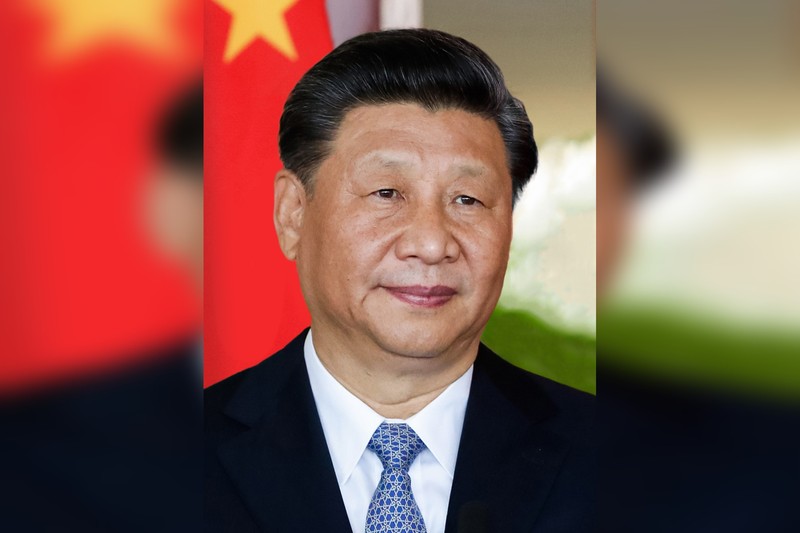
Three numbers frame the power dynamic when Air Force One touches down in Beijing next week. China’s total exports surged 14.1 percent in April, according to customs data released Saturday. Its bilateral trade surplus with the United States stands at $87.7 billion for the first four months of 2026. And mainland China has dropped to fourth among contributors to the US goods trade deficit — its lowest ranking since joining the World Trade Organization in 2001.
The paradox is the point. China’s trade machine is accelerating even as direct commerce between the two superpowers contracts. Beijing enters the summit from a position of demonstrable economic strength. Washington arrives with a tariff strategy that has rerouted supply chains without reducing American dependence on Chinese-made goods.
The Export Machine Beyond America
The 14.1 percent overall export growth, reported by the Financial Times from Saturday’s customs data release, reflects a Chinese economy that has found buyers well beyond American shores. While direct exports to the US fell 10.2 percent year on year in the January-to-April period, total exports kept climbing — evidence that new markets have absorbed the slack with room to spare.
The surge has persisted despite the ongoing war in the Middle East, which has disrupted global shipping and driven up freight costs across major trade routes. China’s export volumes have continued to grow through the disruption — a signal of supply chain depth and logistics adaptability that Western economies have struggled to match. For the officials gathering in Beijing, the message is difficult to ignore: the Chinese trade machine bends but does not break.
The implication for next week’s summit is straightforward. Xi Jinping does not arrive at the negotiating table needing American market access the way he once did.
The Bilateral Squeeze
The direct US-China trade numbers paint a picture of two economies pulling apart, slowly. China’s merchandise exports to the US fell to $133.4 billion in the first four months of 2026, according to data from the General Administration of Customs. Imports from the US declined 10.9 percent to $45.8 billion over the same period.
But April bucked the trend. Shipments to the US climbed 11.3 percent year on year to $36.8 billion, while imports from the US rose 9 percent to $13.7 billion. China’s bilateral trade surplus for April alone hit $23.1 billion — up from $16.8 billion in March.
The monthly bounce suggests that whatever structural forces are pulling the two economies apart, commercial gravity keeps pulling them back. Companies on both sides of the Pacific still need each other, whatever their governments might prefer.
Diversification, Not Decoupling
Analysts caution against reading the bilateral decline as evidence of genuine economic separation.
“Supply chains are diversifying, not decoupling,” said Alicia Garcia-Herrero, chief economist for Asia-Pacific at Natixis. “The US remains reliant on Chinese intermediate inputs in electronics, auto parts and critical minerals.”
Some of those goods reach American consumers through third markets — transshipped via Vietnam, Mexico, or Taiwan, which now rank above China in the US trade deficit. The chains are longer and more complex. They are not severed.
This distinction cuts to the heart of the summit’s stakes. Trump’s tariff strategy has reduced direct bilateral trade. It has not reduced American consumption of Chinese-manufactured components. It has simply added steps — and intermediary profits — to the journey from Chinese factory floors to American store shelves.
What Each Side Walks In With
The summit’s outcome will hinge less on what each leader wants than on what each can credibly demand.
Xi arrives with an economy that has demonstrated it can grow exports even as its largest single-market customer raises barriers. The April data gives Beijing hard evidence that its diversification strategy is working. China’s broader diplomatic play — positioning itself as the stable, reasonable actor in great-power competition — gains credibility when the export numbers cooperate.
Trump arrives having achieved a real shift: China’s lowest ranking in the US trade deficit since it joined the WTO. That is a talking point he will use. But it reflects rerouting, not replacement. The deficit has moved geographically. It has not materially shrunk.
Neither side has signalled willingness to make fundamental concessions on core interests. The gap between what Washington demands and what Beijing will offer remains wide.
The Power Gap
Summits between heads of state are shaped as much by domestic politics as by trade data. Trump heads to Beijing navigating the fallout from the Iran war, setbacks in federal courts on his tariff authorities, and poll numbers that have been sliding for months.
Those pressures are not lost in Zhongnanhai.
“There’s no question that weakness on the domestic front puts a president in a precarious position on the global stage, especially when dealing with a leader like Xi Jinping,” said Brett Bruen, a former White House global engagement director. “He not only senses that weakness but works to exploit it.”
“China has been trying to position itself as the more reasonable actor among global superpowers,” Bruen added. “So this is a prime moment for him to both try and manipulate and outmanoeuvre the other.”
Trump has never been a president who leans heavily on briefing books, preferring instinct over preparatory memoranda. Power dynamics, however, are something he reads with precision — even when he declines to acknowledge them publicly.
Why This Meeting Matters Beyond Beijing
No single summit will resolve the structural tensions between the United States and China. The rivalry spans technology, military posture, and fundamentally different visions for how the global economy should be governed. A grand bargain was never realistic.
But the framing carries weight well beyond the negotiating room. Governments across Southeast Asia, Africa, and Latin America are watching to see which superpower offers a more predictable economic partnership. If Xi emerges projecting strength and composure while Trump appears reactive and cornered, the narrative shift will ripple through trade negotiations worldwide.
The 14.1 percent export surge is more than a monthly data point. It is Beijing’s opening argument — evidence that China’s economy can absorb American tariffs, Middle Eastern conflict, and global uncertainty simultaneously, and still accelerate.
Trump must now decide whether to escalate a trade war that is not delivering what he promised, or to negotiate from a position he would rather not name.
The summit begins next week. The numbers are already in.
Sources
- China’s exports jump 14% ahead of Xi Jinping-Donald Trump summit — Financial Times
Discussion (15)