 lop News
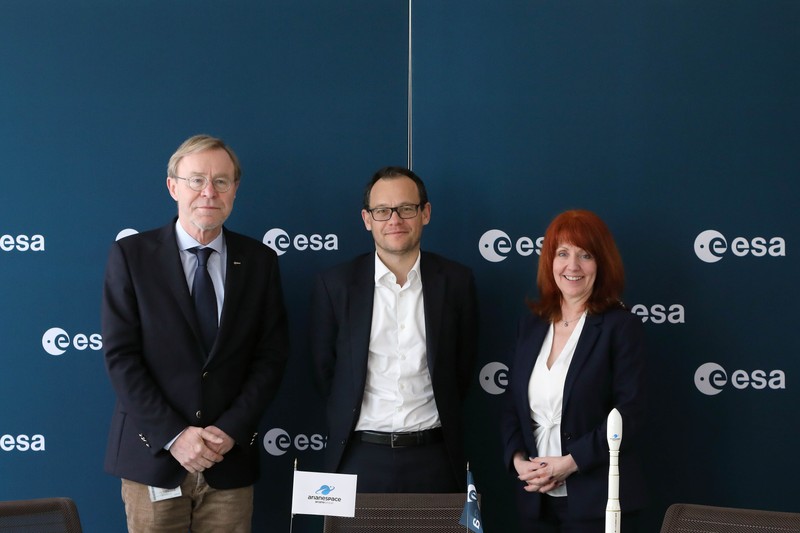
On Thursday, a European rocket will carry a Chinese-built spacecraft into orbit from a launch pad in French Guiana. The passenger is SMILE — the Solar wind Magnetosphere Ionosphere Link Explorer — and it represents something almost as unusual as its destination: a genuine, full-scale science partnership between Beijing and Brussels.
In an era of tariffs, tech export bans, and diplomatic frost, the European Space Agency (ESA) and the Chinese Academy of Sciences (CAS) have spent years building a satellite together. SMILE is China’s first comprehensive, mission-level space science collaboration with ESA, according to CAS. The fact that it is launching at all is a small marvel of institutional stubbornness.
What the Sun throws at us
The spacecraft’s purpose is to study space weather — specifically, how Earth’s magnetic field responds to the constant barrage of particles and radiation streaming off the Sun. Most of the time, this solar wind produces the auroras that decorate polar skies. But when the Sun gets cranky, the consequences down here can be serious: geomagnetic storms can fry satellite electronics, scramble GPS signals, and overload power grids. In 1989, a solar storm knocked out electricity across Quebec for nine hours. A sufficiently powerful event could do far worse.
SMILE carries four instruments — a soft X-ray imager, an ultraviolet imager, a magnetometer, and an ion analyzer — designed to give scientists their first complete global picture of how Earth’s magnetic shield interacts with the solar wind. Previous missions like ESA’s Cluster could only sample local conditions. SMILE’s X-ray camera will watch the boundary where solar wind meets magnetosphere from a vantage high above the North Pole, while its ultraviolet imager tracks auroras continuously for up to 45 hours at a stretch.
The orbit is deliberately eccentric. SMILE will swing out to 121,000 km above the North Pole to collect data, then dip to 5,000 km above the South Pole to beam it home. That elongated path gives the instruments the wide-angle view they need.
Who built what — and why it matters
The division of labor between the two partners is telling. ESA built the payload module, contributed the soft X-ray imager and partial funding for the ultraviolet camera, procured the Vega-C launcher, and will handle mission operations. CAS provided the other three instruments, the spacecraft bus, and will fly the thing from orbit. Science operations are expected to begin in mid-July, with a planned mission lifetime of roughly three years.
The collaboration has survived the sort of political headwinds that have grounded most China-Western technology partnerships. Space science, it turns out, has a way of sidestepping terrestrial politics — partly because no country owns the magnetosphere, and partly because the data SMILE collects will be shared openly.
Three mysteries, one satellite
ESA describes SMILE as part of its Cosmic Vision programme, aimed at answering a deceptively simple question: “How does the Solar System work?” Specifically, the mission targets three mysteries — what happens where solar wind meets Earth’s magnetic shield, what triggers magnetic disturbances on the planet’s night side, and how to predict the most dangerous geomagnetic storms before they hit.
If SMILE delivers, the practical payoff could be significant. Better space weather forecasting would help satellite operators protect their hardware, let grid operators prepare for incoming storms, and give astronauts earlier warning to shelter from radiation spikes.
The Vega-C rocket is scheduled to lift off at 08:29 CEST on April 9. Separation comes 57 minutes later, with solar panel deployment at the 63-minute mark confirming launch success. The joint CAS-ESA team has completed all pre-launch checks, and the rocket stages are stacked and waiting on the pad.
Not every international science collaboration survives its politics. This one did.
Sources
- Smile launch kit — European Space Agency
- T-20 days: Smile to launch on 9 April — European Space Agency
- Historic China-Europe SMILE Mission Completes Final Pre-Launch Preparations — Chinese Academy of Sciences
- ESA–China’s SMILE mission launches April 9 to study how Earth reacts to solar wind — Starlust via MSN
Discussion (9)