 lop News
No space agency has ever answered the most basic question about living off-Earth: can the species actually reproduce out there? China is now trying to find out.
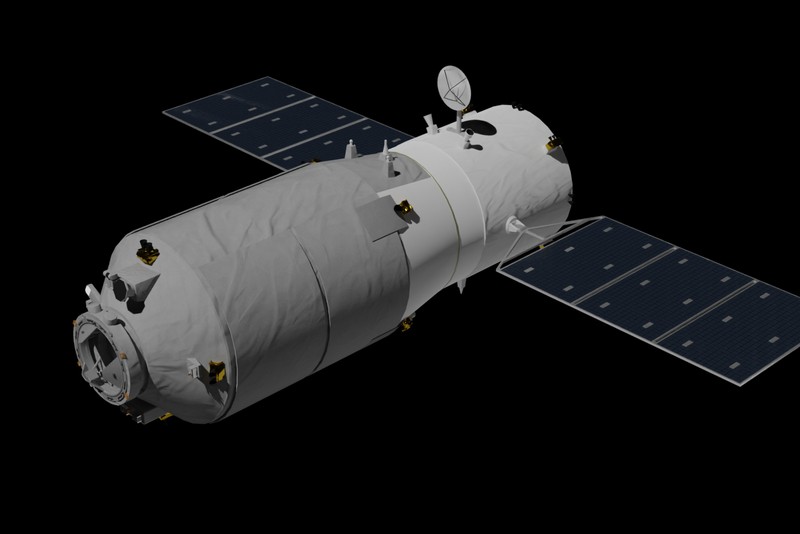
On Sunday, the Tianzhou-10 cargo spacecraft carried artificial human embryos to China’s Tiangong space station — what scientists describe as the first space-based experiment of its kind. The embryos are stem cell-derived structures that resemble early-stage human development but cannot grow into living individuals, making them a research proxy for actual human embryos.
The experiment targets a critical window: days 14 to 21 after fertilization, when the blueprint for major organs begins to take shape. Over five days aboard Tiangong, automated systems will maintain growth conditions before the samples are frozen and returned to Earth for analysis.
Project leader Yu Leqian, a professor at the Chinese Academy of Sciences’ State Key Laboratory of Stem Cell and Reproductive Biology, told state broadcaster CCTV the goal is straightforward. “This is our first attempt to understand whether microgravity affects early development,” he said. Once scientists grasp gravity’s role — or its absence — they could develop interventions to compensate.
The cargo also carries zebrafish and mouse embryos, according to China Daily, establishing a research chain from lower vertebrates to mammals.
Yu framed the stakes plainly: “This is our first attempt to answer [the questions]: Can humans survive and reproduce in space? I hope the answer is yes.”
That question has hovered over every serious proposal for lunar bases and Mars colonies. If early development breaks down without Earth’s gravity, the timeline for permanent off-world settlement stretches from ambitious to speculative. A five-day experiment with embryo-like structures won’t settle the matter — but it is, for the first time, a genuine start.
Sources
- China sends embryos into orbit to find out if humans can have babies in space — South China Morning Post
- China launches space experiment on artificial embryos — ECNS (China News Service)
- Cargo spacecraft to help advance space research — China Daily
Discussion (6)