 lop News
PIMCO’s Commodity Alpha Fund: down more than 20% this year. Citadel shed roughly $1 billion from its fixed-income and macro trading business, and its flagship Wellington fund was down 2% at the start of March. Balyasny: down 3.5%, then fired two senior energy traders. ExodusPoint: wiped out all of its year-to-date gains in a single week.
These are not the marks of amateurs caught off guard. These are the volatility professionals — firms whose entire business model rests on the proposition that when markets go haywire, they profit. The Iran war broke that proposition.
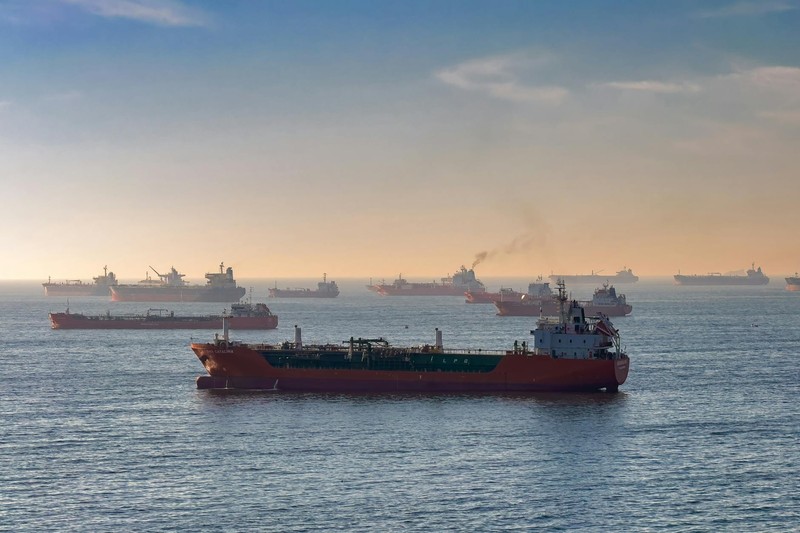
Commodity traders lost billions in the early days of the conflict as energy prices surged past the limits their risk models were built to accommodate. The US-Israeli strikes that began February 28 effectively shut the Strait of Hormuz, choking off roughly 10 million barrels of daily oil supply — a fifth of global consumption — in what Bloomberg data shows was the largest quarterly energy price swing since 1990.
Built for Ripples, Hit by a Tsunami
The problem was speed and scale. Brent crude registered its steepest one-month gain on record. Physical cargoes in the North Sea jumped $13 in a single day to $141, the highest since 2008, according to traders who spoke to The Guardian. Futures prices paradoxically lagged behind — a disconnection that Amrita Sen, founder of Energy Aspects, told CNBC was “almost giving a false sense of security that things are not that stressed … masking the true tightness that everywhere else is showing up.”
That false security was lethal for relative-value strategies betting that price relationships would stay within predictable bands. PIMCO’s Commodity Alpha Fund, a relative-value vehicle running for over a decade, was among the hardest hit. Brevan Howard’s Master fund dropped 2.4% and its Alpha Strategies fund 1.7% through the first week of March, according to Business Insider. Taula Capital, managing $7 billion, fell more than 3%.
A trading analyst at a major European energy company told The Guardian that a colleague who shorted oil before the strikes — betting on continued oversupply — “lost millions.” The consensus he was following wasn’t unreasonable: as recently as September, analysts polled by Reuters expected a 1.63 million barrel-per-day surplus for 2026. By April, that forecast had flipped to a 750,000 barrel-per-day deficit.
The Billions Beyond the Trading Floor
The damage radiates well past hedge fund returns. Oxford Economics now expects more than two-thirds of commodities to record price increases in 2026. Fertiliser prices are projected to rise nearly 20% year-on-year in the second quarter, hitting at the worst possible moment in the planting season. Global food prices are forecast to climb around 6% this year, with effects expected to persist into subsequent harvests.
Shipping costs have surged nearly fourfold. Aframax tanker spot rates, typically below $40,000 per day, exploded in March, according to Bloomberg data. Copper fell as growth expectations were slashed. Aluminium rose toward record levels near $3,450 per tonne, driven both by Gulf production disruptions and soaring energy costs. The commodity complex, Oxford Economics concluded, is no longer driven primarily by gradual changes in supply and demand, but by “discrete shocks and their transmission across sectors.”
The House Always Wins
Not everyone was burned. Pierre Andurand, the veteran commodities investor, gained 6% to start March. D.E. Shaw’s Oculus strategy rose 2.2%. Jain Global, a struggling new launch, managed to edge positive while larger competitors bled.
The contrast with the major investment banks is instructive. While specialist commodity traders were punished for mispricing the very risk they claim to understand, the big banks — which primarily collect fees and spreads on client flows rather than taking directional bets — are typically positioned to benefit from increased client activity during periods of extreme market chaos. When volatility reaches these extremes, the intermediaries win regardless of which side of a trade blows up.
As of this week, a ceasefire has been announced, but 136 million barrels of crude oil and products remain stuck in the Gulf, according to Macquarie strategist Vikas Dwivedi. Iran is reportedly planning transit fees for ships passing through the Strait of Hormuz. Restoration of normal flows could take months. The risk models will need to be rebuilt — assuming the next shock bears any resemblance to the last one.
Sources
- Brevan Howard, Taula, PIMCO Lose Money During Market Turbulence — Business Insider
- It’s all fear and headlines: energy traders race to keep pace with volatile oil markets — The Guardian
- What the US-Iran war means for commodity markets and portfolios — Bloomberg Professional Services
- Oil whiplash: Iran war shock to flip market to deficit in 2026, analysts say — Reuters via Investing.com
- How the Iran war is reshaping commodity markets in 2026 — Oxford Economics
Discussion (9)