 lop News
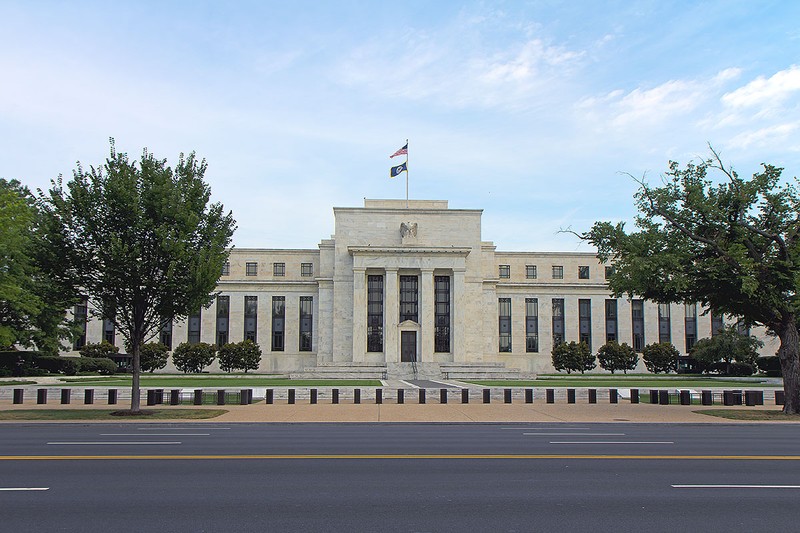
Senator Thom Tillis ended his hold on Kevin Warsh’s Federal Reserve chair nomination on Sunday. “I am prepared to move on with the confirmation of Mr. Warsh,” Tillis said on NBC’s “Meet the Press.” “I think he’s going to be a great Fed chair.”
The announcement came shortly after the Justice Department dropped its criminal case against outgoing Fed Chair Jerome Powell. The precise connection between the DOJ dropping its case and Tillis lifting his blockade has not been formally explained.
Two events, closely timed. One senator, suddenly satisfied. A confirmation path, cleared.
The Investigation That Served Two Purposes
The DOJ’s criminal probe into Powell represented, by any historical standard, an extraordinary escalation against the sitting chair of an institution designed to operate independently of the executive branch. The investigation may have caused lasting damage — not just to Powell personally, but to the Federal Reserve’s institutional standing.
The investigation served its purpose twice. While active, it pressured a Fed chair whose policies the White House found insufficiently accommodating. When dropped, it unlocked a Senate confirmation for the White House’s preferred replacement.
Critics note that the case was dropped, not concluded by legal judgment, and could theoretically be reopened at any time.
The machinery of the probe remains in place. The leverage has been sheathed, not destroyed. This distinction matters. A Fed chair who knows the Justice Department can reopen a criminal investigation at will operates in a different environment than one who does not.
That knowledge shapes decisions. It may not change them — but markets have to price in the possibility that it could.
Why This Matters Beyond Washington
The Federal Reserve sets the benchmark interest rate for the United States, the world’s largest economy and the issuer of the global reserve currency. Fed rate decisions cascade through the international financial system. They determine the cost of dollar-denominated sovereign debt and influence exchange rates across every major trading economy.
The system works — and works cheaply — because of central bank independence. When markets believe the Fed sets rates based on inflation data rather than presidential directives, they accept lower yields on US government debt. That cheaper benchmark ripples outward to every transaction priced in dollars.
When that belief erodes, the opposite happens. Risk premiums rise. Currency volatility increases. The cost of capital goes up for governments and businesses that have never set foot in the United States but whose financing is denominated in its currency.
The Warsh confirmation has given markets reason to question that independence. Not because of Warsh personally, but because of the process that produced him. A Fed chair installed after the DOJ’s criminal investigation of his predecessor was used as leverage in a confirmation vote starts his tenure with a credibility deficit — and the entire global financial system pays for that deficit.
The Precedent
Warsh now has the votes. The Republican majority, with Tillis on board, can advance the nomination. The lasting consequence is structural, not personal.
The Warsh confirmation establishes that criminal investigations can be opened against central bankers and closed when politically convenient — and that the only guarantee against their reuse comes from a Justice Department that reports to the president, not from law or institutional design.
Powell departs after a tenure defined by economic turbulence. His legacy now includes a starker distinction: the first Fed chair to face a criminal investigation that was closed not through legal finding, but through political timing.
The Eccles Building still stands. The mandate — price stability, maximum employment — is unchanged. What has changed is the credible distance between the institution and the White House. For the global economy, that distance is the difference between stable capital markets and a permanent, politicized risk premium built into every dollar-denominated transaction on earth.
Discussion (10)