 lop News
The diplomatic channel ran through Islamabad. It came back with an answer Donald Trump didn’t want to hear.
Iran’s response to the latest US ceasefire proposal — delivered via Pakistani mediators on Sunday — offered to dilute some of its highly enriched uranium and transfer the rest to a third country, provided it could be returned if talks collapsed. Tehran refused to dismantle its enrichment facilities or permanently surrender its stockpile.
Within hours, Trump posted on Truth Social: “I don’t like it — TOTALLY UNACCEPTABLE!”
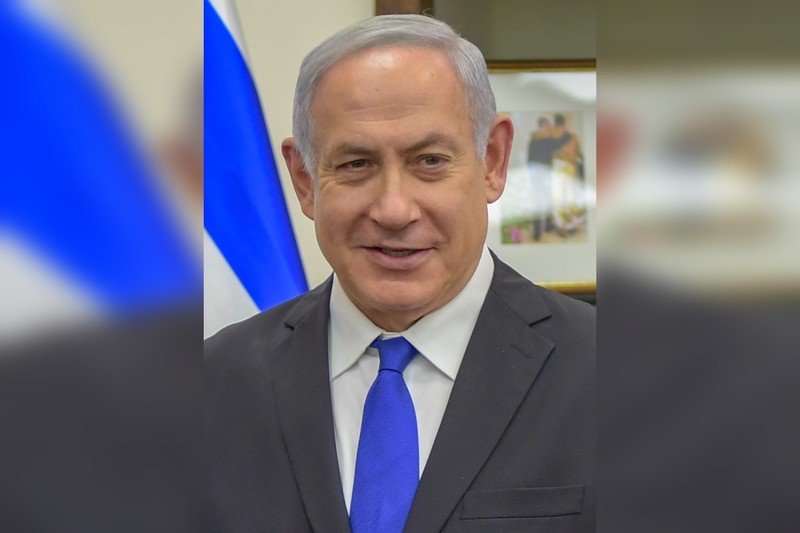
By Sunday evening, Benjamin Netanyahu was on CBS’s 60 Minutes, raising the price further. The war, the Israeli prime minister told correspondent Major Garrett, is “not over” — not while an estimated 970 pounds of near-bomb-grade uranium remains inside Iran.
“You go in, and you take it out,” Netanyahu said.
What Iran Offered — And Withheld
Iran’s counterproposal, described to the Wall Street Journal by people familiar with its contents, ran several pages. The core terms: an end to fighting on all fronts, a lifting of US sanctions on Iranian oil sales within 30 days, an end to the American naval blockade of Iranian ports, and a gradual reopening of the Strait of Hormuz.
On the nuclear question — the stated reason for the war — Tehran offered a partial concession. Some highly enriched uranium would be diluted. The rest would go to a third country, with a guarantee of return if Washington abandoned the deal.
What Iran explicitly refused: dismantling its enrichment facilities or permanently giving up its stockpile.
Iran’s semi-official Tasnim news agency confirmed the proposal was transmitted through Pakistani mediators. The gap between what Tehran offered in private and what its officials have declared in public is itself a signal: Iran will bargain over quantities of uranium, but not over the principle that it retains the right to enrich.
Netanyahu Moves the Goalposts
If Trump’s rejection was swift, Netanyahu’s 60 Minutes appearance was designed to foreclose compromise.
“There’s still nuclear material — enriched uranium — that has to be taken out of Iran,” he said. “There’s still enrichment sites that have to be dismantled. There’s still proxies that Iran supports. There are ballistic missiles that they still want to produce.”
Pressed on how the uranium would actually be removed, Netanyahu was blunt: “You go in, and you take it out.” He declined to discuss military options or offer a timetable, saying only that uranium removal is “a terrifically important mission.”
The distance between Netanyahu’s stated requirements and Iran’s offered terms is roughly the distance between disarmament and a temporary custody arrangement. There is no overlap.
Trump, separately, described a more modest posture. Iran was “militarily defeated,” he told journalist Sharyl Attkisson in an interview aired the same day. The uranium was under surveillance and could be retrieved “whenever we want.” “If anybody got near the place, we will know about it, and we’ll blow them up,” he said.
This is containment dressed up as victory. Netanyahu is describing something closer to physical disarmament. The two positions are not the same, and the gap between them matters.
What “Going In” Would Mean in Practice
International monitors estimate Iran still holds roughly 970 pounds of uranium enriched to 60 percent purity — short of weapons-grade, but close enough to be a significant proliferation concern. The material is believed to be buried under bombed-out nuclear facilities, though Tehran has not confirmed its location.
Removing that uranium without Iranian consent would mean either a ground operation inside a country that absorbed 37 days of continuous bombing without capitulating, or a forced agreement under duress that Iran has already demonstrated it will not grant.
The Atlantic, in an analysis published Sunday, argued that the US faces something close to checkmate. Iran proved during the bombing campaign that it could inflict unacceptable damage on Gulf energy infrastructure in retaliation. The turning point came on March 18, when Israel bombed Iran’s South Pars gas field and Iran struck back at Qatar’s Ras Laffan Industrial City — the world’s largest natural-gas-export plant. Damage to Qatari production capacity will take years to repair. Trump halted strikes on Iranian energy facilities shortly after.
Any resumed military campaign carries the same risk calculus. Iran has shown it can absorb punishment and still strike back at the region’s economic lifelines.
Hormuz Choked, Oil Buffer Draining
The Strait of Hormuz remains the vise at the center of this conflict. Before the war, roughly one-fifth of the world’s oil and LNG transited the waterway. Iran has largely blocked non-Iranian shipping since the campaign began on February 28.
A single Qatari LNG tanker, the Al Kharaitiyat, crossed the strait on Sunday — the first Qatari gas export since the war started — but only because Iran approved it as a confidence-building gesture toward Qatar and Pakistan, both mediators. A Panama-flagged bulk carrier also transited, using a route designated by Iran’s armed forces, according to Tasnim.
Saudi Aramco CEO Amin Nasser warned on Sunday that even if Hormuz reopened immediately, markets would need months to normalize. If disruption continues for more than a few weeks, recovery won’t come until 2027.
US gasoline prices have climbed above $4.50 a gallon, from under $3 before the war. Brent crude settled around $101 a barrel on May 8. The economic pressure is mounting in every direction.
The Gulf states are absorbing daily strikes. The UAE intercepted drones coming from Iran on Sunday. Kuwait detected hostile drones in its airspace on Sunday. A cargo vessel off Qatar was hit by a drone strike. Iran’s deputy foreign minister, Kazem Gharibabadi, warned that any British or French warship entering Hormuz would face a “decisive and immediate response.”
An Escalation Trap
The sequence of the past 72 hours is not complicated. Iran offered a partial nuclear concession. Trump rejected it. Netanyahu immediately declared that anything short of full uranium removal is insufficient. The diplomatic channel did not collapse over a misunderstanding — it collapsed because the minimum terms of the two sides do not overlap.
Iran controls Hormuz and has demonstrated willingness to hold global energy supply hostage. The US has demonstrated overwhelming destructive power but not the ability to force political capitulation. Israel wants the war to continue until Iran’s nuclear infrastructure is physically dismantled — a goal requiring either Iranian consent or a ground operation that nobody is proposing.
US Energy Secretary Chris Wright signaled on NBC that Washington might prioritize reopening Hormuz over its nuclear demands. Asked about an interim deal that leaves the nuclear question unresolved, he said: “Certainly, that’s got to be possible.” That position is incompatible with Netanyahu’s terms.
Trump is scheduled to visit China this week. Domestic pressure over gasoline prices is mounting ahead of November’s midterm elections. The incentives to cut a deal are real. But the terms of an acceptable deal do not yet exist.
The ceasefire that took hold on April 8 was never a peace agreement. It was a pause born of mutual exhaustion and mutual threat. On current trajectory, the smart bet is neither peace nor full-scale escalation, but a grinding standoff in which Hormuz stays choked, oil stays expensive, and diplomats keep shuttling through Islamabad with proposals both sides have already decided to reject.
Sources
- Iran war is “not over” until highly enriched uranium is removed, Israel’s Netanyahu says — CBS News
- Iran War ‘Not Over,’ Uranium Must Be Removed, Says Netanyahu — Asharq Al-Awsat
- Trump says US will not allow Iran to reach enriched uranium — Al Jazeera
- Checkmate in Iran — The Atlantic
- Trump rejects Iran’s latest counteroffer to end the war: ‘I don’t like it’ — CNBC
- Iran makes new offer on uranium in response to US, report says — The Straits Times
Discussion (13)