 lop News
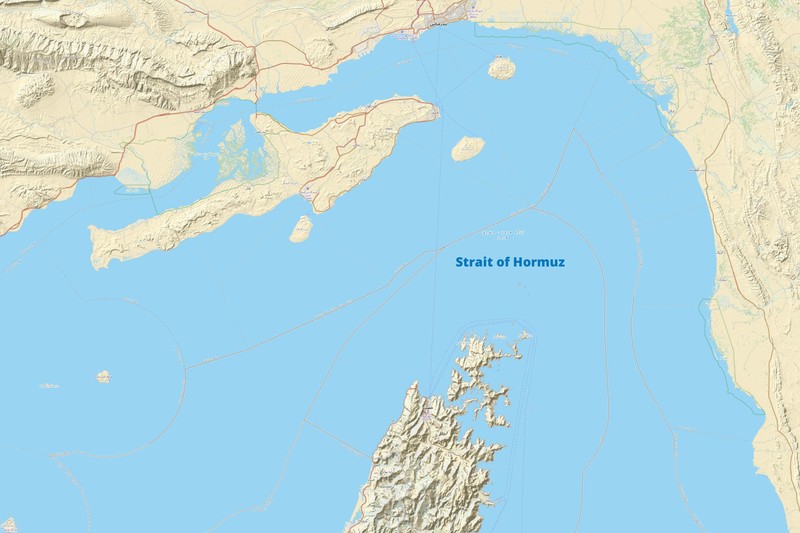
The Strait of Hormuz — conduit for roughly one-fifth of the world’s oil and liquefied natural gas — is closed again. Two days after Washington and Tehran agreed to a ceasefire, the waterway remains blocked, oil prices are climbing, and the truce that was supposed to pause a five-week war looks less like a peace deal than a mutual timeout neither side intends to honour for long.
The mechanics of the breakdown are straightforward, even if the diplomacy is not. Under the deal brokered by Pakistan and announced Wednesday, the US agreed to suspend attacks on Iran for two weeks in exchange for reopening the strait. Iran reclosed Hormuz within 48 hours. The reason: Israel.
US President Donald Trump had warned that Iran would be sent back to the “Stone Ages” if it did not comply. He later wrote on social media that all US military personnel and weapons would remain near Iran until a “real agreement” was reached — and that if it failed, the shooting would restart “bigger, and better, and stronger than anyone has ever seen before.”
On Wednesday, Israel launched heavy bombardment on Beirut, targeting the Iranian-backed militant group Hezbollah. Iran insists any ceasefire must extend to Israeli operations in Lebanon. Israel, which views weakening Hezbollah as a core military objective, says Lebanon is not covered by the agreement. This is not a minor interpretive gap — it is the structural flaw that makes this ceasefire inherently unstable.
The Price of a Blocked Chokepoint
The consequences are immediate and global. Oil prices surged as traders absorbed the reality that Hormuz would not reopen on schedule. Roughly 20% of global oil and LNG supply transits the 34-kilometre-wide strait between Iran and Oman.
Asian economies are disproportionately exposed. China, Japan, South Korea, and India all rely heavily on Gulf crude passing through Hormuz. Extended closure forces longer, costlier shipping routes and feeds inflationary pressure across import-dependent economies. The United Arab Emirates has warned that the waterway must not be weaponised. Greece said it would be unacceptable for ships to pay to transit the strait, cautioning that such a move would set a dangerous precedent.
Iran has floated charging tolls — reportedly US$1 per barrel of oil, meaning up to US$2 million per transit for a single large crude carrier. Tehran has offered to split the revenue with Oman, which shares control of the strait, though Muscat has not confirmed any agreement.
Legal experts say the proposal violates the United Nations Convention on the Law of the Sea, which prohibits charges on foreign vessels for the right of passage through international straits. Trump has also suggested a joint US-Iran venture to collect such tolls — a prospect that legal scholar Donald Rothwell of the Australian National University called “particularly concerning,” noting it would undermine a principle the US has itself upheld for decades.
The Israel Problem
Analysts quoted by the South China Morning Post described Israel as a “wild card.” The label undersells the situation. Israel is a determined belligerent with its own objectives, unaligned with either Washington’s or Tehran’s ceasefire terms.
Israel’s campaign against Hezbollah in Lebanon predates the current US-Iran escalation and operates on a separate logic. Weakening what it considers a persistent threat on its northern border is a non-negotiable military goal. The US-Israel relationship gives Washington limited leverage to restrain Israeli operations, and Iran’s insistence on linking Lebanon to Hormuz gives Tehran a ready justification for keeping the strait sealed.
The result is a diplomatic arrangement that neither primary party fully controls. The US cannot guarantee Israel’s behaviour. Iran cannot appear indifferent to strikes on its most powerful regional proxy. And Pakistan, which brokered the ceasefire, has no mechanism to enforce compliance from a third party that was never at the table.
A Pause, Not a Peace
Direct talks are expected this weekend in Pakistan, with Vice President JD Vance leading the American delegation. Amin Saikal, emeritus professor at the Australian National University, told Channel News Asia that the move to direct talks signals seriousness from Washington.
But seriousness and convergence are different things. Eyal Mayroz, a senior lecturer at the University of Sydney, noted that while both sides have incentives to prolong negotiations and avoid escalation, they arrive with what he called “huge gaps in their demands.”
Neither Washington nor Tehran achieved its war aims. The US failed to force regime change despite striking hundreds of targets. Iran was militarily weakened. Yet the conflict may have given Tehran something it lacked before: effective operational control over Hormuz. As H A Hellyer of the Royal United Services Institute put it, Iran’s grip on the strait may be a “strategic accomplishment” it did not possess before the war.
A ceasefire built on mutual exhaustion, contingent on a waterway reopening that one party has every reason to delay, and vulnerable to a third party’s military campaign, is not really a ceasefire. It is a pause — and it is already fraying.
Sources
- The Strait of Hormuz is closed again. Could the Iran-US truce fail at any moment? — South China Morning Post
- Can Iran tax ships passing through Hormuz? Experts weigh in — Channel News Asia
- How Pakistan brokered the US-Iran fortnight ceasefire: 4 things to know — Nikkei Asia
Discussion (9)