 lop News
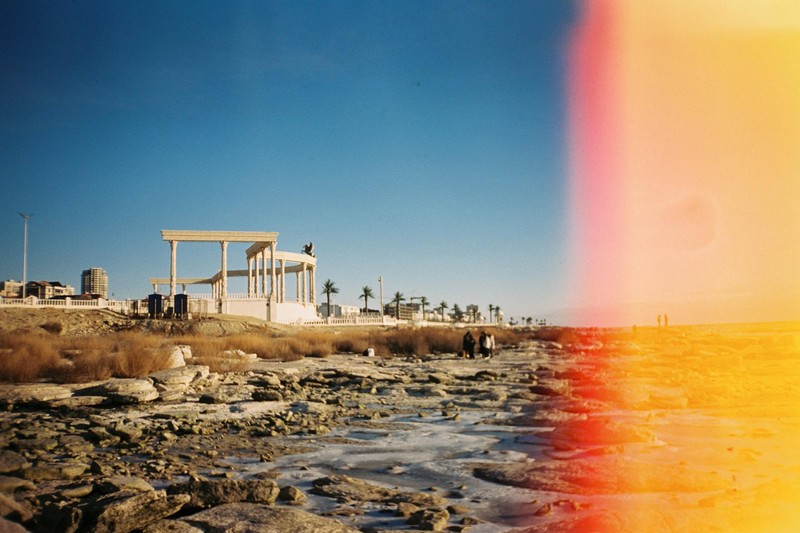
A cafe that once sat at the Caspian Sea’s edge now stands several meters from the nearest water. A bay where tens of thousands of seals once gathered for spring molting is dry earth. Along Kazakhstan’s coast, the shoreline has retreated up to 35 kilometers in under two decades.
This is the world’s largest inland body of water, vanishing in plain sight.
The Caspian has dropped roughly two meters since the 1990s, and the pace is accelerating. Between 2002 and 2015, satellite measurements showed the Caspian declining at roughly 20 times the rate of global sea level rise. Since 2020, declines have reached as high as 30 centimeters per year. A study published in Nature’s Communications Earth & Environment projects further drops of 9 to 21 meters by century’s end under medium-to-high emission scenarios.
The shallow northern basin, averaging just five meters deep, is already transforming. Water coverage in the northeast has shrunk 46 percent since 2001, according to the Nature geospatial analysis. A 10-meter drop would strip away nearly a third of the sea’s entire surface area.
“An 18-meter drop would be greater than the height of a six-story building,” said Simon Goodman, an evolutionary biologist at the University of Leeds. The consequences cascade: ports require constant dredging to stay operational. Fish markets along the Iranian coast, once bustling, are shadows of their former selves. All known Caspian seal haul-out sites would become inaccessible with a decline of just 2.5 to 5 meters. Sturgeon — the source of the world’s caviar and a species already under severe pressure — could lose nearly half their remaining habitat.
Scientists see echoes of the Aral Sea, 600 miles to the east, where Soviet-era water diversion turned one of the planet’s largest lakes into a toxic dust bowl. “We are absolutely already at the beginning of that process,” Goodman told Deutsche Welle.
The Caspian is bordered by five countries — Russia, Iran, Azerbaijan, Turkmenistan, and Kazakhstan — and roughly 80 percent of its freshwater arrives via Russia’s Volga River. Any meaningful response requires all five to coordinate. The Tehran Convention, the region’s only binding environmental framework, provides a legal foundation, and a 2026–2036 action plan is under negotiation. Kazakhstan has also established a dedicated research institute and is calling for stronger regional cooperation.
Whether policy can keep pace is uncertain. Kazakhstan’s meteorological service projects another 3 to 5 meters of decline by 2050. The exposed seabed would release dust — potentially carrying industrial pollutants — across Central Asia.
“The pace of policy must match the speed of environmental change,” said Goodman. Right now, it doesn’t.
Sources
- The sea that is vanishing in real time — Deutsche Welle
- Rapid decline of Caspian Sea level threatens ecosystem integrity — Nature (Communications Earth & Environment)
- Kazakhstan Reports Caspian Sea Level Decline, Outlines 2050 Scenarios — The Astana Times
- From commitment to implementation for Caspian Sea protection — UN Environment Programme
Discussion (5)