 lop News
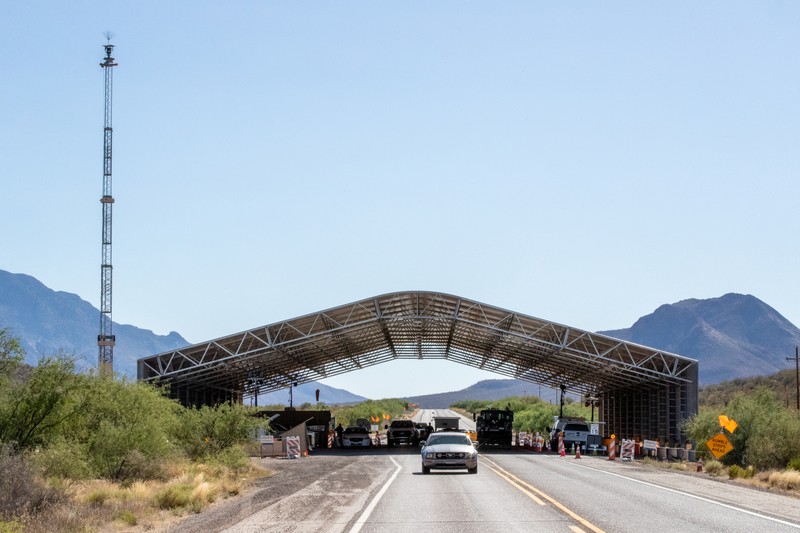
Tania Warner had every document she was supposed to have. A valid work visa. A Texas driver’s license. A Social Security record listing her status as “Lawful Alien Allowed to Work.” None of it mattered at the checkpoint in Sarita, Texas, on March 15, when U.S. border agents took her in for fingerprinting and never let her walk back out.
Her seven-year-old daughter, Ayla Lucas, who has autism, was taken next. A week later, they remain in federal immigration detention.
The Checkpoint
The family — Warner, 47, her American husband Edward Warner, and Ayla — were driving home from a baby shower in Raymondville, Texas, when they hit a routine inland Border Patrol checkpoint. Edward, a U.S. citizen, presented his identification and was cleared. Tania handed over her Texas driver’s license, her work visa, and her visa documentation.
Then they asked her to step inside. “They needed to fingerprint her to get more information, and she never came back out,” Edward Warner told CTV News. Agents returned for Ayla shortly after. The girl didn’t come back either.
Edward Warner told reporters that the issue appeared to be a discrepancy between his wife’s physical documents and her Employment Authorization Document in federal databases. “It’s scary, it’s really frustrating, especially when they have paperwork that’s good, and it doesn’t come up in the system,” he said.
From Ursula to Dilley
Mother and daughter spent their first six days at the Rio Grande Valley Central Processing Center in McAllen — the facility widely known as “Ursula” — a name that has become shorthand for the worst of U.S. border detention. The facility is notorious for overcrowding, 24-hour fluorescent lighting, and mylar blankets on concrete floors.
For a child on the autism spectrum, the conditions are acutely harmful. Tania’s mother, Heather Fleck, told reporters: “She’s on the spectrum. This is going to be devastating.”
The pair have since been transferred to the Dilley Immigration Processing Center, marketed by ICE as a “family-friendly” facility. Reports from families detained there tell a different story: food contaminated with worms and mold, inadequate medical care, and lights that stay on through the night. The Texas Tribune reported in March that detained families had raised medical complaints on at least 700 occasions since the facility reopened.
They were offered a deal: accept “self-deportation” and be moved somewhere more comfortable. Edward Warner rejected it outright. “We don’t want that at all,” he said. The family’s life is in Texas. Their home is in Texas. Tania Warner is a Canadian citizen from British Columbia who has lived legally in the United States for five years.
A System, Not an Anomaly
The Warner case is not an isolated incident. According to reporting by VisaVerge, nearly 150 Canadian citizens have been detained by U.S. Immigration and Customs Enforcement since January 2025, with detention rates on track to double compared to the previous year. Two toddlers under age four were held at a Texas facility; one was confined for 51 days.
Congressman Vicente Gonzalez, who represents the Rio Grande Valley, called for the family’s release. “We must bring them home and reunite yet another family being ripped apart,” he said.
Ottawa’s response has been measured to the point of opacity. Global Affairs Canada acknowledged awareness of “multiple cases of Canadians currently or previously in immigration-related detention in the U.S.” and said consular officials would provide assistance. But Edward Warner said the Canadian consulate in Texas told him it could only help if the family wanted to return to Canada — not if they wanted to stay in the country where they legally reside.
Immigration lawyer Richard Kurland was blunter about the urgency. “These detention centres are not five-star hotels, and in the below one-star category is this particular detention centre,” he said. “That’s why we need to get them out and get them out now.”
The Machinery in Plain View
What happened to the Warners is the product of a system operating as designed — not a bureaucratic accident. Inland checkpoints, expanded ICE authority, and database-first enforcement mean that a discrepancy in a federal computer can override a stack of valid documents in a person’s hand. The human cost — a seven-year-old with autism sleeping under fluorescent lights in a facility built for processing, not for care — is not a bug. It is a feature of enforcement architecture that treats detention as the default and due process as an afterthought.
Edward Warner has retained legal representation and launched a GoFundMe to cover costs. As of March 21, Tania and Ayla remain at Dilley.
Sources
- 7-year-old B.C. girl and her mother being held by U.S. immigration officials in Texas — CBC News
- ‘It’s scary’: Canadian mother, daughter detained by ICE, held in Texas facility, husband claims — CTV News
- About 150 Canadians Detained by ICE, Including Toddlers, Since January — VisaVerge
- Family at Dilley ICE center details moldy food, medical neglect — Texas Tribune
- Canadian mother and daughter ‘traumatized’ by ICE detainment, husband says — The Guardian