 lop News
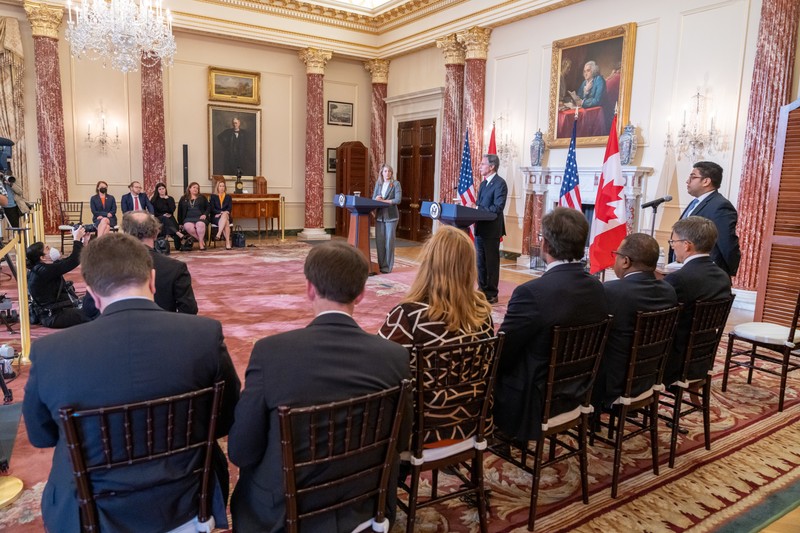
For decades, the question would have been unthinkable in Ottawa. This weekend, Canada’s Foreign Minister Anita Anand addressed it on television: whether Canada can still depend on the United States.
In an interview with Al Jazeera, Anand discussed the future of NATO under Donald Trump, the expanding war with Iran, and Canada’s accelerating push to diversify its trade beyond its southern neighbor. The cumulative picture is one of a historic partnership under extraordinary strain.
Canada was not consulted before the US-Israeli strikes on Iran that triggered the current conflict, Anand told the Associated Press in March, and Ottawa has no intention of joining the offensive. Trump has since demanded NATO allies help reopen the Strait of Hormuz — blocked by Iran since the war began, driving up global fuel prices — after saying it would pull 5,000 troops from Germany amid a dispute with Chancellor Friedrich Merz.
Anand has defended NATO’s institutional strength even as she acknowledges the pressure. The alliance “could never be more important than it is today,” she said during Brussels talks this month, calling it “resilient” enough to weather internal disagreements. She pointed to Arctic security — where Canada has a major role — as evidence that the alliance still functions. Separately, she was co-hosting a conference with the EU on returning Ukrainian children deported by Russia.
But the trade strategy tells its own story. Ottawa aims to double non-US trade within a decade, a goal Anand described as a response to “a complete rewiring of the global trading order.” She has been courting the EU and what she calls “middle powers” — language that signals where Canada now sees its most dependable partners.
When a Canadian foreign minister goes on television to question American reliability, the alliance is not over. But the era of treating that question as unthinkable clearly is.
Sources
- Canadian FM: Is the US still a reliable ally? — Al Jazeera
- NATO ‘could never be more important than today’: Canada FM — AFP via RFI
- Canada was not consulted on Iran war and won’t join offensive action, FM says — AP via Al Arabiya English
Discussion (6)