 lop News
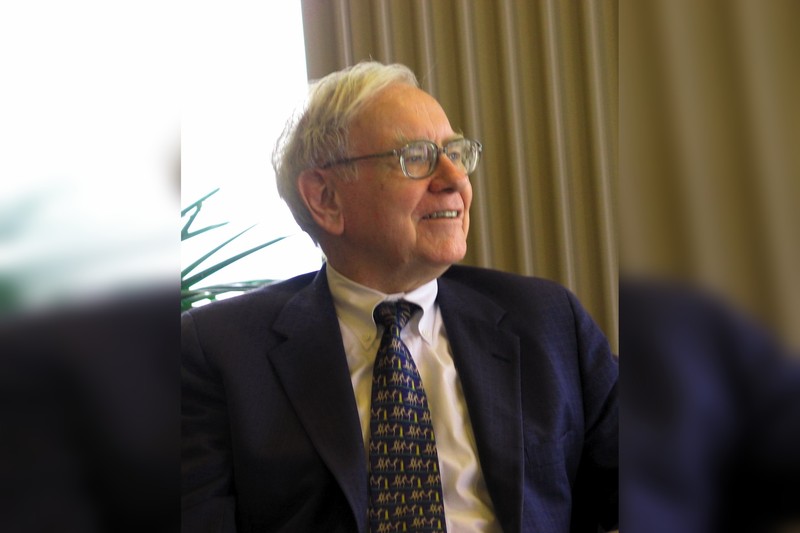
$1.03 trillion in assets. $373 billion in cash. No major acquisition in a decade. For the first time in 60 years, Warren Buffett is not the one deciding what to do with any of it.
Greg Abel, 63, took over as CEO of Berkshire Hathaway at the start of 2026, and this Saturday he faces shareholders at the company’s annual meeting in Omaha — the first time Buffett will sit in the audience rather than command the stage. The handoff has been orderly. The market’s verdict has not been.
Since Buffett announced his retirement last May, Berkshire shares have fallen roughly 12% while the S&P 500 has gained 25%. The “Buffett premium” — the extra valuation the market assigned simply because of who was running things — is evaporating in real time.
The empire in numbers
Berkshire Hathaway is not a normal company. It is a conglomerate larger than the GDP of most nations, housing Geico insurance, the BNSF railroad, Berkshire Hathaway Energy, Dairy Queen, Fruit of the Loom, Pilot truck stops, and dozens of other businesses. Its roughly $300 billion stock portfolio includes stakes in Apple, American Express, Coca-Cola, and five Japanese trading houses. It has not paid a dividend since 1967.
Buffett spent six decades turning a failing textile manufacturer into one of the world’s most valuable companies. The question now is how much of Berkshire’s value was the structure — and how much was the man.
Who is Greg Abel?
Abel is not a household name, and that is partly the point. A Canadian from Edmonton, he got his first taste of business collecting empty soda bottles for five cents each, optimizing his bike route to grab as many as possible. He trained as an accountant at PwC, joined geothermal firm CalEnergy — later MidAmerican — and entered Berkshire’s orbit in 1999 when the company bought a controlling stake.
He built Berkshire Hathaway Energy into the country’s largest wind energy producer and rose to vice chairman of non-insurance operations. Buffett, in his final shareholder letter in November 2025, wrote that Abel “understands many of our businesses and personnel far better than I now do, and he is a very fast learner about matters many CEOs don’t even consider.”
In a CNBC interview this week, Buffett was more blunt: “It’s kind of embarrassing how good” Abel is at the job.
The two men are stylistic opposites. Buffett was the philosopher-king, dispensing wisdom over five-hour Q&A sessions with the late Charlie Munger. Abel is hands-on — visiting subsidiaries, setting performance targets, less inclined to forgive underperformance. Where Buffett gave managers near-total autonomy, Abel has been more directive, though he has committed to Berkshire’s famously decentralized structure.
The $373 billion problem
Abel’s most consequential challenge: what to do with Berkshire’s cash. In January, Berkshire paid $9.5 billion for Occidental Petroleum’s chemicals business — meaningful, but a fraction of available firepower.
The cash is both a weapon and a weight. It gives Berkshire the ability to act as buyer of last resort in a crisis, as it did with Goldman Sachs in 2008. But at a $1 trillion market cap, meaningful growth requires needle-moving acquisitions, and Buffett acknowledged this week he is still struggling to find bargains, snagging only “one tiny purchase.”
After investment lieutenant Todd Combs departed for JPMorgan Chase in December, Abel unloaded an estimated $16 billion of his positions and took direct control of 94% of the equity portfolio — without hiring a replacement. Managing a $300 billion stock portfolio solo, with no formal investment management background, is a bet the market has not yet decided whether to underwrite.
What the market is saying
Berkshire’s fourth-quarter 2025 earnings missed analyst estimates by nearly 9% on operating earnings per share. Operating profit fell 6% for the full year. Revenue was essentially flat.
Some analysts argue the selloff has created opportunity. Berkshire trades at roughly 1.4 times book value. Christopher Davis of Hudson Value Partners called the stock a “coiled spring.” Steve Check of Check Capital Management told Reuters the shares were “overpriced a year ago” but “not overpriced anymore.”
Others want proof. Lawrence Cunningham, a University of Delaware law professor who has written extensively on Berkshire: “Some investors may want to see Greg prove himself in his job before they double down.”
Abel has made moves. He restarted share buybacks in March — Berkshire’s first since May 2024. He bought a 2.49% stake in Tokio Marine, expanding Berkshire’s Japan presence. He joined a US government-backed syndicate insuring ships through the Strait of Hormuz. He committed to investing his entire after-tax salary in Berkshire stock each year.
On Reddit and investment forums, patience is wearing thin. “If I see Abel again with that smirk, talking about adding more to that cash pile, that’ll be my sell trigger,” one user wrote.
The Saturday test
This weekend’s meeting will still draw tens of thousands to Omaha, though hotel bookings are reportedly down from last year. Buffett will be there — listening, not leading. Abel will spend an hour presenting his vision and two and a half hours taking questions, flanked by insurance chief Ajit Jain, BNSF chief Katie Farmer, and Adam Johnson, who now oversees Berkshire’s consumer and retail businesses.
The five-hour Buffett-Munger marathons are gone. In their place: a competent executive making the case that the empire holds together without its architect.
As shareholder Chris Bloomstran put it: “I won’t be able to evaluate how good he is until we get the next deep recession.”
The market is already grading the exam.
Sources
- Warren Buffett has stepped aside. Berkshire is now Greg Abel’s show. — Reuters
- What to know about Greg Abel, the new CEO of Berkshire Hathaway — CBS News
- Meet Greg Abel, the new boss of Berkshire Hathaway — Fortune
- Warren Buffett’s CEO days are over. He says he’s still in Berkshire’s office 5 days a week. — Yahoo Finance / CNBC
- As Berkshire’s first meeting without Warren Buffett nears, investors are frustrated with stock performance — Moneywise via AOL
Discussion (9)