 lop News
Two platforms. Zero significant commitments. One blunt verdict.
Ofcom, Britain’s communications regulator, declared Thursday that TikTok and YouTube are “not safe enough” for children — and that neither company has agreed to make meaningful changes to fix the problem.
The assessment carries real weight. Ofcom enforces the UK’s Online Safety Act and can levy substantial fines against companies that breach its rules. More immediately, it feeds into a government consultation on whether to ban social media entirely for under-16s, closing May 26.
The numbers haven’t moved
Ofcom’s children’s online safety tracker surveyed young people in November and December 2025, months after the UK’s online safety duties took effect in July. Roughly seven in ten children aged 11 to 17 said they had experienced harmful content online — essentially unchanged from before the new rules.
Personalised algorithmic feeds remained the primary route through which children encountered harmful content, cited by 35% of respondents. That figure, too, is virtually identical to pre-regulation levels.
Age enforcement is failing just as badly. Ofcom found that 84% of children aged eight to 12 use at least one major service with a minimum age of 13. The regulator said it is “not currently convinced” that any platform’s existing commitments will effectively keep underage children off their apps.
The two holdouts
YouTube said it works with child safety experts to provide “industry-leading, age-appropriate” experiences for children. TikTok called it “very disappointing” that Ofcom had failed to acknowledge its safety features, pointing to measures like blocking direct messaging for under-16s.
Neither committed to altering the recommendation algorithms that Ofcom identifies as the core problem.
Ofcom was blunt in response. “Notably, TikTok and YouTube failed to commit to any significant changes to reduce harmful content being served to children, maintaining their feeds are already safe for children,” the regulator said. “Our wealth of evidence, published today, suggests they are still not safe enough.”
The contrast with three other platforms is striking. Snapchat will block adult strangers from contacting children by default and roll out “highly effective” age checks this summer. Roblox will let parents disable direct chat entirely for under-16s. Meta will hide teens’ Instagram connection lists by default and develop AI tools to detect likely sexualised conversations in direct messages.
When pressed, three of five companies chose to act. Two declined.
Police join the call
Britain’s National Crime Agency and National Police Chiefs’ Council submitted their own response to the government’s consultation, calling for under-16s to be blocked from any platform offering what they classify as “high-risk” features: unrestricted stranger contact, algorithmic promotion of harmful content, weak age checks, and nude image sharing among them.
NCA director general Graeme Biggar said the agency received 92,000 reports of potential child sexual abuse activity online from tech companies in 2025. The number is growing. “The online environment in its current form is not safe for children,” he said. “Enough is enough.”
The Australia problem
Britain is not the first country to confront this question, and the early evidence from the pioneer is not encouraging.
Australia’s ban on social media for under-16s took effect in December 2025. A survey by the Molly Rose Foundation found roughly two thirds of Australian 12- to 15-year-olds who used social media before the ban still had access to at least one account. Around 70% of those still using restricted platforms said it was “easy” to circumvent the restrictions. More than half said the ban had made no difference to their online safety.
The charity’s head, Andy Burrows, warned that a similar ban in the UK would be a “high stakes gamble” that “only lets tech firms off the hook” without delivering the safety improvements families need.
The world is watching
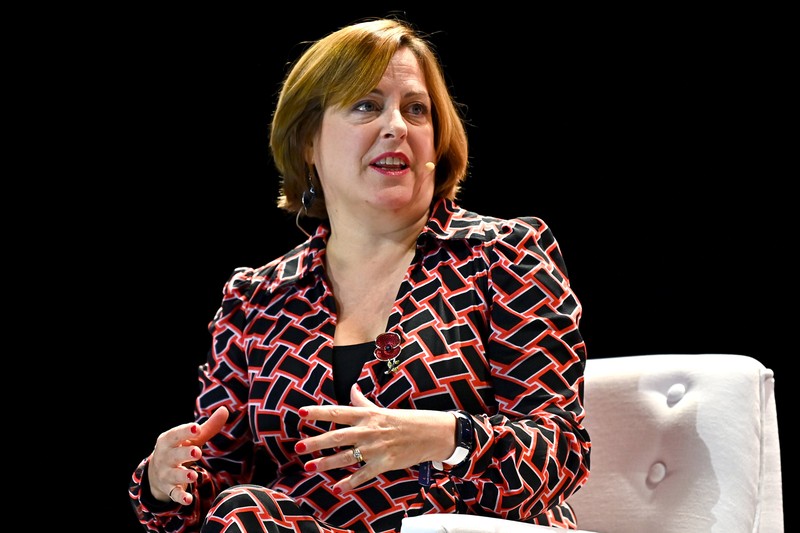
Ofcom chief executive Dame Melanie Dawes framed the challenge in generational terms. “We’re talking about a twenty-year culture at Silicon Valley of not taking safety seriously,” she told the BBC. “You can’t change that overnight.”
She also signalled readiness for confrontation. “We will absolutely move into a formal investigation if we need to.”
The UK government says it will set out next steps by summer. The Education Committee has already called for a full ban on social media for under-16s and restrictions on features designed to drive excessive screen time. Committee chair Helen Hayes MP argued that “social media firms cannot be relied upon to self-regulate.”
If Britain moves forward — whether through an outright ban, age limits, or mandatory algorithmic changes — the template will travel. The EU is watching. Australia is measuring its own experiment against whatever Britain decides. US states pushing age-verification laws through the courts are watching too.
The platforms had two decades of self-regulation. The regulators have run out of patience.
Sources
- TikTok and YouTube ‘not safe enough’ for kids, says Ofcom — BBC News
- UK police bosses say unsafe social media platforms should be blocked for under-16s — BBC News
- TikTok and YouTube ‘not making websites safer for children’ as Ofcom vows to ‘force through’ online safety rules — LBC
- Early wins for the social media ban, new survey claims. But the full picture is far more complicated — The Conversation
- Two thirds of Australian teens still using social media despite under-16s ban — The Independent
Discussion (8)