 lop News
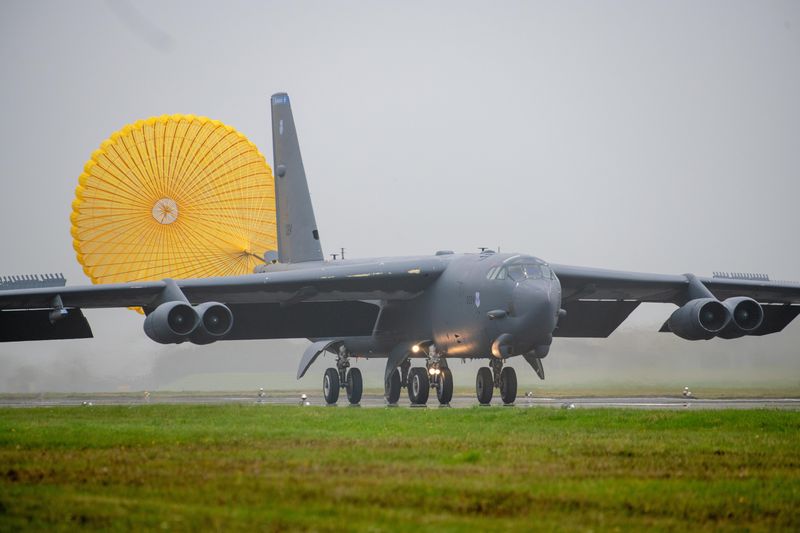
RAF Fairford, a quiet airfield in the Gloucestershire countryside, is now a forward operating base in a Middle Eastern war. Diego Garcia, a coral atoll Britain controversially retained in the Indian Ocean, is the other. On Friday, the UK government authorized the United States to use both facilities to strike Iranian missile sites — the ones Tehran is using to threaten shipping through the Strait of Hormuz.
The decision marks a threshold. Britain has moved from diplomatic sympathy to direct military facilitation of American strikes on Iranian sovereign territory. And it did so on the same day President Donald Trump publicly floated the idea of winding the whole thing down.
‘Defensive Operations’ and the Language of Escalation
Downing Street’s framing was careful. The agreement, it said, covers “US defensive operations to degrade the missile sites and capabilities being used to attack ships in the Strait of Hormuz.” The phrase “collective self-defence of the region” was deployed — legal language designed to anchor the decision in international law rather than offensive ambition.
Prime Minister Keir Starmer told Parliament that Britain does not believe in “regime change from the skies” and insisted the authorization was consistent with protecting allies and British lives. But the label strains under scrutiny. Striking missile installations inside a sovereign nation is, by most conventional definitions, an offensive military act. Several MPs have said as much, arguing that refueling and arming aircraft bound for targets inside Iran makes Britain complicit in aggression, not self-defence.
The legal ambiguity is not academic. Chatham House analysts have questioned whether London’s self-defence argument holds when the strikes target fixed infrastructure on Iranian soil rather than intercepting incoming projectiles. The distinction matters — both for international law and for what Iran does next.
A Reluctant Slide
Starmer’s path to Friday’s announcement has been anything but linear. On February 28, he rejected Washington’s initial request, saying he needed to be satisfied that any military action was legal. Government lawyers reportedly advised against participation. The next day, on March 1, he reversed course, permitting limited defensive operations from British bases.
Friday’s authorization goes further, explicitly including strikes on Iranian missile sites — a significant expansion of what “defensive” was understood to mean just weeks ago. Each step has been framed as a response to Iranian escalation, including Tehran’s retaliatory strikes against British allies and its attacks on energy infrastructure in the Gulf. But the cumulative effect is unmistakable: Britain is being drawn deeper into a conflict its prime minister repeatedly said he wanted no part of.
Iranian Foreign Minister Abbas Araghchi was blunt. Granting base access, he said, constitutes “participation in aggression” that “will be recorded in the history of relations” between the two countries. He warned British officials to “avoid any cooperation” with American military operations and cautioned that the decision would “only aggravate the situation.”
Trump Winds Down, Britain Digs In
The timing is striking. Hours before London confirmed its deepened involvement, Trump posted on Truth Social that he was “getting very close to meeting our objectives” and considering “winding down our great Military efforts in the Middle East with respect to the Terrorist Regime of Iran.”
The juxtaposition raises uncomfortable questions about allied coordination — or the lack of it. Britain is escalating its commitment to a war whose principal architect is publicly contemplating the exit. Trump’s stated objectives — degrading Iran’s missile capability, eliminating its navy and air force, preventing nuclear acquisition — remain largely unmet. The Strait of Hormuz is still contested. And despite the wind-down rhetoric, thousands more US troops are reportedly heading to the region.
Trump himself has been less than grateful for British support. On Monday he called the UK a country that had “greatly disappointed” him and described Britain as having once been “the Rolls-Royce of allies” — past tense.
A Public Unconvinced
British voters are not enthusiastic. A YouGov poll found 59% of respondents oppose the US-Israeli strikes, with significant numbers strongly against allowing American operations from UK soil. The Iraq parallel hangs over the debate — another Labour prime minister, another legally contested decision to support American military action in the Middle East.
Starmer is betting that the “defensive” framing holds and that the conflict resolves before British involvement deepens further. It is a bet that depends heavily on decisions made in Washington and Tehran, not London. On Friday’s evidence, those decisions are pulling in opposite directions.
Sources
- UK allows US to use bases to strike Strait of Hormuz targets — BBC News
- UK approves US use of British bases to strike Iran missile sites targeting ships — Defense News
- UK allows US to use its bases to strike Iran missile sites targeting Hormuz — South China Morning Post
- Iran Warns U.K. That Allowing U.S. Access to Bases Makes It a ‘Participant in Aggression’ — Time
- Trump considers ‘winding down’ Iran war without opening Hormuz Strait — Axios