 lop News
China’s president offered to help broker peace in the Iran war. He also told Donald Trump that China would keep buying Iranian oil. Both statements came out of the same Beijing summit.
The contradiction at the heart of Xi Jinping’s offer captures the broader diplomatic paralysis surrounding the Iran conflict. Within 24 hours of the US-China summit producing no tangible progress on reopening the Strait of Hormuz, BRICS foreign ministers gathered in New Delhi failed to issue a joint statement — blocked by their own members’ irreconcilable positions on a war that pits two of them against each other.
The Strait of Hormuz, through which roughly a fifth of the world’s oil and gas normally flows, remains the conflict’s most disruptive feature. Global oil prices have climbed back above $108 a barrel, according to MarketWatch. US markets are selling off broadly. India, which imports roughly 90 percent of its oil with about half transiting the strait, has already raised fuel prices by 3 percent.
Beijing: Promises Without Pressure
Trump described his meeting with Xi in glowing terms, telling Fox News that the Chinese leader said he would “love to be a help” in resolving the conflict and reopening the strait. Xi reportedly assured Trump that China would not provide military equipment to Iran — a commitment Trump called “a big statement.”
The assurance stopped well short of what Washington needed. China is Iran’s largest oil buyer, providing Tehran with a critical economic lifeline despite American sanctions. Trump told Fox News that Xi intended to continue those purchases, even as the White House readout noted Xi’s opposition to the militarization of the strait. The Chinese government’s own readout of the meeting did not mention the Iran issue directly.
Xi used the summit to remind Trump that Taiwan, not the Gulf, remains Beijing’s primary concern, warning that the issue could push the two countries toward direct confrontation if mishandled, according to Chinese state media. The meeting produced commercial agreements — soybeans, oil, liquefied natural gas, 200 Boeing 737 jets — but nothing that shifted the strategic picture in the Gulf.
New Delhi: BRICS Without Consensus
If Beijing produced polite disagreement, New Delhi produced open fracture.
A two-day meeting of BRICS foreign ministers concluded Friday without a joint statement, with India citing “differing views among some members” on the Middle East. Iran’s Foreign Minister Abbas Araghchi had urged members to condemn what he called “unlawful aggression” by the US and Israel. The UAE blocked sections of the proposed text.
Araghchi was blunt, telling reporters the obstruction came from a member with “its own special relationship with Israel.” The friction is personal as well as geopolitical: the UAE has accused Iran of drone and missile strikes on its territory, including an attack on a Fujairah oil refinery that injured three Indian workers.
India’s Prime Minister Narendra Modi condemned those strikes during a Friday visit to Abu Dhabi, signing defence and energy pacts with UAE President Sheikh Mohamed bin Zayed Al Nahyan. The agreements cover defence industrial collaboration, maritime security, cyber defence, and strategic petroleum reserves, with the UAE committing up to $5 billion to deepen economic ties. For New Delhi, the calculation is straightforward: 4.3 million Indians live or work in the UAE, and half of India’s oil imports transit the strait.
The Pipeline: Building Around the Problem
The most concrete strategic response to the crisis has come not from any diplomatic forum but from a construction directive. Abu Dhabi’s Crown Prince Sheikh Khaled bin Mohamed bin Zayed ordered the Abu Dhabi National Oil Company to fast-track the West East Pipeline project, with operations expected by 2027, according to the Abu Dhabi Media Office.
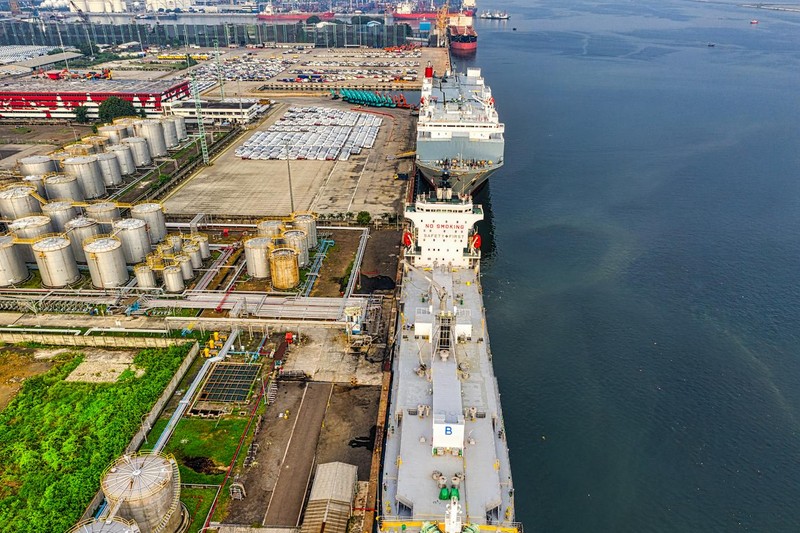
The pipeline would double the UAE’s export capacity through the port of Fujairah, on the Gulf of Oman — outside the Strait of Hormuz. The UAE already operates the Habshan-Fujairah pipeline, which can move approximately 1.8 million barrels per day. The expansion would give Abu Dhabi significantly more room to export without entering contested waters.
The logic is direct. Kuwait, Iraq, Qatar, and Bahrain all remain dependent on the strait for energy shipments. The UAE, which recently left OPEC, has signalled ambitions to raise output capacity to six million barrels per day. But capacity without export routes means nothing when the strait is closed.
Even the pipeline’s endpoint is not safe. The UAE has accused Iran of targeting Fujairah with drone and missile attacks, forcing temporary interruptions to oil loading operations. Some UAE-linked tankers have reportedly moved through the Gulf with location tracking switched off to reduce the risk of Iranian strikes.
Preparing for Duration
Araghchi confirmed Friday that Tehran had received messages from the Trump administration indicating openness to new talks but said “distrust” remains about US intentions. He described a “deadlock” on the question of Iran’s enriched nuclear material, saying the issue would be “postponed” to later stages of any negotiations. He also confirmed discussions with Russia about Moscow’s offer to store Iran’s enriched uranium.
Diplomatic channels remain technically open. None of them produced anything this week that would shorten the war. The bloc meant to challenge Western-dominated institutions could not agree on a single sentence about the conflict dividing two of its members. And the Gulf state most exposed to the blockade responded with pipeline construction and $5 billion in bilateral deals.
The pipeline comes online in 2027 at the earliest. Abu Dhabi is building on the assumption that the strait will still be a problem when it is finished.
Sources
- Trump Says Xi Offered To Help Broker Peace With Iran — Time
- BRICS ministers fail to issue a joint statement over differences on conflict in the Middle East — Associated Press
- Araghchi: Iran doubts US ‘seriousness’ about talks amid nuclear deadlock — Al Jazeera
- India and UAE sign defence pacts, as Iran war tensions simmer — Al Jazeera
- Stocks tumble, bond rout deepens as Trump’s China visit fails to pry open Strait of Hormuz — MarketWatch
- UAE Accelerates Oil Pipeline Expansion to Bypass Strait of Hormuz — Modern Diplomacy
Discussion (10)