 lop News
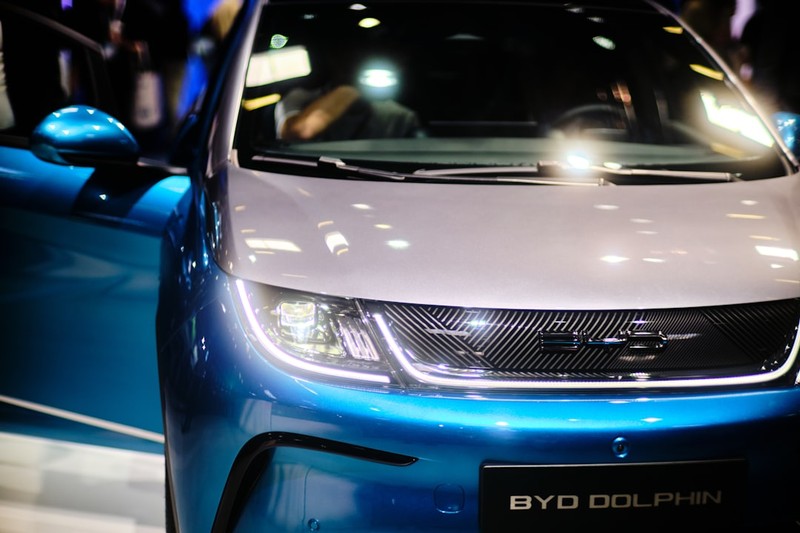
The secretary responsible for enforcing Brazil’s labour laws was fired on Monday, days after his office added Chinese electric vehicle giant BYD to the country’s registry of employers who subjected workers to slavery-like conditions.
Luiz Felipe Brandao de Mello, who led the National Secretariat of Labour Inspection since 2023, had his dismissal published in Brazil’s official gazette. According to two people with knowledge of the matter who spoke to Reuters, Labour Minister Luiz Marinho had explicitly ordered Mello to keep BYD off the list. Mello refused. The firing was the consequence.
The sequence is hard to ignore. On April 7, the Labour Ministry published an updated registry — widely known as the “dirty list” — naming 169 employers, including BYD. The next day, a labour court judge issued an injunction removing BYD, calling the inclusion potentially illegal. Five days after that, the official responsible was out of a job.
The Labour Ministry described the dismissal as “an administrative act” and provided no further details. Mello did not respond to a request for comment. BYD also did not reply to requests for comment.
What Inspectors Found at the Factory
The blacklisting stems from a case dating to late 2024, when Brazilian labour inspectors raided the construction site of BYD’s flagship factory in Camaçari, in the northeastern state of Bahia.
Inspectors found 163 Chinese workers employed by contractor Jinjiang Group living in what authorities described as degrading conditions, according to Agencia Brasil. Workers slept on beds without mattresses. One dormitory had a single bathroom for 31 people. Kitchens were unsanitary, with food stored alongside construction materials. Most workers ate meals in their beds. Drinking water came straight from the tap, untreated.
Their contracts told their own story. Workers were required to hand over their passports, allow most wages to be remitted directly to China, and pay a deposit of nearly $900 — refundable only after six months of work, according to a contract reviewed by Reuters. The workday lasted at least 10 hours with no regular days off. One injured worker reported going 25 consecutive days without a break.
Brazilian inspectors concluded that BYD bore direct responsibility. Despite formal service contracts with Jinjiang, investigators found workers were de facto subordinate to the automaker. The inspection team also found evidence that BYD itself committed fraud against Brazilian immigration authorities to facilitate the entry of 471 Chinese workers without proper registration, Agencia Brasil reported.
In January 2026, BYD signed a Conduct Adjustment Agreement with the Labour Prosecution Office worth BRL 40 million. Jinjiang Group has denied the allegations. BYD has maintained it had no knowledge of any violations until Brazilian media reports in late November 2024.
A Pattern of Political Interference
The National Association of Labour Inspectors, known as Anafitra, condemned Mello’s dismissal as institutional retaliation.
“The dismissal of the secretary signals an escalation of political interference in labour inspections,” the association said in a statement. Rodrigo Carvalho, a labour inspector and member of Anafitra’s executive committee, called it “an extremely grave act” that “weakens the autonomy of labour inspection and endangers a public policy built over decades.”
This is not the first time Marinho has been accused of shielding large companies. Last year, the minister conducted unusual final reviews of inspectors’ investigations to block the inclusion of certain firms, including a division of Brazilian meatpacking giant JBS, Reuters reported. Mello had opposed those decisions, and his refusal to comply on BYD was reportedly the final straw.
Anafitra has filed a case at Brazil’s Supreme Court seeking to strike down the provision allowing the labour minister to take over completed enforcement proceedings.
Follow the Money
BYD is not just any foreign investor in Brazil. Its BRL 5.5 billion factory in Camaçari represents one of the largest Chinese investments in the country. Brazil is BYD’s biggest market outside China, and the plant has already produced more than 25,000 vehicles.
President Luiz Inacio Lula da Silva personally attended the factory’s inauguration in October 2025 — even as the labour abuse case was ongoing — in a signal of how much the government values the relationship.
Placement on the dirty list carries real financial consequences: listed firms are barred from certain types of loans from Brazilian banks. The registry is widely considered one of Brazil’s most effective tools for combating labour exploitation.
For now, BYD remains off it. The court injunction is provisional, pending a final ruling. The official who put the company there is gone.
Sources
- Brazil’s top labor inspector fired for adding China’s BYD to ‘dirty list,’ sources say — Reuters (via Investing.com)
- Brazilian court removes BYD from list of firms linked to forced labor — Reuters (via WKZO)
- Chinese carmaker BYD added to Brazil’s forced labor list — Agencia Brasil
- Brazil puts China’s BYD on list of shame for workers’ past slavery-like conditions — CNBC (via Reuters)
Discussion (9)