 lop News
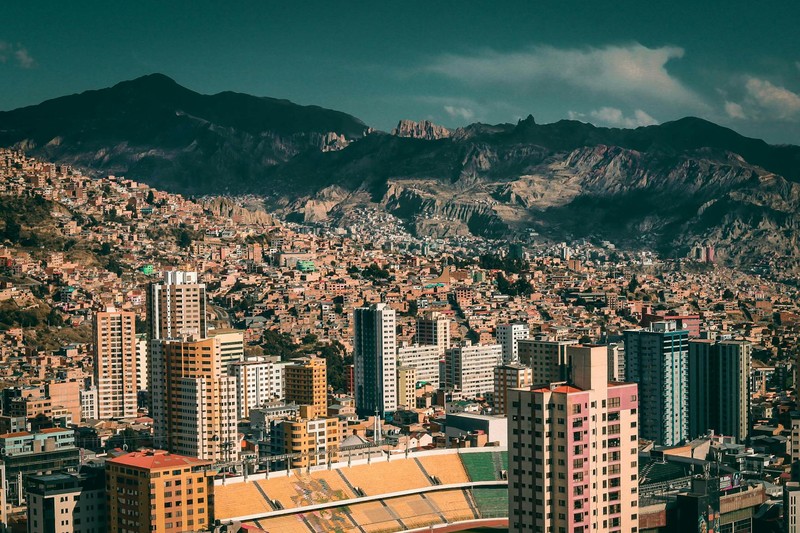
Hospital oxygen reserves are running out. Markets in La Paz stand empty. More than 40 road blockades have severed Bolivia’s highways, stranding 5,000 vehicles and choking off food, fuel, and medicine to the country’s political capital. Four people are dead — one demonstrator killed in clashes, three others because ambulances could not reach them in time.
And Washington has a name for what is happening: a coup.
US Deputy Secretary of State Christopher Landau described the protests on Tuesday as “an ongoing coup d’état,” financed by what he called “this perverse alliance between politics and organised crime across the region.” He said the Trump administration was working to ensure that “anti-government, anti-institutional forces” did not prevail.
A Presidency Born Into Crisis
Rodrigo Paz Pereira took office in November after ending nearly two decades of rule by the leftwing Movimiento al Socialismo (MAS). A former senator and son of a previous president, he promised “economic shock therapy” for a country in its worst financial crisis in 40 years — inflation near 20 percent, chronic dollar shortages, and empty fuel pumps.
He ended a two-decade fuel subsidy as one of his first moves, arguing that free-market competition would bring better-quality fuel. Instead, shortages persisted and the government imported adulterated gasoline that damaged vehicles across the country. The “dirty fuel” scandal forced the resignation of two senior officials at the state oil company and triggered the transport strikes that seeded the current unrest.
The Forces on the Streets
The Bolivian Workers’ Central (COB), peasant unions, and cooperative miners now lead the blockades, demanding wage increases, steady gasoline supplies, and — increasingly — Paz’s resignation. Public schoolteachers are holding separate talks over salary improvements.
These are, in many cases, the same organizations that powered the MAS movement. The populist machine that governed Bolivia for 20 years has turned its machinery against the man who unseated it.
Whether that machine still answers to Evo Morales is the question shaping the crisis.
Morales, Bolivia’s first Indigenous president and the historic leader of MAS, has been entrenched in the coca-growing region of Chapare for 18 months, shielded by hundreds of farmers from an arrest warrant for allegedly fathering a child with a 15-year-old girl in 2006. He also faces separate human-trafficking charges, linked to alleged political favours granted to the girl’s parents. He calls the case politically motivated and has failed to appear in court. A judge issued a fresh warrant.
Presidential spokesperson José Luis Gálvez accused Morales of fomenting unrest to evade trial. Morales, posting on X, said the uprisings were “against the implementation of the neoliberal model.”
Analysts believe Morales no longer commands the mass following he once did and may be leveraging the protests purely to evade justice, according to NPR.
A President Without a Foundation
Paz’s difficulties extend beyond the streets. His Christian Democratic Party fractured in the legislature almost immediately after his election. He lacks a governing majority and is locked in an open feud with his own vice president, Edman Lara, a former police officer. He inherited what he calls a “bankrupt state,” and while his international outreach has secured pledges of investment and loans, most have yet to materialize.
That political isolation has made him reliant on foreign backing — which the US is eager to provide. Paz restored relations with Washington as one of his first acts, reversing the hostility that defined the Morales era. But the embrace cuts both ways. Colombia’s leftwing president, Gustavo Petro, reposted a video calling Paz a “puppet of the US” and described the protests as a “popular insurrection.” Paz expelled Colombia’s ambassador days later. Petro responded that Bolivia was “sliding into extremism.”
The Region Watches
Eight Latin American governments, from Chile to Costa Rica, have issued a joint statement rejecting any destabilization of Bolivia’s democratic order. Argentina has launched a weeklong humanitarian airlift to deliver supplies. Business groups estimate the blockades are draining more than $50 million daily from the economy.
Landau claimed, without providing evidence, that organized crime and drug traffickers back the blockades. Bolivian authorities have echoed the accusation, with Gálvez alleging “drug trafficking financing is behind these leaders.” Those claims remain unsubstantiated.
What is verifiable is this: a president six months into his term, commanding no legislative majority, presiding over a cratering economy, facing street movements that his own policies helped ignite. The democratic transition Bolivians voted for is being tested by the very forces any transition must survive — the demands of people promised something better who have not received it.
Discussion (9)