 lop News
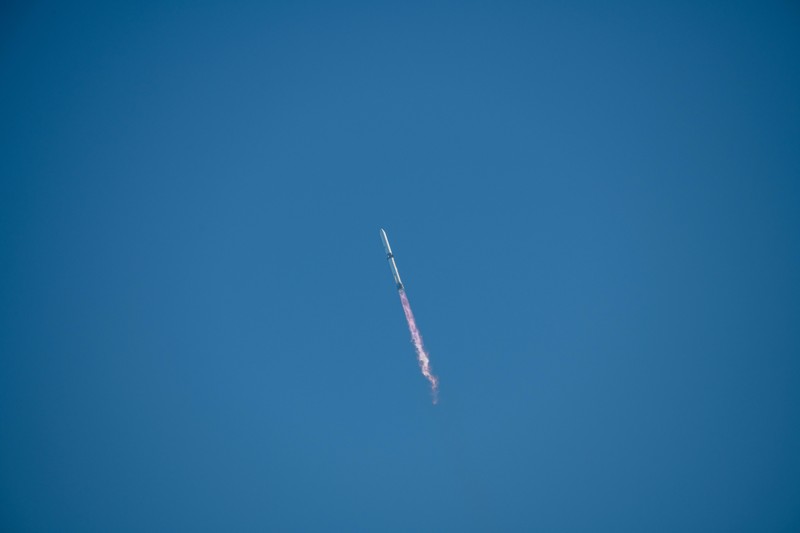
The booster came back. The satellite may be in the wrong orbit.
On April 19, Blue Origin launched and landed a reused New Glenn first-stage booster — becoming only the second company in history to demonstrate orbital-class booster reuse, after SpaceX. The milestone was clouded by an upper-stage malfunction that left the mission’s commercial satellite in what the company called an “off-nominal orbit.”
A historic first in booster reuse, compromised by a failure one stage up. That tension captures exactly where Blue Origin sits: at the table, but still finding its footing.
The Booster Came Back
The NG-3 mission lifted off from Cape Canaveral’s Launch Complex 36 at 7:25 a.m. Eastern, after a 40-minute countdown hold. The first-stage booster — nicknamed “Never Tell Me The Odds” — separated from the upper stage about 3.5 minutes into flight and touched down on Blue Origin’s Jacklyn droneship in the Atlantic roughly six minutes later.
Workers cheered and chanted “GS-1,” the booster’s technical designation, as it landed.
This was the same booster core that flew the NG-2 mission in November 2025, launching NASA’s ESCAPADE Mars probes before landing on the same droneship. But the reuse was partial. Blue Origin replaced all seven BE-4 engines with new units for this flight.
“With our first refurbished booster we elected to replace all seven engines and test out a few upgrades including a thermal protection system on one of the engine nozzles,” CEO Dave Limp said in an April 13 social media post. He added that the original NG-2 engines are being held for future flights.
Jordan Charles, Blue Origin’s vice president of New Glenn, said during launch commentary that engineers also refurbished the booster’s base thermal protection and upgraded the guidance system for improved reentry accuracy.
New Glenn first stages are designed to fly at least 25 times each. NG-3 was the first step toward proving that.
The Upper Stage Didn’t
While the booster nailed its landing, the news higher up was less encouraging. AST SpaceMobile’s BlueBird 7 — a 6,100-kilogram direct-to-cellphone satellite with a phased-array antenna spanning more than 220 square meters — was placed into an incorrect orbit.
Blue Origin ended its webcast after the booster landing and provided no real-time updates on the upper stage’s planned second burn, scheduled roughly an hour after liftoff. About two hours post-launch, the company confirmed on social media that BlueBird 7 had separated and powered on, but added: “The payload was placed into an off-nominal orbit. We are currently assessing and will update when we have more detailed information.”
The satellite was intended for a 460-kilometer circular orbit at 49.4 degrees inclination. Whether it can correct its trajectory remains unclear. The anomaly could also affect AST SpaceMobile’s aggressive 2026 schedule: CEO Abel Avellan said in a March earnings call that the company targets 45 satellites in orbit and 60 ready to ship this year, with future launches batching three to eight satellites per flight.
Why the Economics Shift
The booster milestone — even a partial one — is the development that matters for the industry’s structure.
SpaceX’s ability to re-fly Falcon 9 boosters, sometimes dozens of times each, is the primary reason it dominates global orbital launch. Reusable boosters turn hardware from a one-time expense into a recurring asset. Propellant becomes the price floor, not a new rocket from scratch.
A second operator with proven reusable heavy-lift capability changes the math for every customer buying launches. Satellite operators, defense agencies, and companies building orbital infrastructure gain something they haven’t had: a credible alternative to SpaceX on both pricing and schedule availability.
New Glenn stands 98 meters tall — comparable to NASA’s Space Launch System — powered by seven BE-4 engines burning liquid methane and liquid oxygen. Blue Origin is counting on the vehicle for its Blue Moon lunar lander, scheduled for an uncrewed test flight by the end of summer, as well as launches for AST SpaceMobile and Amazon’s Project Kuiper constellation.
Two Players, One Market
For more than a decade, SpaceX has had no real competition in reusable orbital launch. That’s changing — not because Jeff Bezos and Elon Musk have settled anything, but because the engineering is catching up with the ambition.
Blue Origin’s next challenge is velocity: reusing boosters fast enough and flying often enough to make the economics real. The company hasn’t publicly committed to a specific 2026 launch cadence, though Avellan said AST SpaceMobile expects New Glenn boosters to be reused “every 30 days or less” going forward.
The NG-3 upper-stage anomaly is a reminder that proving reuse is not the same as mastering operations. But the booster is back on the ship. That fact alone reshapes the competitive landscape.
Discussion (9)