 lop News
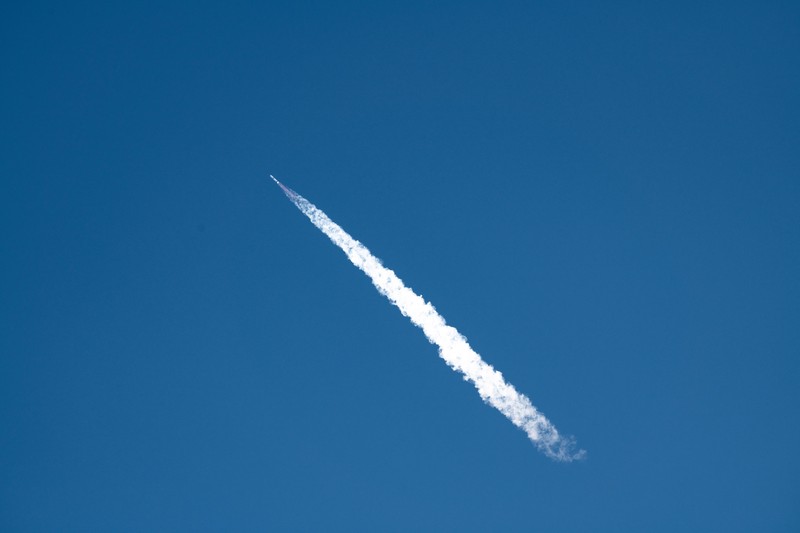
The booster came back perfectly. The satellite is a write-off.
On only the third flight of Blue Origin’s New Glenn rocket, the company pulled off a genuine milestone — reusing and landing an orbital-class booster for the first time — then deposited its customer’s satellite in the wrong orbit, prompting the Federal Aviation Administration to ground the vehicle indefinitely.
The FAA confirmed Monday it has designated Sunday’s incident a “mishap” and will oversee a Blue Origin-led investigation before the rocket can fly again. That process could take months, delaying an ambitious launch manifest that Blue Origin hoped would include a dozen more flights this year.
What went wrong
New Glenn lifted off from Cape Canaveral at 7:25 am Eastern on Sunday, carrying AST SpaceMobile’s BlueBird 7, a 6,100-kilogram communications satellite designed to beam broadband directly to smartphones. The 321-foot rocket’s first stage separated cleanly, performed its braking burns, and touched down on Blue Origin’s Atlantic landing platform less than ten minutes after liftoff.
Then things stopped going to plan.
The upper stage’s two BE-3U engines were supposed to execute a 68-second burn to circularize the orbit at 460 kilometers and a 49.4-degree inclination. Instead, according to US Space Force tracking data, the stage and its payload ended up in a 154-by-494-kilometer orbit inclined at 36.1 degrees — too low, too elliptical, and too far off course for the satellite’s electric thrusters to correct.
Blue Origin CEO Dave Limp said Monday that one of the upper stage engines “didn’t produce sufficient thrust to reach our target orbit.”
AST SpaceMobile confirmed Sunday evening that the satellite cannot be saved, stating that “the altitude is too low to sustain operations with its on-board thruster technology.” The spacecraft will deorbit and burn up in the atmosphere.
The investigation
Under FAA mishap investigation rules, Blue Origin must identify the root cause, propose corrective actions, and submit a final report for agency approval. “The FAA will oversee the Blue Origin-led investigation, be involved in every step of the process and approve Blue Origin’s final report, including any corrective actions,” a spokesperson said.
The rocket cannot launch again until the agency signs off.
That puts Blue Origin in a tight spot. The company is seeking certification from the US Space Force to carry national security payloads — a process that demands a proven flight record. It is also developing a lunar lander for NASA’s Artemis program. Any extended grounding threatens both efforts.
Limp said the investigation will allow Blue Origin to “learn from the data and implement the improvements needed to quickly return to flight operations.”
The collateral damage
AST SpaceMobile was the immediate casualty. The company’s shares dropped more than 10 percent in early Monday trading before partially recovering, according to TechCrunch, and closed down more than 5 percent, per CNBC.
The lost satellite — which featured a phased-array antenna spanning more than 220 square meters — was to be the first of 45 to 60 satellites AST SpaceMobile planned to orbit this year for its direct-to-device broadband constellation. The company said it expects insurance to cover the cost of BlueBird 7, though a March SEC filing noted that launch insurance premiums cost approximately 3 to 20 percent of each satellite’s insured value.
AST SpaceMobile said BlueBird 8, 9, and 10 should be ready to ship within 30 days and that it holds contracts with other launch providers. Analysts were split on the long-term damage. William Blair’s Louie DiPalma pointed out that future New Glenn flights may carry as many as eight BlueBird satellites at once, making this single-satellite loss the best-case version of a bad outcome. Clear Street analyst Greg Pendy cut his price target on AST from $137 to $115, while UBS analyst Christopher Schoell cautioned that the company’s share price is now effectively tied to Blue Origin’s fortunes.
The SpaceX shadow
The irony of Sunday’s flight is that Blue Origin actually achieved something difficult. Reusing a first-stage booster and landing it again on a drone ship is a feat only one other company — SpaceX — has accomplished with an orbital-class rocket. Blue Origin technicians had installed new BE-4 engines on the refurbished booster for this flight but plan to reuse the original engines on future missions.
But nobody remembers the landing when the customer’s satellite is burning up on reentry.
SpaceX has demonstrated it can recycle a Falcon 9 booster in as few as nine days and launch five or more rockets per week across its fleet. Blue Origin has now flown New Glenn three times. Jeff Bezos has patience and billions to spend. The commercial launch market, though, rewards reliability above all else — and New Glenn just showed it doesn’t have enough of it yet.
Sources
- Third New Glenn launch suffers upper stage malfunction — SpaceNews
- FAA orders investigation into Blue Origin’s New Glenn mishap — TechCrunch
- AST falls after Bezos’ Blue Origin places satellite in wrong orbit — CNBC
- Blue Origin rocket grounded after satellite ‘mishap’ — BBC
- Blue Origin’s rocket reuse achievement marred by upper stage failure — Ars Technica
Discussion (10)