 lop News
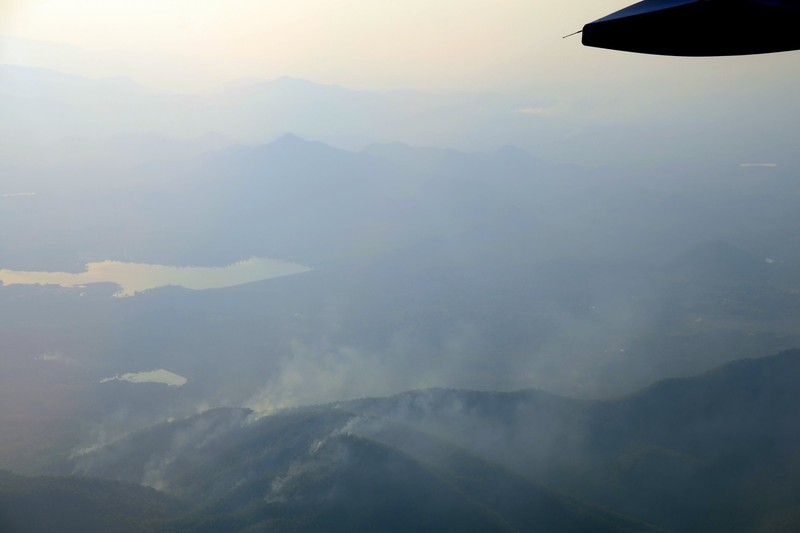
Residents blow their noses after hours outside in northern Thailand’s thick haze and find blood on the tissue. Their eyes burn. Their chests tighten. This is not an emergency — it is an ordinary Thursday in Chiang Mai.
Across the city, the story repeats in clinic waiting rooms and kitchen sinks. Six-year-old children wake with nosebleeds. Parents find rashes spreading across toddlers’ skin. Benjamas Jaiparkan, a public school teacher, sent her children to live with relatives in a neighboring province where the air is cleaner. “I feel so sorry for him because I don’t know how much more his lungs can take,” she told the BBC.
The Wrong Kind of Global Ranking
Chiang Mai has ranked as the world’s most polluted major city multiple times in March 2026. On March 30, IQAir’s real-time monitoring placed it at number one globally with an air quality index of 233 — classified as “Very Unhealthy” for all population groups. Fine particulate matter concentrations reached 188 micrograms per cubic meter. The World Health Organization’s safe daily limit is 15.
That is more than twelve times what international health standards consider safe.
Satellite data recorded 4,750 hotspots across Thailand on a single day in late March, mostly in forested areas. Chiang Mai province alone logged over 2,090 hotspots between January 1 and March 27, according to Open The Magazine. On March 24, 158 wildfires were recorded across 15 districts — nearly five times the previous day’s count.
The Machinery of the Haze
The causes are structural. Farmers across northern Thailand and in neighboring Laos, Myanmar, and Cambodia burn rice straw, sugarcane waste, and maize stubble between November and March to clear fields before the next planting season. Forest fires — some linked to illegal logging or hunting — compound the agricultural smoke. Chiang Mai sits in a mountain basin, and still weather traps the pollution at ground level.
The Thai government has banned open burning in Chiang Mai province from February 1 through May 31, 2026, and deployed KA-32 firefighting helicopters to tackle mountain blazes. Authorities ordered the closure of high-risk parks and warned that anyone caught starting fires faces up to 20 years in prison and a 2 million baht ($61,100) fine.
The enforcement record tells a different story. In July 2023, roughly 1,700 Chiang Mai residents sued then-Prime Minister Prayut Chan-o-cha and two state agencies, arguing that government inaction was shortening each of their lives by about five years. A court ordered the government in January 2024 to produce an emergency air quality plan within 90 days. The haze returned every year since, as scheduled as the monsoon.
A Tourism Economy Breathing Poison
Chiang Mai sells itself as a cooler, greener alternative to Bangkok — mountain temples, night markets, lush hillsides. Those landscapes are what the smoke is now destroying. Visitors have cut trips short. The Doi Suthep temple and other scenic viewpoints disappear behind a gray curtain for days at a time.
Tirayut Wongsantisuk moved to Chiang Mai in the 2010s, drawn by the region’s air and greenery. Now he and his wife are considering leaving. His six-year-old daughter has suffered nosebleeds, a rash, and an allergic reaction that left her eyelids swollen. “If something bad happens to our child, we’ll feel terrible forever,” he said.
Hospitals across Chiang Mai and neighboring Chiang Rai report rising admissions for respiratory complaints. Health officials urge residents to limit outdoor activity and wear N95 masks outside. The monsoon rains that typically flush the basin are not expected for weeks.
Northern Thailand’s pollution season is annual, predictable, and so far unstoppable. The world has normalized a public health crisis that would trigger emergency action almost anywhere else.
Sources
- Thailand haze: Chiang Mai air pollution sparks health fears — BBC News
- Chiang Mai Chokes: Inside Thailand’s Worst Air Crisis of 2026 — Open The Magazine
- Chiang Mai Air Quality at Dangerous Levels, Health Alerts Issued — Chiang Rai Times
Discussion (9)