 lop News
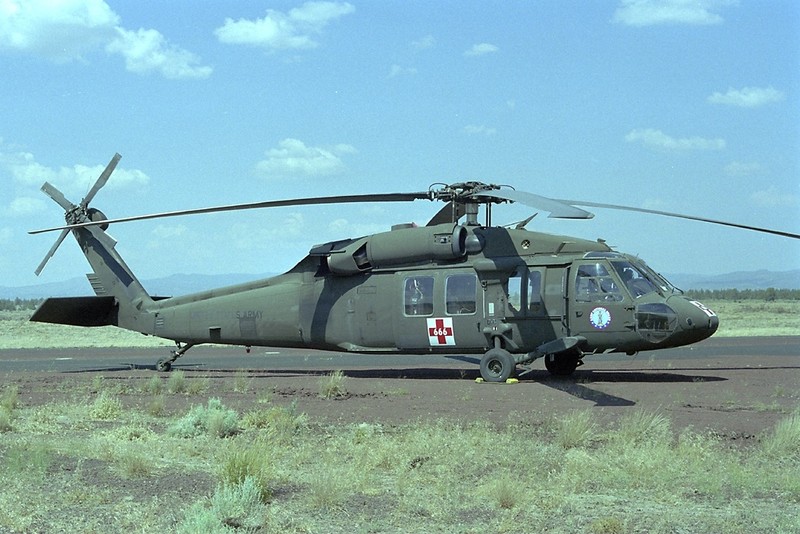
The US Army took delivery of a Black Hawk helicopter last week at Fort Eustis, Virginia. Standard procedure, except for one detail: this helicopter doesn’t need a pilot.
The Optionally Piloted Vehicle Black Hawk H-60Mx, developed under DARPA’s Aircrew Labor In-Cockpit Automation System program, represents something genuinely new in military aviation. Not a small drone. Not a prototype that flew once in controlled conditions. A full-sized combat helicopter, battle-tested across multiple missions, now cleared for the Army to deploy as it sees fit.
Sikorsky, the Lockheed Martin subsidiary that manufactures Black Hawks, equipped the aircraft with its MATRIX flight control system. The technology handles everything from pre-flight checks to autonomous landing, including responding to simulated system failures mid-flight. Ground crews trained on tablets can command the aircraft remotely, or it can execute pre-planned missions without any human input.
This is not a lab experiment anymore.
Cargo Without the Risk
Last November, the autonomous Black Hawk flew a 70-nautical-mile cargo resupply mission at Camp Grayling, Michigan. The flight included precision parachute drops, equipment sling loading, and medical evacuation trials. Human pilots rode along for safety. They weren’t needed.
The implications cut straight to the calculus of military logistics. Resupply missions in contested environments—where a helicopter and its crew might face anti-aircraft fire, bad weather, or equipment failure—can now be executed without putting soldiers in the air. The aircraft has flown without humans aboard multiple times since 2022, DARPA confirmed.
This matters because the Black Hawk isn’t a disposable asset. It’s a workhorse. The Army operates thousands of them for troop transport, medical evacuation, and cargo missions. If the MATRIX system proves scalable, the service could retrofit its existing fleet with autonomous capability rather than designing new airframes from scratch.
From DARPA to the Fleet
The ALIAS program spent more than a decade developing the technology before last week’s handoff. DARPA’s investment bought not just the aircraft but a software development kit that will let the Army integrate new sensors and third-party innovations without going back to the contractor.
“The delivery of this first OPV Black Hawk is more than just a hardware handover; it’s a tangible step toward a future where technology and soldiers work together in new and powerful ways,” the Army said in a statement.
Translation: the Army intends to install this across its helicopter fleet and build autonomy into future aircraft designs from the start.
The next phase of testing will focus on mission-specific sensors and equipment integration. The aircraft will serve as the primary testbed for an Army program seeking a scalable autonomy kit—one system that can be installed across the entire Black Hawk inventory.
Why This Isn’t Just Another Drone Story
The distinction matters. Small drones are expendable. A reconnaissance quadcopter is a loss the military can absorb. A Black Hawk, by contrast, carries critical cargo or wounded soldiers and operates in airspace where failure has strategic consequences.
Autonomy at this scale requires a different order of reliability. The system must handle engine failures, weather changes, and combat damage without human intervention—scenarios where a drone operator’s split-second judgment normally matters. MATRIX appears to have demonstrated that capability in testing.
The Army now owns both the aircraft and the software tools to modify it. How quickly the service moves from testing to operational deployment will depend on what the next round of trials reveals—and how confident commanders become in a helicopter that makes its own decisions.
Discussion (8)