 lop News
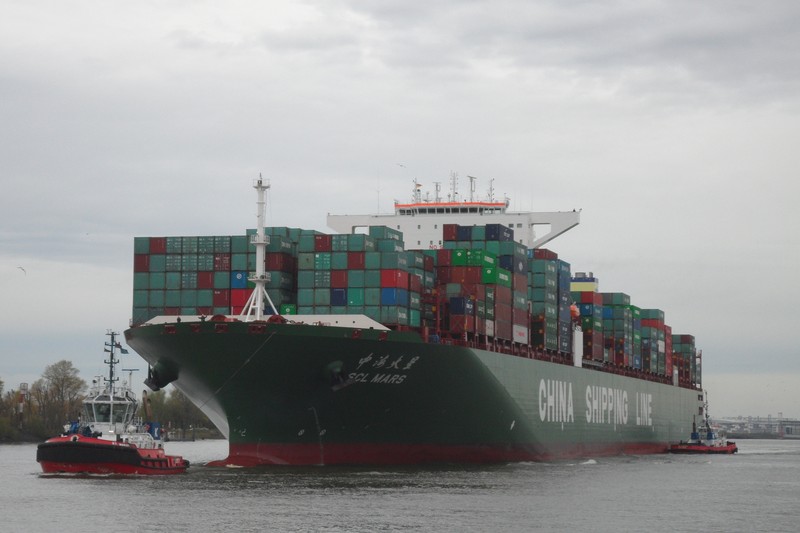
Hui Ka Yan once topped Forbes’ list of Asia’s wealthiest people with a $42.5 billion fortune. On Monday, he stood in a Shenzhen courtroom and pleaded guilty to fraud, bribery, and the illegal absorption of public deposits. Within 24 hours, China’s customs bureau published figures showing exports had slumped to their weakest growth in six months while imports surged to their strongest pace in over four years.
Two body blows, one day. Together they capture a Chinese economy squeezed between the reckoning it engineered at home and a conflict it didn’t invite from abroad.
The Property Reckoning Closes
The Shenzhen Intermediate People’s Court heard that Hui’s Evergrande — once China’s biggest real estate firm — had siphoned millions of dollars in pre-sale deposits from homebuyers into new projects rather than finishing the homes they had paid for. Hundreds of properties across China sit unfinished. At its collapse, Evergrande had around 1,300 projects spread across 280 cities.
Evergrande carried more than $300 billion in liabilities when it collapsed, making it the world’s most indebted property developer. A Hong Kong court handed down a liquidation order in 2024. The company’s Hong Kong-listed shares subsequently lost 99% of their value before being delisted in 2025.
Hui expressed remorse during the two-day trial, according to Chinese state media. The court said it would deliver a verdict at a later date. The guilty plea effectively closes the criminal chapter of the Evergrande saga — the corporate face of China’s property crisis, triggered when Beijing cracked down on developer leverage in 2020.
The property downturn was deliberate policy. What arrived last month was not.
Exports Stall, Imports Surge
March export growth fell to 2.5% year-on-year in dollar terms, according to customs data released Tuesday, sharply missing analyst forecasts of 8.3%. The figure marks a dramatic deceleration from the combined 21.8% surge recorded in January and February, when AI-driven demand for semiconductors and servers pushed outbound shipments well above expectations.
The culprit: Iran’s closure of the Strait of Hormuz, through which roughly 20% of global oil and gas flows, and the resulting spike in energy costs and shipping disruption.
Zhiwei Zhang, president and chief economist at Pinpoint Asset Management, said the uncertainty of the global macro outlook driven by the Middle East conflict “likely weighed on the demand side,” straining exports.
The trade surplus shrank to $51.13 billion in March — less than half the $107.5 billion analysts expected and a fraction of the $214 billion surplus logged in the first two months of the year. Exports to the US fell 26.5%.
Meanwhile, imports surged 27.8% — the strongest reading since November 2021 and more than double the 11.2% analysts had forecast. The question is what that surge actually means.
Stockpiling or Stimulus?
The import jump was not driven by energy. Crude oil imports fell 2.8% by volume in March, and natural gas imports dropped 10.7% to their lowest level since October 2022, with Chinese vessels reportedly stuck in the strait.
Instead, the bellwether was South Korea. Korean exports to China — dominated by semiconductors and servers — surged 62.4% in March, with global chip shipments rising 151.4% on higher memory prices and AI-related demand. China’s rare earth imports more than tripled in value.
The import figures point to “some resilience in domestic demand,” according to Investing.com, with AI infrastructure buildout absorbing semiconductor supply. Capital Economics argued the soft export print largely reflected seasonal distortions, noting that exports still grew substantially across the first quarter. Xu Tianchen of the Economist Intelligence Unit also pointed to seasonal effects from a late Lunar New Year holiday.
But there’s a less optimistic reading: Chinese manufacturers and the state may be stockpiling critical inputs before a prolonged Hormuz disruption makes them prohibitively expensive or unavailable. China’s strategic and commercial oil stocks cover well over 120 days of net imports, according to Dan Wang, China director at Eurasia Group — a buffer that looks increasingly prescient.
HSBC chief Asia economist Fred Neumann noted that Chinese producers may gain ground as global buyers seek cheaper options, and that decades of commodity stockpiling have helped blunt the impact of raw-material shocks on factory-gate prices. But those factory-gate prices still rose 0.5% in March — the first increase in more than three years — threatening margins at firms already operating on thin cushions. Consumer price inflation came in at a slower-than-expected 1%.
China reports first-quarter GDP on Thursday. Analysts polled by Reuters expect 4.8% growth, marginally above the three-year low of 4.5% recorded in the fourth quarter of 2025.
The Evergrande chapter is closing. The Hormuz chapter is just beginning. Between a property sector still searching for a floor and a trade environment that just got more expensive, Beijing’s growth targets for 2026 are about to be stress-tested in ways nobody anticipated when the year began.
Sources
- China Evergrande founder Hui Ka Yan pleads guilty to a set of charges including fraud and bribery — Associated Press
- Founder of China’s Evergrande pleads guilty to fraud — BBC News
- China exports growth in March misses estimates, imports surge most in over four years — CNBC
- China’s export engine stutters in March as Iran war wipes out AI-driven gains — The Business Times
- China trade balance falls sharply in March as exports slow, imports surge — Investing.com
Discussion (10)