 lop News
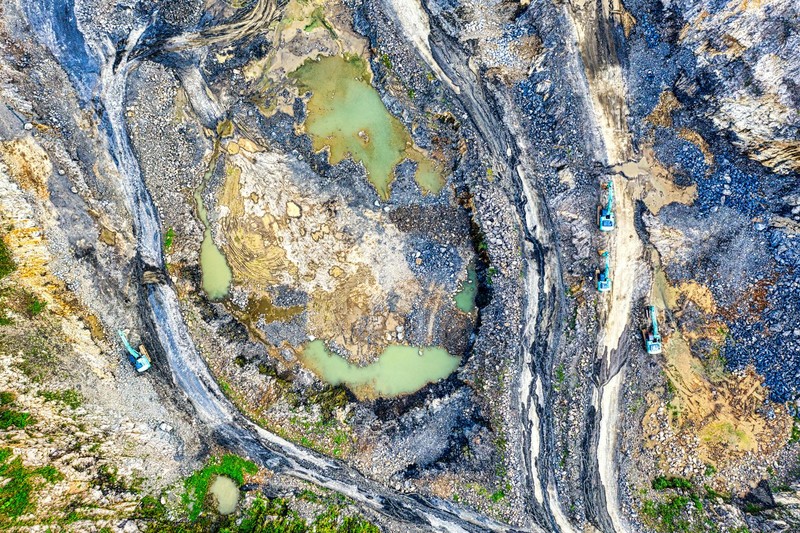
Heilongjiang and Jilin, the Chinese provinces hard against the Russian border, spend a good portion of the year below freezing. They may also be sitting on the most convenient rare earth deposits the country has ever found.
A team from the Chinese Academy of Sciences’ Institute of Geology and Geophysics and the Heilongjiang Bureau of Geology and Mineral Resources has identified a new type of rare earth formation across the two provinces — loose sand and gravel shaped by natural freeze-thaw cycles, according to a paper published last month in the Chinese journal Acta Petrologica Sinica. Unlike the clay-heavy deposits in southern China, which require aggressive chemical leaching to release the elements, these northern formations could be extracted more efficiently, at lower cost, and with less environmental damage.
The same week the discovery drew international attention, the White House announced that China had agreed to address US concerns over rare earth shortages, according to Reuters. Two signals, aimed at different audiences, pointing in very different directions. Beijing is expanding the resource base the world depends on while telling Washington it will cooperate on supply. The first is tangible. The second is a diplomatic placeholder.
What the Geology Changes
Rare earth elements — a group of 17 minerals including cerium, neodymium, and dysprosium — are the backbone of modern manufacturing. They go into electronics, electric vehicle motors, wind turbines, and advanced defense systems. China already processes roughly 90 percent of the global supply.
The new deposits could widen that lead. The research team said the find “could potentially rewrite the ‘heavy in the south, light in the north’ pattern of rare earth resources in China.” That phrase carries weight in the industry. “Light” rare earths are relatively abundant and less commercially valuable. “Heavy” rare earths — the ones that go into high-performance magnets and military applications — are scarcer and far more strategically important. If the northeastern formations contain meaningful quantities of heavy rare earths, China’s already dominant resource base just expanded significantly.
The extraction advantage matters just as much as the tonnage. Chemical leaching in southern clay deposits has poisoned waterways and triggered domestic regulatory crackdowns. Looser sand and gravel formations could allow Beijing to ramp production without the same environmental and political friction — a lower-cost, lower-risk expansion of capacity precisely when Western countries are scrambling to build alternatives.
The Diplomatic Math
The White House statement that China will “address” US concerns over rare earth shortages is notably short on specifics. No export guarantees, no joint framework, no timeline. Reuters reported the announcement on May 18, but the operational details — faster licensing? minimum shipment volumes? — remain undisclosed, if they exist at all.
The leverage asymmetry is the story. The US imports the vast majority of its processed rare earth compounds from China. The Pentagon has funded domestic mining and processing infrastructure, most visibly at the Mountain Pass mine in California, but building an independent supply chain is measured in years and billions of dollars. A vague diplomatic concession from Beijing costs nothing. A geological discovery that deepens Chinese supply dominance is permanent.
Who’s Exposed
The countries and companies most at risk are those that treated China’s rare earth dominance as a static problem — solvable with enough capital and political will. Australia’s Lynas Rare Earths, the largest non-Chinese processor, has expanded capacity in Malaysia and Western Australia. The US Defense Department has poured funding into domestic processing. The EU has classified rare earths as critical materials and backed recycling programs.
These are real investments. None of them are fast enough to match what a geologically expanding Chinese supply base does to pricing and availability. If the northern deposits prove as accessible as the initial research suggests, China can produce more, at lower cost, with less environmental liability — and it can scale before Western alternatives reach commercial viability.
The rare earth market runs on geology and processing capacity. Beijing just added to both, then handed Washington a politely worded press release. One of those things will shape the next decade of supply chains. The other will be forgotten by next month.
Discussion (9)