 lop News
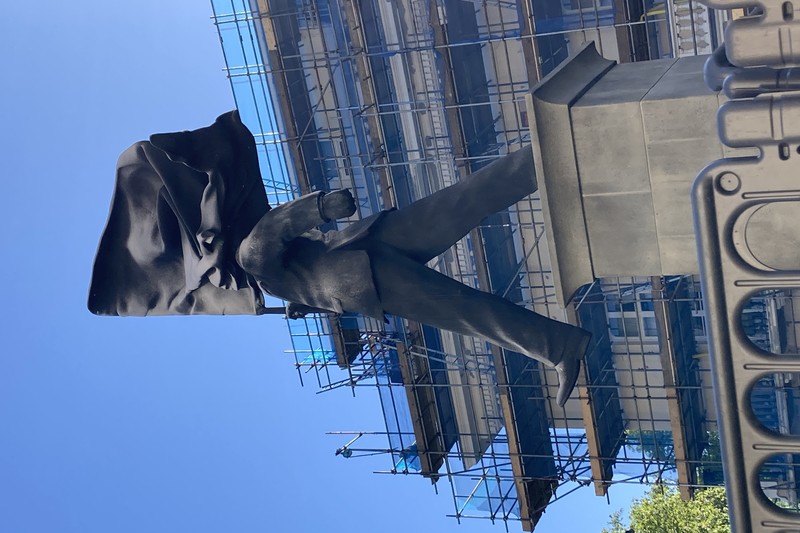
Sometime in the early hours of Wednesday, a flatbed truck backed into Waterloo Place and left behind a sculpture. By Thursday afternoon, Banksy had claimed it on Instagram. By Friday, crowds were three deep.
The work is blunt in the way Banksy’s best pieces are blunt. A man in a suit strides forward off a plinth, chin up, chest out, hoisting a large flag. The flag covers his face entirely. His next step meets nothing but air.
It sits on a ceremonial island in St James’s, flanked by statues of King Edward VII, Florence Nightingale, and the Crimean War Memorial — monuments to imperial confidence, all of them. Banksy’s comment on the location, relayed by his representatives to the BBC, was characteristically dry: “There was a bit of a gap.”
The timing is hard to ignore. The statue appeared the same week King Charles III addressed Congress during a state visit to Washington, arguing for the importance of NATO, and was feted by President Trump at a state dinner. Banksy’s accompanying video is scored to Elgar’s Pomp and Circumstance March No. 1 — the same melody played at Edward VII’s coronation.
James Peak, creator of the BBC podcast series The Banksy Story, called it “a wonderfully framed moment in time that you never really get with a statue.” Visitors to the site have variously read it as a commentary on blind patriotism or resurgent nationalism. None of those readings are wrong.
Westminster City Council confirmed it has no plans to remove the work and has erected safety barriers around it. The sculpture carries a Banksy signature on its base. Whether it received planning permission is, as ever with Banksy, beside the point.
Discussion (6)