 lop News
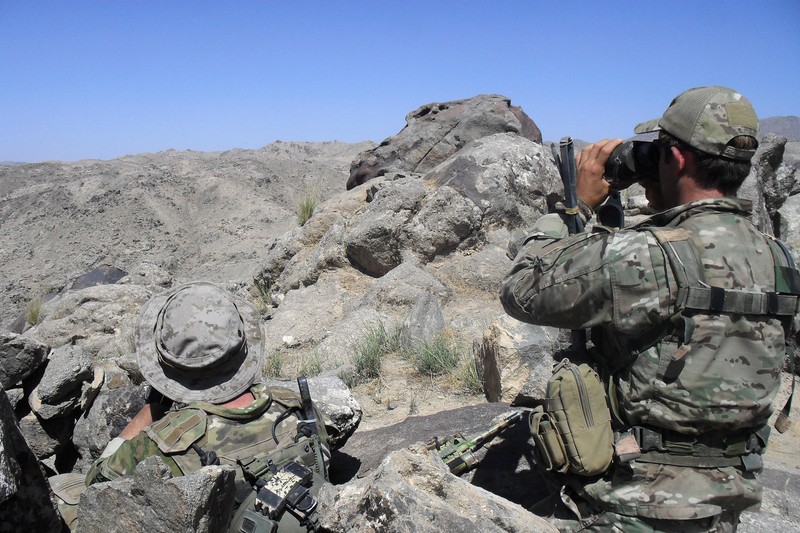
Police escorted Ben Roberts-Smith off a domestic flight at Sydney Airport on Tuesday morning, walked him across the tarmac to a waiting car, and drove him to a cell at Silverwater prison. By afternoon, Australia’s most decorated living soldier had been charged with five counts of war crime murder.
The charges carry a maximum sentence of life imprisonment.
Roberts-Smith, 47, a former corporal in Australia’s Special Air Service Regiment and a recipient of the Victoria Cross — the nation’s highest military honour — is accused of killing or ordering the killing of five unarmed Afghan civilians across three incidents between 2009 and 2012.
Australian Federal Police Commissioner Krissy Barrett told reporters the victims “were not taking part in hostilities at the time of their alleged murder in Afghanistan.” She said they were detained, unarmed, and under the control of Australian Defence Force members when killed.
The charges span three incidents, according to Guardian Australia. Two relate to deaths at a compound code-named Whiskey 108 in Kakarak, Uruzgan Province, in April 2009. Two concern killings at Syahchow in October 2012. The fifth involves the death of a man named Ali Jan in Darwan in September 2012.
A hero’s fall
Roberts-Smith was once the face of Australian military valour. Awarded the Victoria Cross for “most conspicuous gallantry” during the Battle of Tizak in 2010, he was named Father of the Year and chaired the government’s Australia Day Council. Six tours in Afghanistan. The Medal of Gallantry alongside the Victoria Cross. A figure who seemed to embody the country’s martial tradition.
Billionaire Kerry Stokes, who funded Roberts-Smith’s legal defence during a lengthy defamation trial, declined to comment. “As the matter is now before the court we have no comment regarding Ben,” a Stokes spokesperson told the ABC.
The descent from national hero to criminal defendant has been years in the making.
From headlines to handcuffs
In 2017 and 2018, three Australian newspapers published investigations alleging Roberts-Smith had murdered unarmed civilians and ordered subordinates to execute prisoners in “blooding” rituals. Roberts-Smith sued, denying all wrongdoing.
He lost. In 2023, Federal Court Justice Anthony Besanko found on the balance of probabilities that Roberts-Smith had committed four murders. The most graphic finding concerned Ali Jan: the court found Roberts-Smith kicked a handcuffed man off a 10-metre cliff in Darwan, then ordered a subordinate to shoot him as he tried to stand.
At Whiskey 108, the court found Roberts-Smith ordered a junior soldier to execute an elderly man found hiding in a tunnel, then shot a disabled man with a prosthetic leg outside the compound walls. The prosthetic leg was later taken as a trophy and used as a drinking vessel at the SAS on-base bar.
Roberts-Smith’s appeal was dismissed in May 2025. The High Court refused a further appeal in September. But a civil finding on the balance of probabilities is not a criminal conviction. The new charges must be proved beyond reasonable doubt.
A long reckoning
The charges trace back to a landmark 2020 military inquiry that found credible evidence elite Australian SAS and commando troops had unlawfully killed 39 Afghan prisoners, farmers, and other noncombatants. The Office of the Special Investigator was established in its wake.
Since 2021, the joint OSI-AFP task force has investigated 53 war crimes allegations. Thirty-nine closed without charges. Ten remain ongoing. Roberts-Smith is only the second Australian soldier charged; former SAS soldier Oliver Schulz, accused of shooting an Afghan man three times in the head in 2012, is scheduled for trial next February.
OSI director of investigations Ross Barnett said investigators have never been able to visit Afghanistan. No crime scene access. No photographs, measurements, or post-mortem examinations. Families of the Afghan victims, living under Taliban rule, may not even know an arrest has been made.
“If the evidence leads to other people needing to be charged, you can be assured that will happen,” Barnett added.
What comes next
Prime Minister Anthony Albanese declined to comment, citing the legal proceedings. Opposition leader Angus Taylor said the process should run its course but “should not detract from the respect we show for our special forces.” Senator Pauline Hanson declared her continued support for Roberts-Smith.
Amnesty International called the arrest “a critical step toward global justice and accountability efforts.” The Australian War Memorial said it would update the interpretive panel accompanying Roberts-Smith’s uniform and medals.
The contrast at the heart of this case is stark. The same nation that pinned its highest honour on Ben Roberts-Smith now accuses him of its gravest crime. How Australia reconciles those two facts — in a courtroom and in its national memory — will be watched far beyond its borders.
Sources
- Ben Roberts-Smith arrested: former Australian soldier charged with five war crime murders in Afghanistan — The Guardian
- Former Australian soldier charged with committing 5 war crime murders in Afghanistan — AP News
- Australia’s most decorated soldier Ben Roberts-Smith charged with war crimes — Reuters
- Ben Roberts-Smith charged with war crimes — ABC News Australia
Discussion (10)