 lop News
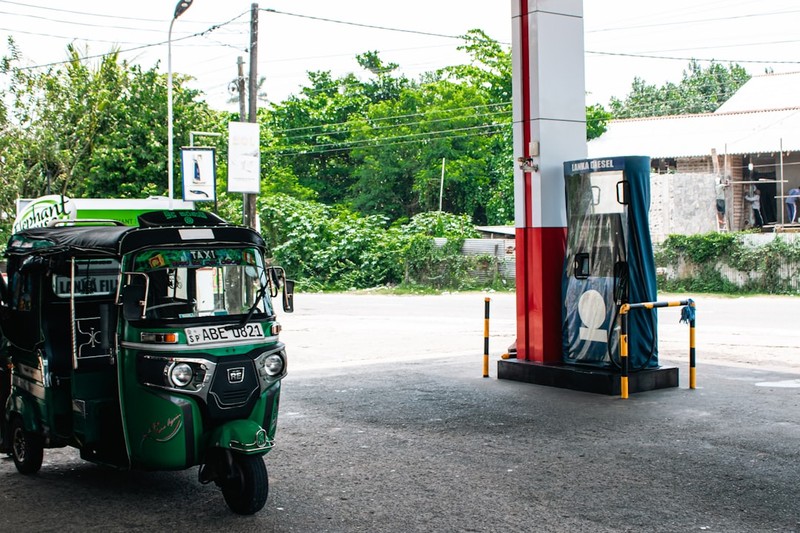
Manila is paying more than 1,000 jeepney drivers to give free rides. Sri Lanka has declared Wednesdays a public holiday. Thai news anchors have shed their blazers on air to model energy conservation. In Gujarat, 400,000 ceramics workers sit idle because the gas has stopped flowing.
More than five weeks since the US and Israel launched their surprise attack on Iran, the Strait of Hormuz is effectively closed, and the economic fallout has reached billions of people thousands of miles from the Persian Gulf. Asia, which receives nearly 90 percent of the oil and gas transiting the strait, is now scrambling through a cascade of shortages that governments are struggling to contain.
Singapore’s Coordinating Minister for National Security K Shanmugam laid out the stakes on Saturday in his first public update as chair of the Homefront Crisis Ministerial Committee, convened by Prime Minister Lawrence Wong to coordinate the government’s response.
“Inevitable” price increases for food and other products are among the issues the committee is dealing with, Shanmugam said. Singapore imports nearly all its food, and fertilizer prices have surged as the Hormuz disruption tightens supplies of natural gas, a key feedstock for nitrogen fertilizers.
“It’s not clear when that situation will change, and even when the war stops very soon, doesn’t mean supply disruptions will go away,” Shanmugam told reporters at a community event.
The most exposed
The Philippines, which imports more than 90 percent of its oil from the Gulf, has declared a national energy emergency and shortened government work weeks. Jeepney driver Carlos Bragal Jr told the BBC his daily earnings have collapsed from 1,000 to 1,200 pesos to as little as 200 pesos for a 12-hour shift. “Our situation now is worse than during the pandemic,” he said.
Indonesia is seeking roughly 80 trillion rupiah ($6 billion) in budget savings to absorb the war’s economic impact. Malaysia has raised petrol-subsidy spending from 700 million ringgit to 3.2 billion ringgit to keep domestic prices stable. Vietnam has scrapped some fuel taxes and urged citizens to limit private vehicle use. Cambodia saw a third of its 6,300 petrol stations shutter at one point before emergency imports brought the closure rate down.
India, where roughly 60 percent of liquefied petroleum gas is imported and 90 percent of those shipments pass through Hormuz, has been hit hard. In Mumbai, as many as a fifth of all restaurants fully or partially closed in early March. “Cooking gas simply isn’t available,” Manpreet Singh of the National Restaurant Association of India told the BBC.
The International Energy Agency says the world has already lost around 11 million barrels per day of oil supply. IEA chief Fatih Birol has described the shock as worse than the 1970s oil crises and the 2022 gas turmoil combined. Brent crude has risen roughly 55 percent to around $100 a barrel. Singapore diesel benchmarks have nearly doubled to above $180.
Buying time, not solutions
The structural problem is that governments are spending reserves to cushion a shock with no clear end. Singapore’s Manpower Minister Tan See Leng said on March 11 that the city-state’s stockpile of liquefied natural gas and diesel is “enough to last for months” — a finite and deliberately vague timeline.
Japan has set up a task force to secure medical supplies made from naphtha, a petrochemical feedstock now in short supply. South Korea’s energy minister has urged calm over panic-buying of rubbish bags, which depend on the same feedstock, assuring citizens the country has more than a year of supply.
The Diplomat has argued that Southeast Asia is following a familiar crisis sequence: energy disruption first, then inflation spreading through transport and fertilizer, then fiscal strain as governments subsidize the pain, and potentially food insecurity and social instability if the shock endures. Urea fertilizer prices have already risen 30 to 40 percent globally. In parts of Malaysia, prices jumped 100 to 150 percent in two weeks, prompting some producers to halt new orders.
Coal is returning as the emergency fuel of choice. India has ordered coal plants to run at full capacity. Japan is allowing less-efficient coal plants back onto the market. South Korea has lifted caps on coal-fired electricity and delayed its planned phaseout. The environmental cost is being deferred to a future crisis.
A man-made disaster with no end in sight
As Nikkei Asia’s editor noted, the COVID-19 pandemic was a catastrophe that could not have been prevented. This energy crisis is man-made — the product of leaders choosing war. The only real solution is the return of peace in the Middle East.
After US President Donald Trump’s latest televised address, in which he said “core strategic objectives are near completion” without any clear reference to a ceasefire, the timing of that outcome has become more uncertain, not less. Asian stock markets lost direction. Crude oil prices rose.
Shanmugam captured the essential calculation facing every government in the region: “If the lights go off and you haven’t thought about fuel, and you haven’t thought about how you’re going to keep the electricity going, your businesses going.”
The lights are still on across most of Asia. Governments are spending furiously to keep it that way. The question is whether peace arrives before the money — and the fertilizer, and the diesel, and the public patience — runs out.
Sources
- Ministerial committee to tackle energy crisis, wider supply shocks from Middle East conflict: Shanmugam — Channel News Asia
- Editor’s Choice: Energy crisis forces Asia into COVID-like restrictions — Nikkei Asia
- South Korea to Sri Lanka: How the Iran war impacts you if you live in Asia — BBC
- The Iran War: Is Southeast Asia Heading Into Its Next Crisis? — The Diplomat
- The world responds to Iran war energy crisis — The Guardian
Discussion (9)