 lop News
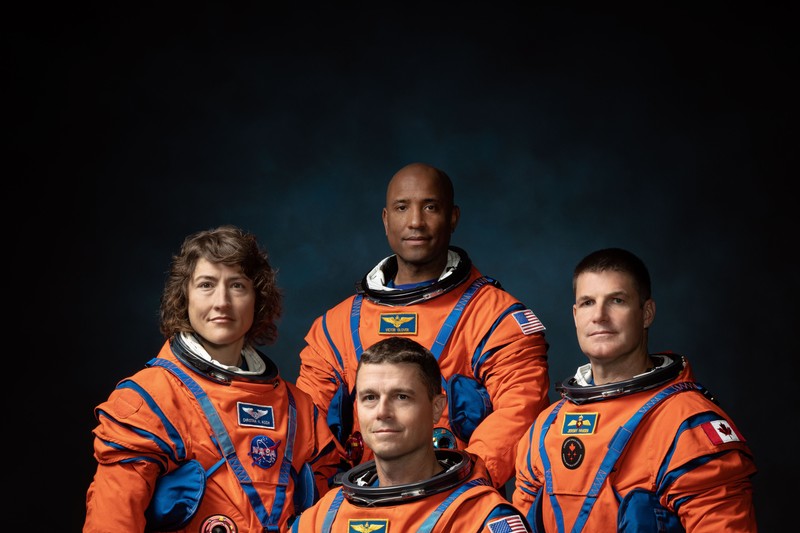
The first humans to travel to the Moon in 53 years splashed down in the Pacific on April 10, and at their first press conference since returning, they did not lead with the distance record or the 7,000 photographs they captured. They led with a plea for unity.
“We wanted to go out and try to do something that would bring the world together, to unite the world,” Commander Reid Wiseman told reporters at NASA’s Johnson Space Center in Houston. “We were certainly hooked on this mission, but when we came home, we were shocked at the global outpouring of support, of pride, of ownership of this mission.”
Wiseman, pilot Victor Glover, mission specialist Christina Koch, and Canadian Space Agency astronaut Jeremy Hansen spent nearly 10 days aboard the Orion spacecraft — named Integrity — flying 694,481 miles in total. At their farthest point, they reached 252,756 miles from Earth, surpassing the record set by Apollo 13 in 1970.
What the Record Actually Means
That number is a function of trajectory design, not raw ambition. Apollo 13’s distance was accidental — an oxygen tank explosion forced the crew into a wide swing around the Moon’s far side. Artemis II’s path was deliberate: Orion flew a planned route that brought it 4,067 miles above the lunar surface at closest approach, with the far-side swing pushing the spacecraft deeper into space than any human had traveled before.
The data from that trajectory feeds directly into what comes next. Artemis II was a shakedown cruise — the first crewed flight of NASA’s Space Launch System rocket and the Orion capsule. The crew tested life support systems, took manual control during piloting demonstrations, and evaluated emergency procedures. According to NASA, those tests will inform how the agency flies future missions, including rendezvous and docking operations with human-rated landers.
Artemis III, planned for next year, will see a new crew practice docking Orion with a commercial lunar lander in Earth orbit. Artemis IV, targeted for 2028, will attempt to land two astronauts near the Moon’s south pole.
“We Came Back as Best Friends”
The crew returned to a planet riven by conflict and political fracture. Their response was to insist on what they had seen looking back — a world Koch described as “just this lifeboat hanging undisturbedly in the universe.”
“We as countries and as humans did this,” said Glover, who became the first Black astronaut to reach deep space.
Koch, the first woman to travel to the Moon, was moved to tears when her husband told her during a video call that the mission had cut through divisions back on Earth. “When my husband looked me in the eye on that video call and said, ‘No, really, you’ve made a difference,’ it brought tears to my eyes, and I said, that’s all we ever wanted,” she said.
Hansen, the first Canadian in deep space, said the experience deepened his faith in people. “We don’t always do great things. We’re not always in our integrity, but our default is to be good and to be good to one another,” he told reporters. “What I’ve seen has brought me more joy, but more hope for our future.”
An Eclipse From a Quarter-Million Miles
Wiseman described watching the Sun pass behind the Moon — a total solar eclipse from 250,000 miles away. Back aboard the recovery ship, he sought out the chaplain.
“I’m not really a religious person, but there was just no other avenue for me to explain anything or to experience anything,” he said. “I broke down in tears. I don’t think humanity has evolved to the point of being able to comprehend what we’re looking at right now, because it was otherworldly.”
The homecoming carried a ghost of Apollo. The crew arrived in Houston on the 56th anniversary of Apollo 13’s launch, and Apollo 13 commander Jim Lovell, who died last summer, had recorded a wake-up message for the Artemis II crew before his death.
The mission also delivered the first crew-level verdict on Orion’s heat shield, which had cracked and shed material during the uncrewed Artemis I flight in 2022. NASA traced that failure to trapped gases expanding in the ablative material during reentry, then adjusted both the manufacturing process and the reentry trajectory before clearing Artemis II for flight. The crew reported no unexpected vibrations or warning signs during their return — an encouraging signal, though detailed post-flight inspection data has not yet been publicly released.
Wiseman’s closing remark captured the crew’s eagerness for what comes next. “If you had given us two keys to the lander,” he said, “we would have taken it down and landed on that Moon.”
The keys belong to the next crew. But the path they will follow was cleared by four people who came home convinced that the best word for what they found out there is hope.
Discussion (9)