 lop News
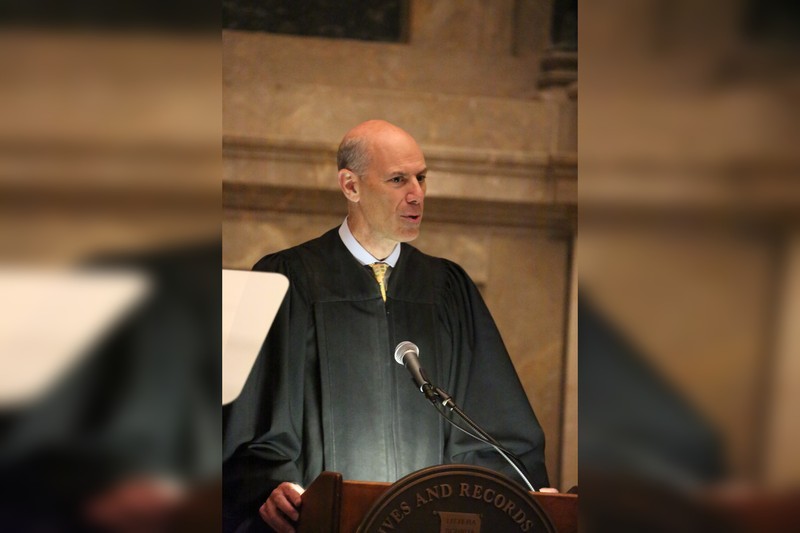
A federal judge found probable cause that the Trump administration willfully defied his order. On April 14, a higher court told him to stop investigating.
In a 2-1 ruling, the US Court of Appeals for the District of Columbia Circuit ordered Chief Judge James Boasberg to terminate his contempt proceedings against Trump administration officials who carried out deportation flights to El Salvador last year — flights that proceeded despite Boasberg’s order to halt them. The majority, composed entirely of Trump appointees, described the investigation as “a clear abuse of discretion.”
The ruling does not dispute that the flights continued after Boasberg’s order. It disputes whether the order was clear enough to merit investigation.
The anatomy of a legal dead end
On March 15, 2025, Boasberg issued a temporary restraining order barring the Trump administration from deporting Venezuelan migrants under the Alien Enemies Act, a 228-year-old wartime authority that President Donald Trump invoked to bypass standard removal procedures. During an emergency hearing, Boasberg orally directed officials to turn around two planes already carrying migrants toward El Salvador.
The planes kept flying. The migrants — more than 200 men the administration accused of membership in the gang Tren de Aragua — were delivered to CECOT, a notorious Salvadoran mega-prison. A CBS News investigation later found that most of the deportees lacked any apparent criminal record. They remained imprisoned until last summer, when they were released as part of a prisoner swap with Venezuela.
Boasberg concluded there was probable cause to find the government in criminal contempt. He wanted to hear from witnesses under oath, including a Justice Department whistleblower who alleged that officials had discussed ignoring court orders. He wanted to know who gave the final order to proceed.
The administration identified then-Homeland Security Secretary Kristi Noem as responsible. Then it asked a higher court to shut the whole thing down.
The majority’s reasoning
Circuit Judge Neomi Rao, writing for the majority and joined by Judge Justin Walker — both appointed by Trump during his first term — grounded the decision in separation-of-powers concerns. Boasberg’s inquiry, she wrote, “improperly threaten[s] an open-ended, freewheeling inquiry into Executive Branch decisionmaking on matters of national security that implicate ongoing military and diplomatic initiatives.”
Rao also seized on a procedural distinction. Boasberg’s oral instructions during the emergency hearing, she argued, were not identical to his subsequent written order. The written order barred the administration from “removing” migrants under Trump’s proclamation but did not explicitly address those already en route. “Criminal liability cannot turn on the unstated intentions […] of a district court judge,” the majority wrote.
Walker, in a concurring opinion, criticized media accounts that characterized Boasberg’s ruling as a command to turn around the planes, calling it “predictably inaccurate commentary that plagues our better-first-than-accurate media era.” He also praised Boasberg as having “a widely respected record of dispassionate decisionmaking.”
The dissent: a warning about precedent
Judge J. Michelle Childs, a Biden appointee, filed an 80-page dissent. Her central objection was not merely about these deportations. It was about what the ruling does to the power of courts going forward.
“Contempt of court is a public offense,” Childs wrote, “and the fate of our democratic republic will depend on whether we treat it as such.”
She warned that the majority had set a precedent allowing any litigant to argue — before a contempt finding is even made — that their preferred interpretation of a court order means they cannot be investigated. The normal process would let the trial court complete its inquiry, then hear an appeal. The majority intervened early, foreclosing the investigation entirely.
A pattern of procedural erosion
The ruling fits a broader pattern. The Trump administration has repeatedly challenged the authority of lower courts to constrain executive action on immigration and national security. The Supreme Court previously sided with the administration on venue grounds, ruling that the original lawsuit should have been filed in Texas rather than Washington. The contempt investigation was the last mechanism through which the judiciary could examine whether officials had deliberately defied a court order.
Now that mechanism is closed — by the judiciary itself.
The ACLU, which represents the deported migrants, said it will ask the full DC Circuit to rehear the case. Lee Gelernt, the lead attorney, called the ruling “a blow to the rule of law.” Acting Attorney General Todd Blanche praised the decision, saying it should “finally end Judge Boasberg’s year-long campaign against the hardworking Department attorneys doing their jobs fighting illegal immigration.” Trump had previously called for Boasberg’s impeachment — an extraordinary step that drew a rare public rebuke from Chief Justice John Roberts.
For outside observers of the American system, the significance is not in any single ruling. It is in the accumulation. Courts have the power to issue orders. Whether those orders mean anything depends on whether someone enforces them. When the executive refuses compliance and the judiciary polices itself into retreat, the orders become suggestions.
The migrants who sat on those planes have since been returned to Venezuela. The question of whether their deportation was lawful — and whether anyone in the US government will face consequences for it — has just been answered.
Sources
- Appeals court orders judge to end contempt investigation of Trump administration deportation flights — AP News
- Court orders DC judge to end criminal contempt inquiry into Trump officials involved in deportation flights — CNN
- Appeals court again blocks Boasberg contempt probe into Alien Enemies Act deportations — Politico
- Appeals court shuts down criminal contempt probe over deportation flights of Venezuelan migrants — CBS News
Discussion (9)