 lop News
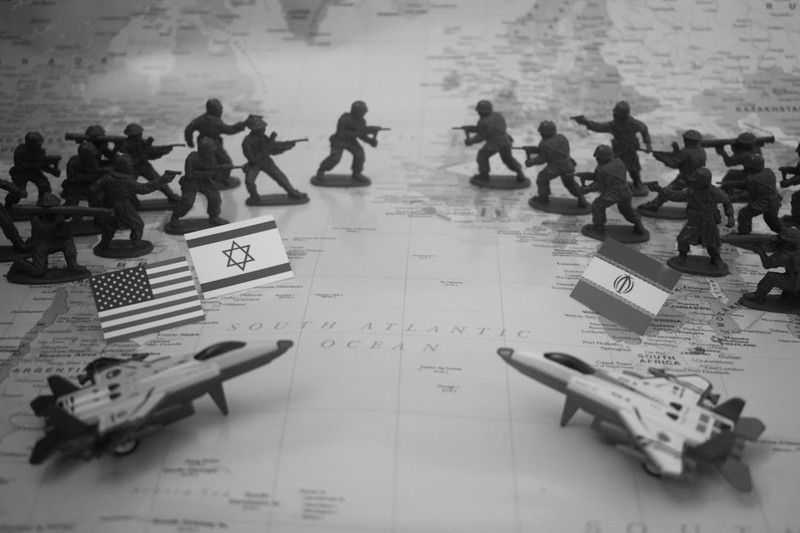
Two Patriot missile batteries that once sat in Germany are now in Turkey. Components of a THAAD system that defended South Korea are headed to the Gulf. And NATO’s eastern flank — the stretch of alliance territory most exposed to Russian attack — has less than 5 percent of the air defense capability its own confidential plans say it needs.
The U.S. war against Iran, now entering its fourth week, has triggered one of the largest rapid redeployments of American missile defense assets in years. The military consequences in the Middle East are well documented. The consequences for Europe are only beginning to register.
What Moved, and From Where
According to an AP investigation published on March 20, two Patriot systems were sent from Germany to Turkey after Iranian ballistic missiles were fired over Turkish airspace. One was transferred from Ramstein Air Base to Incirlik Air Base, where U.S. and NATO forces are based. The other was positioned in the southeastern Malatya province, near a NATO radar station. Additional Patriot interceptor stocks were drawn from “various locations around Europe,” three U.S. defense officials told the AP, speaking anonymously to discuss sensitive operations.
Separately, Army Recognition reported in early March that the Pentagon began relocating elements of its Terminal High Altitude Area Defense system from South Korea to the Middle East — a move that stretches the already thin global supply of THAAD batteries across yet another theater.
One U.S. official told the AP that Patriot missile stocks are “absolutely” dwindling in Europe and called the situation “pretty concerning.” Another acknowledged the core trade-off: everything that moves out of Europe is a capability that “can’t respond to Russia” if Moscow decides to act.
The Numbers That Matter
The consumption rate tells the story. Ukrainian President Volodymyr Zelenskyy said the U.S. produces roughly 60 to 65 Patriot interceptors per month — between 700 and 800 a year. According to the Foreign Policy Research Institute, Washington and its partners used approximately 943 Patriot missiles in the first 96 hours of the Iran war alone. The U.S. alone fired around 325 in that window.
That is more than a year’s production burned through in four days. And much of it was spent on targets that did not warrant the expense: U.S. officials told the AP that Patriots are being used against comparatively cheap Iranian Shahed drones, threats that “don’t require them.”
A drone-on-drone system called Merops is now being deployed to address the mismatch, but only in “limited” quantities so far.
Europe’s Exposure
The defense gap is not theoretical. The Financial Times reported, citing confidential NATO planning documents, that alliance members can currently provide less than 5 percent of the air defense capabilities deemed necessary to protect Central and Eastern Europe from a full-scale Russian attack. A senior NATO diplomat was blunt: “And right now, we don’t have that.”
Greek Prime Minister Kyriakos Mitsotakis and Polish Prime Minister Donald Tusk described air defense as “a major vulnerability in our security.” Britain’s most recent defense review called the challenge of protecting against aerial attack “its most acute for over 30 years.”
Russia’s hybrid campaign has not paused to accommodate the redeployment. Drones from the war in Ukraine continue to stray into NATO airspace, from the Baltic states to Poland and Romania. European officials say Moscow is also pursuing sabotage and cyberattacks across the continent.
Ukraine Feels It First
Kyiv stands to lose the most. Ukraine has fewer than a dozen Patriot batteries and has said it needs at least 25. Zelenskyy warned this week that shortages are now inevitable because of the Iran campaign.
Volodymyr Fesenko, head of the Kyiv-based Penta think tank, told Al Jazeera that Russia’s most obvious move would be to “bleed Ukraine’s stock of Patriot missiles dry” through massive coordinated strikes. He noted that Moscow recently paused its drone and missile attacks — a pattern consistent with amassing ordnance for a large-scale raid.
A German military official told the AP he has not yet seen evidence of operational shortfalls in Ukraine caused by the Middle East war, but added that shortfalls “may occur in the near future, eventually weakening Ukraine’s endurance and capabilities.”
The Strategic Bind
The White House has pushed back on the concern. Press secretary Karoline Leavitt said the U.S. military has “more than enough munitions, ammo, and weapons stockpiles” to achieve the goals of what the administration calls Operation Epic Fury. One U.S. official said there is still “plenty” of capacity in NATO to defend Europe.
But the math is difficult to square. Production cannot keep pace with consumption. The systems protecting Europe were not surplus — they were positioned there for a reason. And the threat they were guarding against has not gone away.
Europe’s air defense was already a known weakness before a single Patriot left Ramstein. Now it is an active gap, widening by the week.
Sources
- AP exclusive: As the US shifts missiles towards Iran, officials raise concerns of gaps in European air defenses — AP News via Boston Herald
- U.S. Redeploys THAAD Defense System From South Korea to Middle East — Army Recognition
- Amid Iran war, will Russia exploit Ukraine’s shortage of Patriot missiles? — Al Jazeera
- Shortfall in NATO Air Defense Capability Leaves Eastern Europe Vulnerable — Kyiv Post