 lop News
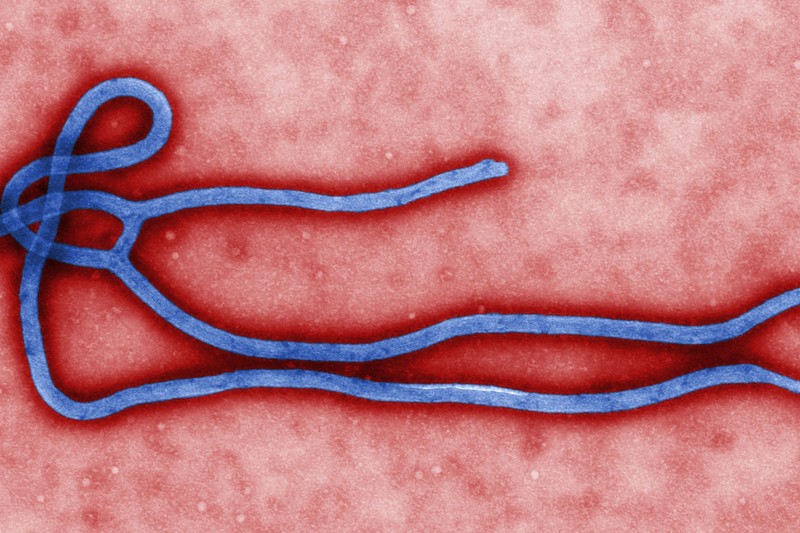
A number of American citizens currently in the Democratic Republic of Congo have had high-risk exposures to Ebola, and at least one may have developed symptoms, multiple sources told STAT News on Sunday.
The disclosures came the same day the World Health Organization declared the outbreak a public health emergency of international concern — its highest alert level — with at least 246 suspected cases and 80 deaths concentrated in northeastern Ituri province.
At a hastily convened CDC news conference on Sunday, the agency’s incident manager, Dr. Satish Pillai, was asked directly whether Americans had been exposed. “We don’t discuss or comment on individual dispositions,” Pillai said. “It is a highly dynamic situation.”
The State Department and the Department of Health and Human Services have not responded to repeated press inquiries.
Scrambling to Evacuate
The US government is working to arrange transport for exposed Americans out of the DRC, according to STAT’s sources. Options under discussion include moving them to an American military base in Germany, though no final decision has been made. No test results have come back yet for any of the individuals.
Federal officials have also been contacting US institutions that operate high-containment quarantine units capable of handling Ebola patients. At least one such facility is currently occupied — housing Americans from the MV Hondius, a cruise ship that recently experienced a separate hantavirus outbreak. Containment infrastructure is already under strain.
An Outbreak That Was Large Before It Was Found
The DRC’s National Public Health Institute only confirmed the outbreak on Friday. By then, the damage was substantial. The earliest known suspected case — a health worker — developed symptoms on April 24. By May 5, when health authorities first learned of the crisis through social media reports, 50 deaths had already been recorded, according to the Africa Centres for Disease Control and Prevention.
WHO reported eight laboratory-confirmed cases out of just 13 samples tested — a positivity rate suggesting the true scale is significantly larger than current figures indicate. Suspected cases have been reported across Ituri and neighboring North Kivu province. Two infected individuals traveled independently to Kampala, Uganda’s capital; one died. A case reported in Kinshasa, roughly 1,000 kilometers from the epicenter, tested negative on confirmatory testing. On Sunday, the rebel administration in Goma, eastern Congo’s largest city, announced a confirmed case.
Dr. Jean Kaseya, director-general of the Africa CDC, did not mince words: “This outbreak started in April. So far, we don’t know the index case. It means we don’t know how far is the magnitude of this outbreak.”
A Virus Without a Vaccine
The culprit is Bundibugyo ebolavirus — only the third detected outbreak of this species on record, following events in 2007 and 2012. Its case fatality rate has historically been lower than the Zaire and Sudan strains, at roughly 32 to 34 percent. But no licensed vaccine exists, and no antiviral is approved.
Kaseya noted that pharmaceutical companies have little incentive to develop vaccines for a rare pathogen. “If we are serious in this continent, we need to manufacture what we need,” he told reporters. “We cannot every single day look for others to come to tell us what they are doing.”
The affected area hosted the second-largest Ebola outbreak in history from 2018 to 2020, which killed 2,287 people. Armed conflict, displacement, and heavy cross-border population movement — conditions that hampered that response — persist today.
A Weakened System Faces a Test
Dr. Daniel Jernigan, who led the CDC’s National Center for Emerging and Zoonotic Infectious Diseases until he resigned last summer in protest over the firing of CDC Director Susan Monarez, warned the current signs point to a prolonged crisis. “There is a lot that we don’t know here, and it has happened very quickly, and the numbers suggest that it’s not going away anytime soon,” he told STAT.
Former CDC Director Dr. Tom Frieden was more direct. “The world again faces grave risk and needs an urgent response,” he said in a statement to USA Today, calling the US withdrawal from the WHO and other Trump administration actions “reckless.” The United States withdrew from the global health body under President Donald Trump, eliminating a key node in international outbreak surveillance.
The CDC has activated its emergency operations center and is deploying experts to support surveillance and contact tracing. Pillai said the risk to the American public remains low. But with exposed citizens still in-country, quarantine capacity under strain, and the outbreak’s true dimensions unknown, that assessment rests heavily on the hope that containment holds.
Sources
- In Ebola outbreak, a number of Americans in the Congo believed to have had exposure to suspected cases — STAT News
- Epidemic of Ebola Disease caused by Bundibugyo virus in the Democratic Republic of the Congo and Uganda determined a public health emergency of international concern — World Health Organization
- WHO declares global health emergency for Ebola: What Americans should know — USA Today
- WHO declares global health emergency over Ebola outbreak in Congo and Uganda — France 24
Discussion (10)