 lop News
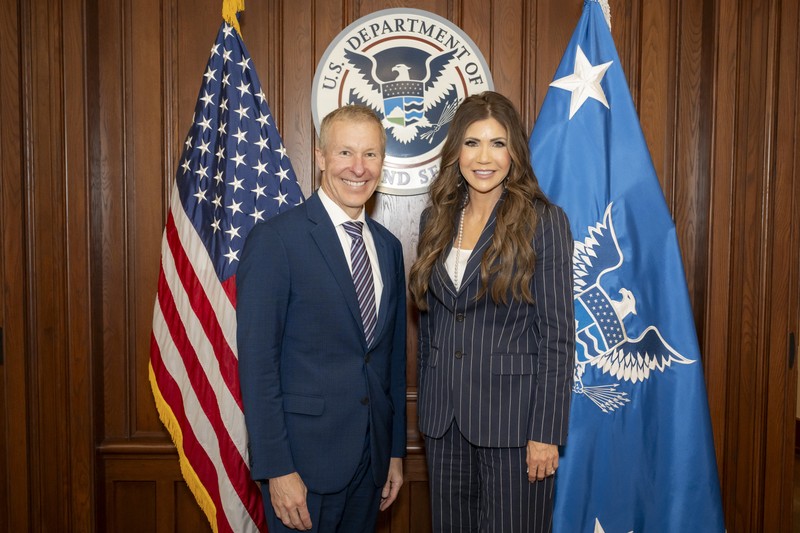
Scott Kirby and Robert Isom once shared the executive wing at American Airlines, working in such tight coordination that colleagues reportedly dubbed them the “dream team.” This week, Kirby — now CEO of United Airlines — came calling with a merger proposal. Isom, who holds the top job at American, sent him packing.
American Airlines publicly rejected United’s overtures on Thursday. In a statement, the carrier said it would not pursue a combination with United, shutting down what was first reported as a formal approach from Kirby. Multiple outlets also reported on the rejection.
No counteroffer. No exploratory committee. No polite language about “evaluating strategic options.” Just a door slammed hard enough to be heard across the industry.
Two Executives, Two Visions
The personal history transforms what might have been a routine corporate overture into something more pointed. Kirby and Isom served together in American’s C-suite under then-CEO Doug Parker during the critical post-merger integration with US Airways. Their partnership was reportedly considered central to American’s operational strategy during that period. Kirby departed for United in 2016, ascending to CEO in 2020. Isom succeeded Parker at American in 2022.
Now the two men lead carriers that compete head-to-head in dozens of markets, and their conflicting read of the industry’s future is playing out in public.
Why Kirby Called
Kirby’s approach reflects a thesis that has defined his career: scale is the only reliable defense against the airline industry’s structural chaos. Fuel prices swing without warning. Labor costs ratchet upward with every contract cycle. Post-pandemic demand has stabilized, but unevenly — premium and long-haul segments are thriving, while some domestic routes remain below pre-COVID levels.
A combined United-American would have produced a carrier with dominant positions at the country’s most important hub airports and a loyalty base spanning the two largest frequent-flyer programs in the US. For Kirby, the arithmetic is likely straightforward: in a business where profit margins are measured in single digits, size is the variable you can control.
Why Isom Said No
Isom’s rejection rests on a different set of calculations. American has spent the past two years focused on debt reduction and operational reliability after a bruising post-pandemic stretch. The carrier’s balance sheet has strengthened, and its Dallas-Fort Worth hub remains one of the most profitable single-airport operations in global aviation.
A merger pursuit would mean years of regulatory scrutiny in an environment where antitrust authorities have grown hostile to airline consolidation. American has recent, personal experience with that reality: its Northeast Alliance with JetBlue was dismantled after the Justice Department challenged it in court.
By rejecting the deal outright, Isom avoids a regulatory quagmire and keeps American focused on its own turnaround — rather than absorbing the risk and distraction of merging with a rival of roughly equal size.
What This Means for Travelers
In the near term, not much changes. No merger means no immediate route cuts, no hub consolidation, and no removal of a competitor from markets where United and American compete directly — Chicago, Los Angeles, Phoenix, and numerous others.
But the competitive landscape is shifting regardless. Smaller carriers have been expanding aggressively into territory once dominated by legacy airlines. Alaska Airlines continues integrating Hawaiian Airlines’ operations after its acquisition, and Southwest has pushed into markets that used to belong exclusively to the big three. Without the combined heft of a merged network, both United and American face legitimate questions about whether they can defend their market share against competitors with leaner cost structures.
The rejection also raises the question of alternative partnerships. Code-shares, joint ventures, and alliance structures fall short of full merger but could still reshape competitive dynamics — particularly on transatlantic and transpacific routes where both carriers have invested heavily.
The Bottom Line
Kirby saw a deal that made sense on paper. Isom saw a deal that didn’t make sense in practice. The executive who knows American’s assets almost as intimately as Isom does decided they were worth acquiring; the executive who controls them decided they were worth keeping.
Both men once built a single strategy together. Now they’re building rival ones — and the competitive consequences will play out on departure boards across the country.
Sources
- American Airlines Rejects United CEO’s Merger Proposal — Wall Street Journal via Google News
- American Airlines Says It Won’t Merge With United — New York Times via Google News
- American rejects merger talks with United Airlines — CNBC via Google News
- United CEO Scott Kirby and American CEO Robert Isom were once colleagues known as the dream team — Fortune via Google News
Discussion (9)