 lop News
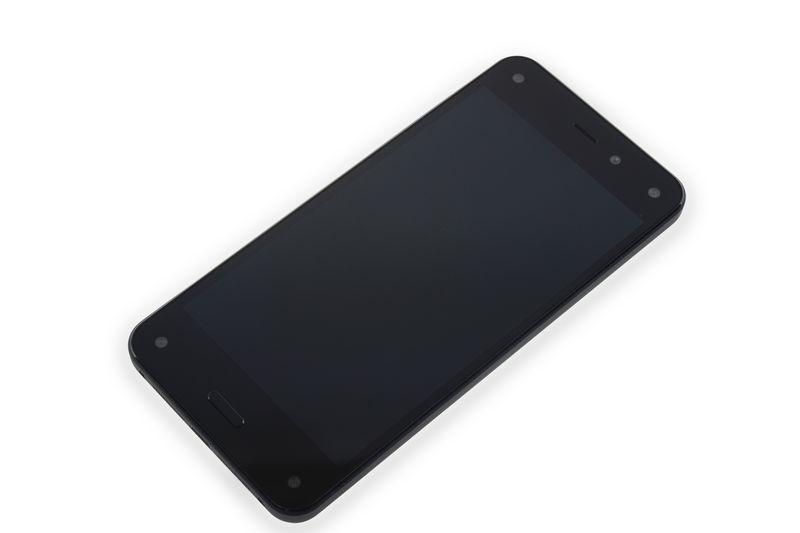
Fewer than 35,000 units sold. A $170 million write-down. A price cut from $199 to 99 cents in under three months. That was the Amazon Fire Phone in 2014. Now Amazon wants to try again.
The company is developing a new smartphone codenamed “Transformer,” according to a Reuters exclusive citing three people familiar with the project. The device is being built around Alexa, Amazon’s voice assistant, with artificial intelligence positioned as the feature that justifies the entire enterprise. Whether that justification holds up is a different question.
The Pitch
Transformer is being developed by ZeroOne, a unit within Amazon’s devices division led by J Allard — the former Microsoft executive who helped create the Xbox and, less auspiciously, the Zune. The unit reports to Panos Panay, the ex-Surface chief whom Amazon hired in 2023 to reinvent its hardware lineup.
The phone would function as what Reuters describes as “a mobile personalization device” that syncs with Alexa and serves as a conduit to Amazon’s ecosystem throughout the day — shopping, Prime Video, Prime Music, Grubhub orders, all streamlined through AI. The core pitch is that Alexa’s intelligence could “eliminate the need for traditional app stores,” handling tasks directly rather than requiring users to download and register for individual applications.
Alexa will be “a core feature” of the device but “not necessarily the primary operating system,” according to Reuters’ sources. Amazon is also exploring a stripped-down “dumbphone” variant with limited features aimed at reducing screen dependence, reportedly drawing inspiration from the Light Phone, a $700 minimalist handset with a camera, maps, and not much else.
What’s Actually Changed
The obvious question: what makes this different from the Fire Phone?
In 2014, Amazon shipped a device that solved problems nobody had. Its signature feature was Dynamic Perspective, a 3D display system powered by four front-facing cameras that tracked the user’s face. Technically impressive. Entirely useless. The phone launched as an AT&T exclusive at flagship pricing, ran a forked version of Android with a fraction of the apps on Google Play, and lacked basic services like Gmail, YouTube, and Google Maps. It was, by most accounts, a phone built for Jeff Bezos rather than for customers.
The argument for Transformer is that AI changes the calculus. If Alexa can act as an intelligent agent — booking rides, managing schedules, completing purchases — then the phone doesn’t need a massive app library. The assistant is the interface.
There’s some substance behind the idea. Alexa+, Amazon’s generative AI upgrade, launched to U.S. Prime members for free in February 2026 and now supports agentic capabilities: booking through Ticketmaster, ordering Uber rides, making OpenTable reservations. Engagement metrics during beta testing showed conversations increasing two to three times over the original Alexa, according to Amazon.
The Skeptic’s Case
But the premise has a hole. Alexa+ already runs on 97 percent of existing Alexa devices. It’s available via a web app at Alexa.com. It works on phones people already own. The question Amazon hasn’t answered is why any of this requires dedicated hardware.
The smartphone market is also not the same one Amazon fumbled a decade ago. It’s more consolidated, not less. Apple and Samsung control the overwhelming majority of global sales. Google’s Pixel exists as a proof of concept for Android and still claims single-digit market share. Amazon, meanwhile, has no carrier partnerships for the Transformer, no announced timeline, and no disclosed budget. Reuters noted the project could still be scrapped.
Then there’s the codename. “Transformer” is doing a lot of heavy lifting for a device whose existence hasn’t been confirmed by Amazon itself, and whose most novel feature — an AI assistant that handles tasks without apps — is a pitch that Google, Apple, and Samsung are all making with their own assistants right now.
The Bottom Line
Amazon has the ecosystem, the AI investment, and the Panay-Allard hardware talent to build a credible phone. What it doesn’t have is a clear answer to the simplest question: why would someone buy this instead of installing Alexa on their iPhone?
Until that answer materializes, Transformer is a codename in search of a product.
Sources
- Amazon plans smartphone comeback more than a decade after Fire Phone flop — Reuters
- Amazon working on new smartphone with Alexa at its core, report says — TechCrunch
- Amazon is reportedly working on a new phone built around Alexa — Engadget
- Amazon developing Fire Phone successor to take on iPhone with Alexa AI focus — 9to5Mac
- Alexa+, Amazon’s AI assistant, is now available to everyone in the US — TechCrunch
- Amazon’s Novel Approach to a Newfangled AI Device: a Phone? — Spyglass