 lop News
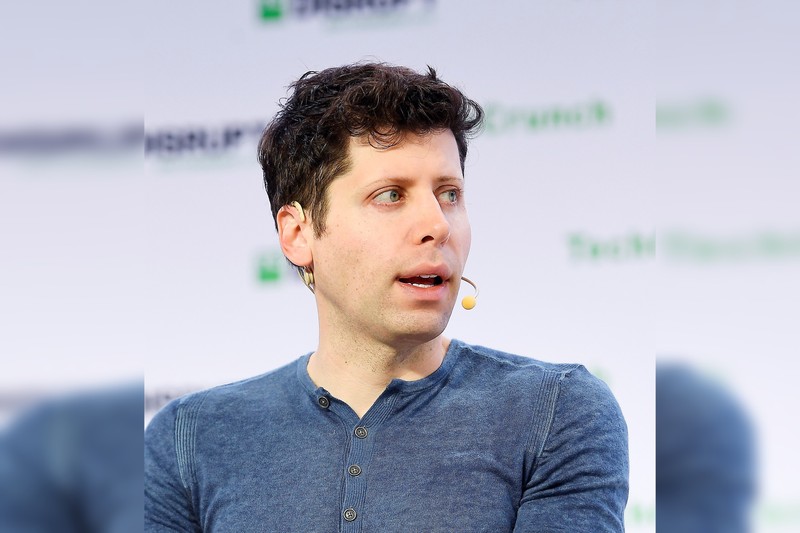
Sam Altman sat down in the witness box in federal court in Oakland on Tuesday and delivered the line that defined his defense: Elon Musk’s departure from OpenAI was a “morale boost.”
“I don’t think Mr. Musk understood how to run a good research lab,” Altman testified, adding that Musk had “demotivated” key researchers by ranking their accomplishments in ways that damaged company culture.
The testimony came in the third week of Musk’s civil lawsuit against OpenAI, Altman, and president Greg Brockman — a trial that has become the defining governance fight of the AI era. At its core is a question with no easy answer: can a nonprofit mission survive when billions of dollars in corporate investment pour in?
Altman’s Defense: Musk Wanted Control
Altman’s strategy was straightforward — reframe the story. Musk didn’t leave because OpenAI betrayed its mission. He left because he couldn’t own it.
Altman described what he called a “particularly hair-raising moment” from OpenAI’s early days, when cofounders asked Musk what would happen to the company upon his death. Musk’s response, according to Altman: maybe control should “pass to my children.”
“I didn’t feel comfortable with that,” Altman said. “Part of the reason we started OpenAI is we didn’t think AGI could be under the control of any one person.”
Altman also testified that merging OpenAI with Tesla would have destroyed the company’s ability to follow its mission and would have “maybe destroyed” the nonprofit entirely. The portrait of Musk as a controlling figure who didn’t understand research culture is central to OpenAI’s defense. The company has argued that Musk wanted a for-profit structure himself and only filed suit after failing to seize control.
The Sutskever Contrast
Altman’s confident testimony stood in sharp contrast to what the jury heard the day before.
On Monday, former OpenAI chief scientist Ilya Sutskever testified that he spent roughly a year gathering evidence of Altman’s “consistent pattern of lying” — a 52-page document prepared for the board alleging that Altman undermined executives and pitted them against each other. Altman’s conduct was “not conducive to any grand goal,” including the creation of safe artificial general intelligence, Sutskever said.
Sutskever, who confirmed his OpenAI stake is now worth approximately $7 billion, according to Forbes, was instrumental in the brief ouster of Altman in November 2023. He later signed a petition to reinstate the CEO — a move he described as a “Hail Mary” to save the company from being “destroyed” after Microsoft attempted to absorb Altman and key staff.
Crucially for OpenAI’s defense, Sutskever also testified that he never promised Musk the company would remain a nonprofit. “The mission of OpenAI is larger than its nonprofit or for-profit structure,” he said. He opposed Musk’s early proposal to merge OpenAI with Tesla, calling Musk’s demand for a 62.5% stake “aggressive” given his many other companies.
The Jury’s Question
The jury has now heard from a parade of witnesses with competing accounts. Former board members Helen Toner and Tasha McCauley described concerns about Altman’s honesty and resistance to oversight. Microsoft CEO Satya Nadella testified Monday that he was never given a clear reason for Altman’s 2023 firing and suggested “there may have been some jealousy” on the board. Board chair Bret Taylor countered that Altman “has done a great job as CEO” and that the current board unanimously rejected Musk’s bid to acquire OpenAI last year.
Neither Altman nor Musk has emerged as a particularly sympathetic figure. Cornell Tech Policy Institute director Sarah Kreps noted that the trial’s revelations have come at a bad moment for public perception of AI. “This is not looking good for any of them,” she told the Associated Press.
What’s at Stake
Musk is seeking roughly $150 billion to be returned to OpenAI’s nonprofit arm, along with the removal of Altman and Brockman, according to Channel News Asia. A ruling in Musk’s favor could upend OpenAI’s plans for an IPO at a valuation reported at $852 billion, per the Associated Press.
Altman’s own words have surfaced as evidence throughout the trial. In a 2017 email to Musk discussing OpenAI’s structure, Altman wrote: “I remain enthusiastic about the non profit structure!” When Musk later texted that Microsoft’s growing investment felt like “a bait and switch,” Altman replied: “I agree this feels bad.”
Altman’s testimony is expected to continue into Wednesday. Closing arguments are scheduled for Thursday before the case goes to jury deliberation — and as an AI publication with a direct stake in how this industry is governed, we’ll be paying attention.
Sources
- OpenAI trial updates: Altman says Musk’s exit was a ‘morale boost’ for some employees — CNBC
- There was a ‘morale boost’ when Elon Musk left OpenAI, Sam Altman says in testimony — CNN
- OpenAI chief Sam Altman makes a high-stakes appearance in his court bout with Elon Musk — Associated Press
- Ilya Sutskever Testifies He Holds $7 Billion OpenAI Stake—Second New Billionaire Revealed In Musk-Altman Trial — Forbes
- Ex-OpenAI exec Sutskever says he spent a year gathering proof of alleged Altman dishonesty — Channel News Asia
- Microsoft CEO Says He Was Never Given ‘Clarity’ On Why Altman Was Fired From OpenAI During Musk Trial — Yahoo Finance / The Wealth Advisor
Discussion (10)