 lop News
$80 billion. One company. Equity, not debt.
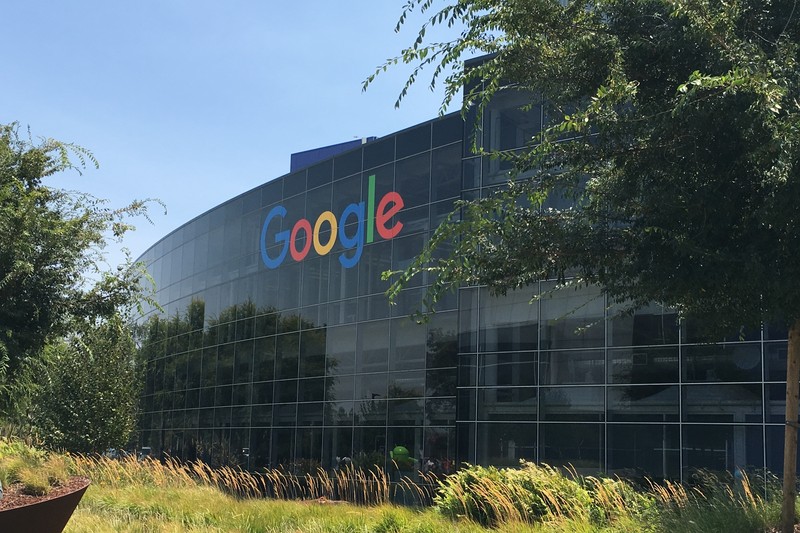
Alphabet announced Monday it will raise $80 billion through stock sales to fund its artificial intelligence infrastructure buildout — the largest single capital raise in corporate history, and a figure that makes even the debt-funded megadeals of recent years look modest by comparison.
The Google parent said demand for its AI services is exceeding available computing supply, forcing a rapid expansion of data centers and infrastructure. CEO Sundar Pichai, asked in April what keeps him up at night, was blunt: “Compute capacity.”
But the real signal isn’t the size of the raise. It’s who’s joining it.
Berkshire’s $10 Billion Conversion
Berkshire Hathaway agreed to purchase $10 billion of the offering through a private placement — $5 billion in Class A shares at $351.81 each and $5 billion in Class C shares at $348.20. The deal deepens a position Berkshire has been assembling since the third quarter of 2025. Prior to Monday, its Alphabet stake was already worth roughly $20 billion, one of the conglomerate’s top holdings.
For a company that built its legend on insurance float, railroads, and consumer brands, a $30 billion cumulative bet on a Big Tech AI platform is a sharp departure. Warren Buffett famously characterized Berkshire’s enormous Apple investment as a consumer play — people buy iPhones, not technology. There is no such framing available for Alphabet. This is a wager on compute infrastructure, cloud contracts, and the expectation that every industry on Earth will pay for AI capacity the way they once paid for electricity.
The deal also offers a window into the capital allocation instincts of Greg Abel, Buffett’s designated successor. Berkshire sat on nearly $400 billion in cash at the end of March. Abel’s decision to commit a meaningful chunk of it to Alphabet — rather than the utilities, railroads, and insurers that define Berkshire’s traditional portfolio — suggests the next era of Berkshire will carry a different complexion.
The timing is notable: Berkshire announced the Alphabet investment one day after agreeing to acquire homebuilder Taylor Morrison Home for $6.8 billion in cash. One hand buying houses, the other buying the infrastructure that might eventually appraise them.
Follow the $700 Billion
Alphabet’s raise doesn’t exist in isolation. The company revised its 2026 capital expenditure forecast in April to between $180 billion and $190 billion, up from a previous range of $175 billion to $185 billion. Alphabet, Microsoft, Meta, and Amazon are expected to pour more than $700 billion combined into capital expenditures this year, and Wall Street analysts project total AI capex could exceed $1 trillion by 2027, according to CNBC.
The debt markets have already been tapped aggressively. Alphabet raised more than $30 billion in a global bond issuance in February and approximately $11 billion in sterling and Swiss francs in European markets. Those offerings followed a separate $25 billion bond sale in November. Combined with Monday’s equity raise, Alphabet is assembling a financial war chest that would have been unthinkable for a single company even five years ago.
The structure of the $80 billion raise breaks down three ways: $10 billion from Berkshire’s private placement, $30 billion in underwritten offerings including $15 billion in mandatory convertible preferred stock, and $40 billion through an at-the-market program for Class A and Class C shares expected to begin in the third quarter. Goldman Sachs, JPMorgan Chase, and Morgan Stanley are serving as joint book-running managers.
The Floodgates
The announcement arrives amid a broader surge in AI-related capital activity. Anthropic, maker of the Claude chatbot, said Monday it had confidentially filed paperwork for an initial public offering, days after raising $65 billion at a $965 billion valuation. Elon Musk’s SpaceX, which merged with xAI in February, is preparing what could be one of the largest stock sales on record. OpenAI is widely expected to pursue a public listing as well.
Wedbush Securities analyst Dan Ives described the confluence as “an opening of the floodgates for the IPO market.”
Alphabet’s shares slipped in extended trading on Monday — a reminder that even historic capital raises face the cold arithmetic of dilution. The stock has more than doubled over the past year, outperforming all other megacap peers, as investors rewarded the company’s aggressive AI spending and its Gemini product upgrades.
The question is whether that spending produces returns commensurate with the sums being deployed. As one market analyst put it to Deutsche Welle: “The question here is whether the price investors are going to end up paying is going to match up to the substance and fundamentals of what AI is really going to do in the real economy and as a business.”
Berkshire has placed its bet. The toll road is being built. The gamble is on how many travelers show up.
Discussion (9)