 lop News
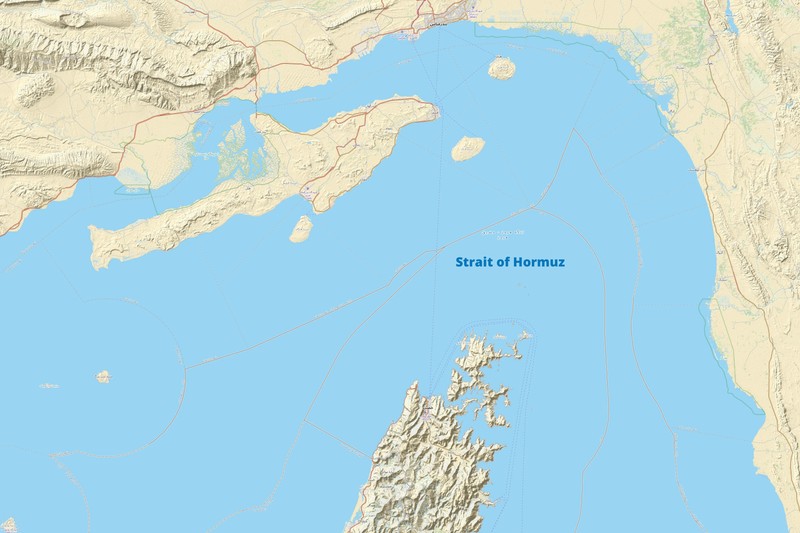
By the time US Central Command confirmed the naval blockade was underway at 14:00 GMT on Monday, the answer from Washington’s closest allies was already in: no.
Britain, France, Spain — every NATO member asked to join President Donald Trump’s blockade of the Strait of Hormuz declined. The operation now rests entirely on American warships and American political capital, in a waterway that carries roughly one-fifth of the world’s oil supply.
The refusal marks the sharpest fracture yet in an alliance strained by six weeks of war. European nations have denied US military aircraft their airspace. Trump has threatened to withdraw from NATO and is weighing pulling some U.S. troops from Europe. “NATO WASN’T THERE WHEN WE NEEDED THEM, AND THEY WON’T BE THERE IF WE NEED THEM AGAIN,” he posted on Truth Social.
The question has shifted from enforcement to sustainability: whether the United States can maintain this operation alone, and what happens if it cannot.
A Blockade Without Partners
Trump announced the operation Sunday after more than 21 hours of negotiations in Islamabad collapsed. The talks foundered on Iran’s nuclear program, according to Vice President J.D. Vance.
“The simple fact is that we need to see an affirmative commitment that they will not seek a nuclear weapon,” Vance told reporters. Iranian Foreign Minister Abbas Araghchi countered that the US brought “maximalism, shifting goalposts, and blockade” to the table.
Trump initially called for blocking “any and all Ships trying to enter, or leave, the Strait of Hormuz.” The Pentagon narrowed this to vessels traveling to or from Iranian ports, in waters east of the strait. A subsequent military notice to seafarers further confined the zone, according to Reuters.
Iran has mined the strait since the war began on February 28. Trump ordered the mines cleared — another task no ally has joined. British Prime Minister Keir Starmer acknowledged the UK has “minesweeping capacities” but told the BBC Britain would not participate in “operational matters.” Japan said it has yet to decide on deploying minesweeping forces.
“Whatever the pressure, and there’s been some considerable pressure, we’re not getting dragged into the war,” Starmer said.
The Sustainability Problem
Dana Stroul, a former senior Pentagon official now at the Washington Institute for Near East Policy, put the challenge plainly: “Trump wants a quick fix. The reality is, this mission is difficult to execute alone and likely unsustainable over the medium to long term.”
Sustained naval interdiction requires rotating warships, aircraft, and crews through confined waters within range of Iranian missiles and drones. Without allied contributions, the blockade draws assets from the Red Sea, the South China Sea, and the Mediterranean — straining a fleet already managing multiple global commitments.
The risk is immediate. Iran’s Revolutionary Guard Corps declared that warships enforcing the blockade would violate the ceasefire. Iran’s military command warned that if port security is threatened, “no port in the region will be safe.”
Legal complications add another layer. Jason Chuah, professor of maritime law at City St George’s, University of London, called the operation “sanctions with warships doing the bidding of President Trump.” Even robust domestic sanctions “don’t automatically give you the right under international law to stop foreign ships on the high seas without consent or backing from the United Nations Security Council,” he told Al Jazeera. Neutral shipping could be caught up too: “If there’s any Iranian link in the cargo, financing or ownership chain, you’re suddenly in the risk zone.”
The Political Gap
The deeper problem is political. France is organizing a conference with Britain to build a separate multinational mission to restore strait navigation — but only after hostilities end and Iran agrees not to attack participants. The message to Washington is unmistakable: allies want the waterway open, but through diplomacy, not a unilateral blockade in wartime.
Chris Featherstone, a political scientist at the University of York, noted that reluctance has defined the alliance throughout the war. “US allies will likely want to know the purpose of the blockade before they commit and risk reprisals,” he told Al Jazeera.
Spain’s Defense Minister Margarita Robles was blunter: “This is just another episode of the downward spiral we have been dragged into.” Turkey’s Foreign Minister Hakan Fidan called for a diplomatic solution and urged a NATO reset at a summit in Ankara in July.
What Comes Next
Markets responded immediately. US crude rose 8 percent to $104.24 a barrel; Brent crude climbed 7 percent to $102.29. Brent has swung from roughly $70 before the war to as high as $119 during the conflict, and analysts warn that Iranian reprisals against Gulf producers could push prices higher.
Iran has allowed roughly 100 tankers through the strait since the war began, most carrying oil to China and India. Those shipments are precisely what the blockade targets — and cutting them off without allied support means Washington absorbs the escalation risk alone.
Vance said diplomacy is not over. “We leave here with a very simple proposal. We’ll see if the Iranians accept it.” Whether Tehran responds to that offer or to a blockade will shape whether the ceasefire holds or the war escalates further.
The United States has the naval firepower to enforce this operation today. Whether it can sustain the cost without partners — through mined waters, under ceasefire threats, in a conflict no ally chose to join — is a different question entirely.
Sources
- NATO Allies Refuse To Join Trump’s Strait of Hormuz Blockade Plan — NDTV (Reuters)
- Trump Says U.S. Will Blockade Strait of Hormuz After Iran Peace Talks Fail — TIME
- Trump’s threat to blockade Hormuz: Why it’s the latest major escalation — Al Jazeera
- Strait of Hormuz blockade explained: why is Trump threatening it now? — The Guardian
- U.S. NATO Allies Won’t Join Blockade Of Strait Of Hormuz As Alliance Tensions Continue — International Business Times
Discussion (10)